

What Exactly Is Chlorinated Chicken?
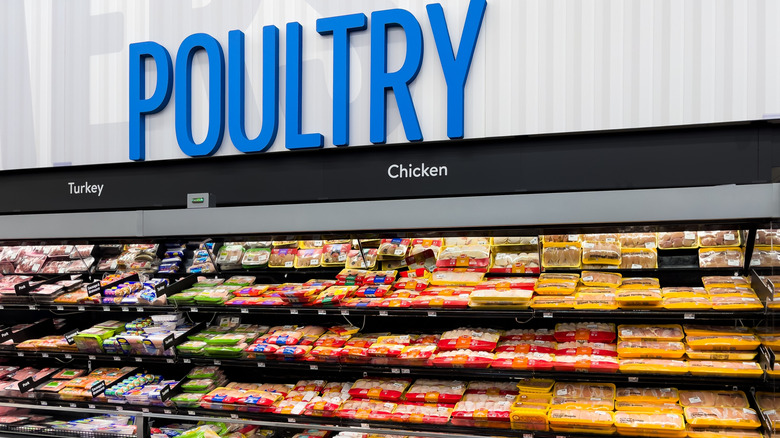
It can be challenging to keep up with every term and label when trying to purchase the highest quality foods at the grocery store. One term many may not be entirely familiar with is "chlorinated chicken." Sure, it sounds kind of like a chicken that went swimming in a pool, but it's really a term for chicken that has been treated or cleaned with an antimicrobial solution containing chlorine during processing.
There have been many shocking salmonella outbreaks in U.S. history – from 1998 to 2022, there were 366 salmonella outbreaks that could be traced back to chicken (per the Journal of Food Protection). A chlorinated antimicrobial cleanse helps prevent foodborne illnesses like salmonella.
But before you visualize gallons of chlorine, know that the solution is very heavily diluted. The amount of chlorine that can be used in a chicken cleaning solution is 50 parts per million (ppm), or 50 ounces for every 7,800 gallons of water, though it is actually typically not more than 5 ppm (via the National Chicken Council). Compare this amount to the average of 1.16 ppm of chlorine found in tap water (via Aquasana). The safe limit of chlorine in drinking water, per the Environmental Protection Agency, is up to 4 ppm.
In 1997, chlorinated chicken was banned in the European Union, though the European Food Safety Authority later determined that "chemical substances in poultry meat are unlikely to pose an immediate or acute health risk for consumers." Still, only an estimated 5% of processing facilities in the United States continue to use chlorine for sanitizing chicken (per the National Chicken Council).
Chlorinated chicken isn't very common
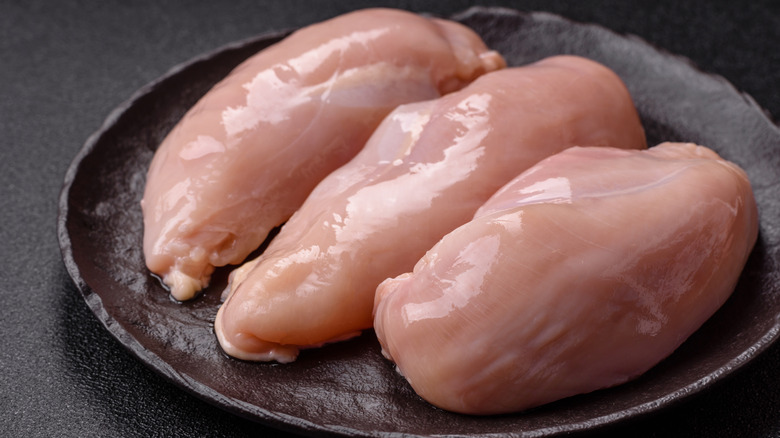
Many chicken processing plants have traded chlorinated chicken rinses for rapid air chilling, ice water immersion chilling, or diluted peracetic acid (a mixture of hydrogen peroxide and acetic acid). Peracetic acid has been shown to be incredibly effective at eliminating E. coli and salmonella. Chlorine is still widely used in processing plants as a method of cleaning equipment and facilities. Aside from various methods of sanitizing the bird, to further mitigate risk of bacterial growth, the chicken is cooled as quickly as possible after slaughter to temperatures of 40 degrees Fahrenheit or lower.
When picking out chicken at the grocery store, the label may say whether the chicken was cleaned via water immersion but won't usually tell the shopper if that water contained chlorine or not. Though, if you do buy it chlorinated, rest easy when you prep chicken for different meals, as small amounts of chlorine that may be in your poultry will be eliminated during cooking. However, if you really want to know whether your chicken was processed using a chlorinated antimicrobial solution or not, you can buy local or raise your own chickens if you're feeling ambitious.