

I'm A Former Line Cook. Here's How To Make The Best Fried Chicken Sandwich At Home
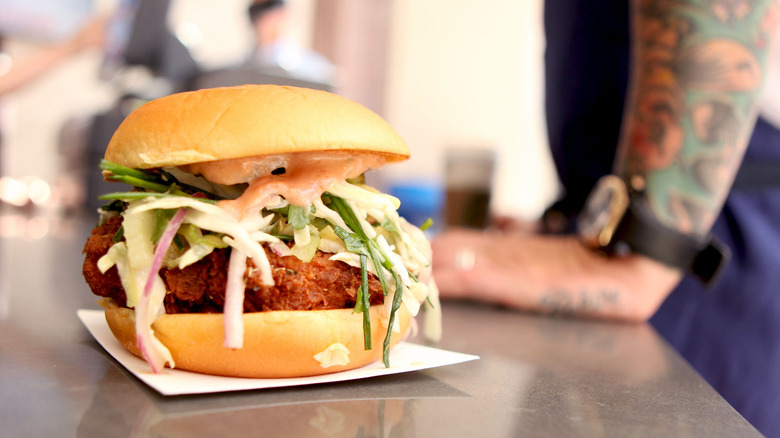
I'm certainly not opposed to buying a fried chicken sandwich when the craving strikes. (That'll be a Popeyes spicy chicken with extra pickles and a side of Blackened Ranch, please and thank you.) But when I've got time and a sandwich itch that can't be scratched, I'm using all the tricks from my line cook days to make my own at home. In my view, how you treat the chicken makes all the difference.
Yes, a soft, buttered, lightly toasted bun is essential, as are thoughtful toppings, but if the bird is bunk, so is the rest of the sandwich. I start with boneless, skinless chicken thighs. Though it might be controversial to state this, I do think chicken breast has its place in the culinary world, but my chicken sandwich is not it. Chicken thighs are more tender, more flavorful, and, importantly, the texture and thickness of the muscle lend themselves perfectly for this preparation.
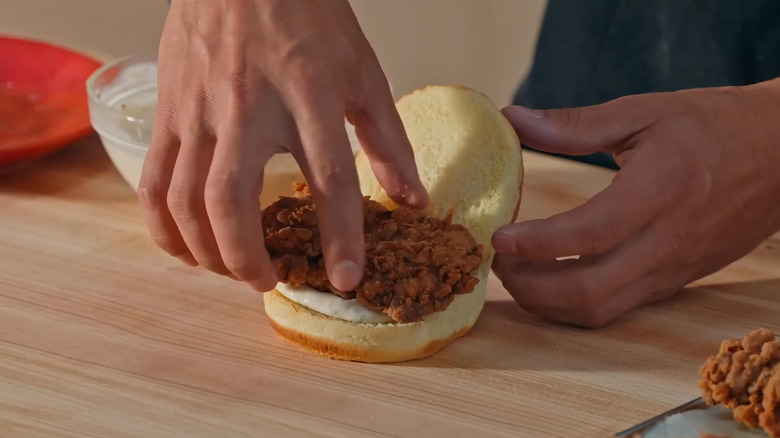
After letting the thighs spend some time in a buttermilk marinade, they go straight into a seasoned flour dredge. In fact, we'd hold marinated chicken thighs in the lowboy right on the line — the wet dredge step was already done. Now, the chicken doesn't just get a scant dusting of flour; using the heel of my hand, I press the thigh hard into the dry ingredients, focusing on the thicker side of the cut.
This strategy evens out the thickness of the chicken, flattening it without the need to pound or butterfly. It also helps you to get seasoned flour into every single nook and cranny, creating an even coating and lots of opportunities for crispy, craggy edges once fried.
The details of my ideal fried chicken sandwich
As any professional cook will tell you, intentionally building layers of flavor is one of the main reasons chicken always tastes so much better at restaurants. The mechanics of how I prepare my chicken cutlet are essential, but the flavorings seal the deal.
The marinade's simple combination of buttermilk and salt adds moisture to the meat, tenderizes the thighs, and helps the chicken hold onto its juices as it cooks. I add a scoop of grainy mustard, though even a couple squirts of a classic brand of yellow mustard will also do the trick. A flavorful hot sauce is another welcome addition. Choose one that's not too vinegary and mild enough that you could eat a spoonful — Frank's Red Hot is my go-to, though Cholula or Tapatio would also work well. With the sodium in the mustard, hot sauce, and buttermilk, you don't need to add additional salt.
The all-purpose flour dredge, though, should have a big pinch, plus a generous amount of spices. I like using garlic powder, onion powder, paprika, black pepper, and a bit of cayenne. Drop your marinated chicken thighs into a big pile of seasoned flour, coat both sides, and then press and press and press. Every millimeter should be covered, and the meat should be about a ½ inch thick. If you're a fan of a meatier sandwich, just fry up two cutlets.
With the oil between 325 and 350 degrees Fahrenheit, the chicken should only take 5 to 8 minutes to fry — when the breading is crispy and browned, the chicken will be cooked through. Let the fried chicken drain on a wire-rimmed sheet pan. In my opinion, the best chicken sandwich toppings are quite simple: a good amount of mayo and something pickled and tangy, like sweet and sour pickles or a vinegar-based cabbage slaw.