

13 Staple Ingredients Of Mexican Cuisine You Need To Know About
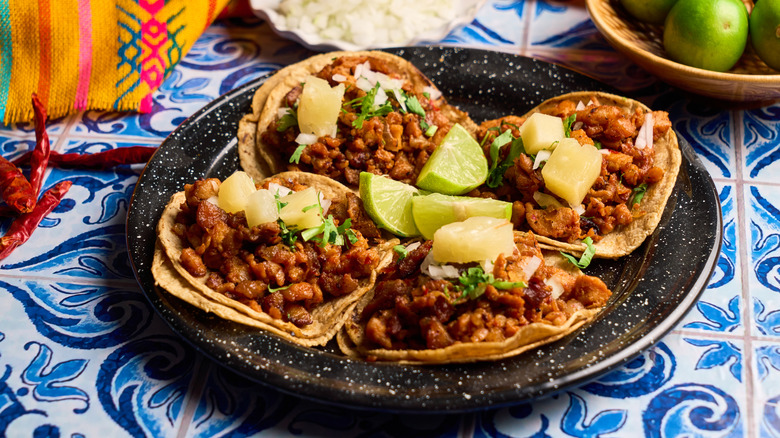
If you're broadening your recipe repertoire and exploring international cuisines from the comfort of your own kitchen, you've likely expanded the Mexican food you serve at home beyond the confines of a boxed taco kit and a can of refried beans. There are numerous Mexican cuisine staples that every home cook should try at least once, from pozole to tortas, mole to ceviche.
As you peruse recipes for dishes like these, you'll probably recognize a lot of the ingredients — but others could be a little unfamiliar, yet still definitely worth knowing about. To find out what you need to stock in your pantry and fridge for truly turning out some delicious and authentic Mexican meals, we talked to a handful of pros. Chefs hailing from Mexico and others serving up Mexican eats stateside let us in on the staple ingredients of Mexican cuisine that you need to know about, stat.
Epazote
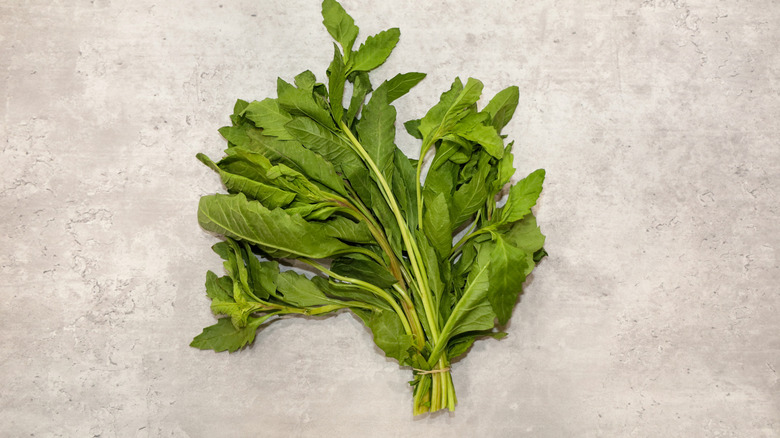
Not one, not two, but three chefs listed epazote among their top Mexican staples. So what is it? Epazote is an herb that grows in Mexico and Central America. Sometimes used medicinally, epazote is employed in food for its rustic and distinct flavor. As such, it's available both dried and fresh. You can find epazote in a variety of regional Mexican foods, like chileatole (a hearty stew), chilaquiles (tortilla chips simmered in sauce and topped with beans, eggs, or meat), or esquites (the off-the-cob version of elote).
Chef Martha Ortiz of Tuch de Luna stated, "Epazote is an ancient herb with a very distinctive aroma: intense, resinous, and slightly medicinal. It's often used in dishes with beans, corn, or fish because it adds depth and aids digestion. At home, it should be used sparingly; a small amount goes a long way. Add it toward the end of cooking so its personality stays vibrant rather than overpowering."
Taquería Condesa owner Leonel Baizan further described the herb as "Mexican oregano with attitude," and suggested pairing it with mushrooms, quesadillas, or scrambled eggs. Meanwhile, Chef Ignacio Sanabria at Mondrian Mexico City Condesa confirmed that fresh epazote can add "aromatic complexity" to beans and soups.
Xoconostle
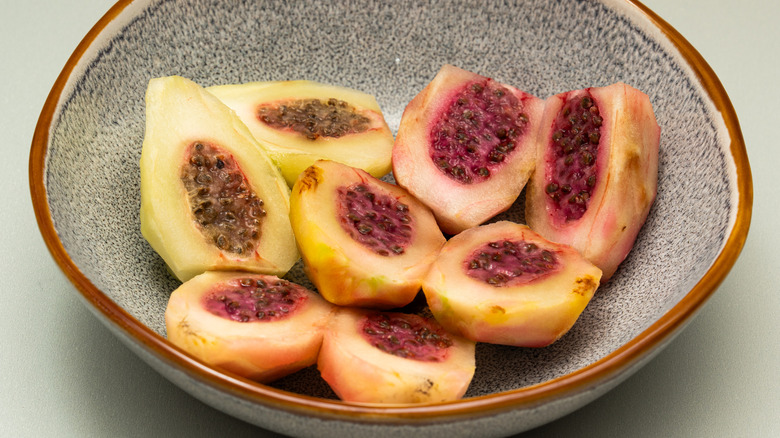
Martha Ortiz likewise recommended that home cooks acquaint themselves with Mexican fruit known as xoconostle, or sour prickly pear. Used in Mexican cuisine for millennia, it's a versatile, cactus-derived ingredient that can be eaten raw, cooked, or dehydrated. The seeds can be turned into a powder, and the fruit is sometimes sold as a paste, similar to quince paste.
It can be difficult to find xoconostle at just your average grocery store. You may only see it offered around the holidays, but you may be able to get it at a Mexican grocery store, or order dehydrated xoconostle online. Just take care to ensure you're actually getting xoconostle. There are many types of Mexican prickly pear cacti, and they can vary significantly. For example, xoconostle is sour with a lemony tang, while other varieties are sweet or floral, with flavors closer to those of a banana, peach, or persimmon.
Ortiz said, "Xoconostle brings a beautiful acidity that balances rich broths and stews. Unlike lime, its sourness is softer and more rounded. I love using it in soups like mole de olla or vegetable-based dishes. For home cooks, it's wonderful simmered gently, never rushed, so its tartness integrates rather than dominates."
Guajillo
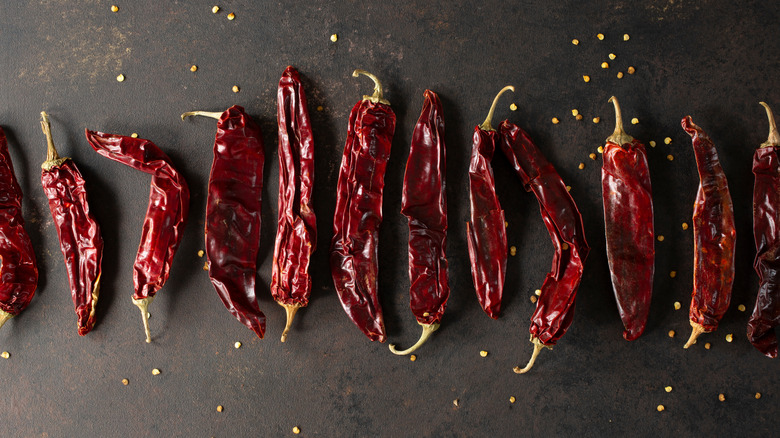
Guajillo chiles are a mild dried chile that's exceptionally popular in Mexican cuisine. Just how popular are they? Well, Chipotle once had garlic guajillo steak on its menu, and the chain also used these chiles on its pollo asado, which earned a spot as one of the best foods Takeout writers tried in 2022. If they're popular enough to be on a national chain's menu, they're accessible enough to find a place in your kitchen.
The reddish-brown chiles are sweet and smoky, and can be used just about anywhere you'd like. They can be ground into a powder, or rehydrated before pureeing them. You might flavor your pozole — a staple of Mexican cuisine – using a little dried red guajillo and ancho chiles. Or, you might add some rehydrated and pureed guajillo chiles to your homemade salsa.
While working with dried chiles can be intimidating for the first-timer, Martha Ortiz assures that you can do it, as long as you show the chiles a little respect. "Clean them well, toast them lightly, never burn them, and hydrate them patiently," she said. "When handled with care, they offer complexity rather than heat, bringing notes of fruit, earth, and warmth to sauces, moles, and even oils."
Pasilla
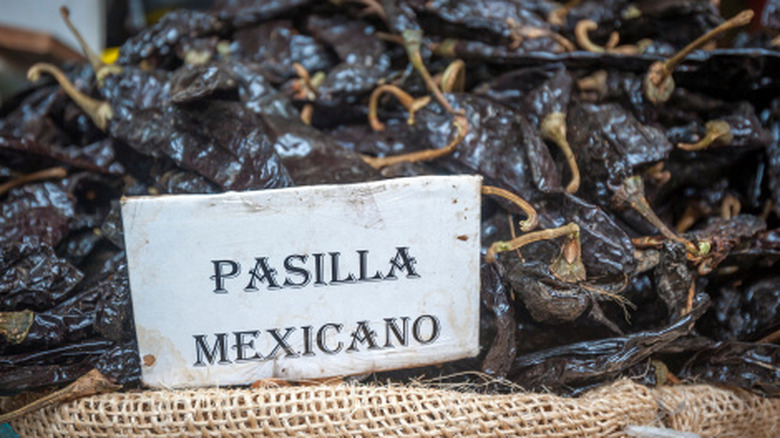
When discussing the chiles that form the backbone of Mexican cooking, Martha Ortiz not only mentioned guajillo, but also pasilla chiles. In comparison to guajillo chiles, pasilla chiles are even milder (and milder than jalapeños, too), and they're one of the three varieties of chiles that give Tajin its distinct flavor. Pasilla chiles appear in salsas and moles, and even Taco Bell's cantina chicken.
The chile's name literally means "little raisin," though that's a bit of a misnomer. While the chile definitely has a hue, texture, and some shared flavor notes similar to that of a raisin, pasillas are notably long and thin, so not exactly "little."
Pasilla chiles are often compared to ancho chiles, but pasillas are narrower and not as sweet as anchos. Pasilla chiles are also sometimes confused with poblano peppers (the fresh version of an ancho), and sometimes the two are even mislabeled in grocery stores. However, true poblano peppers are always fresh, while true pasilla chiles are always dried and are a completely different pepper altogether. Like guajillo chiles, pasilla chiles can be ground into a powder or rehydrated and pureed.
Chipotle in adobo
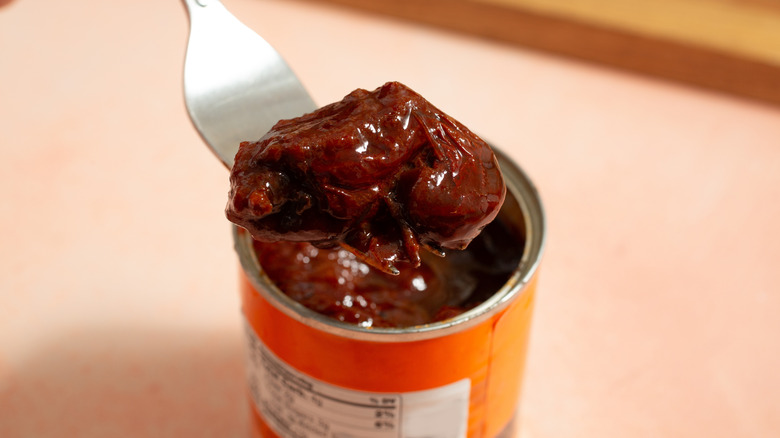
Leonel Baizan told us that "one spoon of chipotle in adobo transforms soups, stews, or vinaigrettes. Not only does it deliver instant complexity, but it keeps well in the fridge." If you're not familiar with this long-lasting, affordable can of goodness, chipotle in adobo is literally just jalapeños that have been dried and smoked, and then smothered in a tomato-based sauce.
There are three primary ways to use chipotles in adobo for a seemingly never-ending list of recipes: You can use the chiles themselves (mince or dice them), you can use just a spoonful of the sauce, or you can combine them both into a puree. Find that the chiles are a bit too spicy for your liking? Just remove the seeds before chopping or pureeing them.
Use chipotles in adobo to add a spicy kick to literally just about anything. Mix it with mayo. Use it in a marinade. Toss it into a soup or stew. Have some chipotles leftover? (You probably will; very rarely will you pop open a can of chipotles in adobo and actually use the entire thing.) While, as Baizan noted, they'll last for a while in the fridge, you can also freeze them indefinitely. Try freezing the pureed chiles and sauce into ice cube portions for easier prep the next time you cook.
Tomatillo
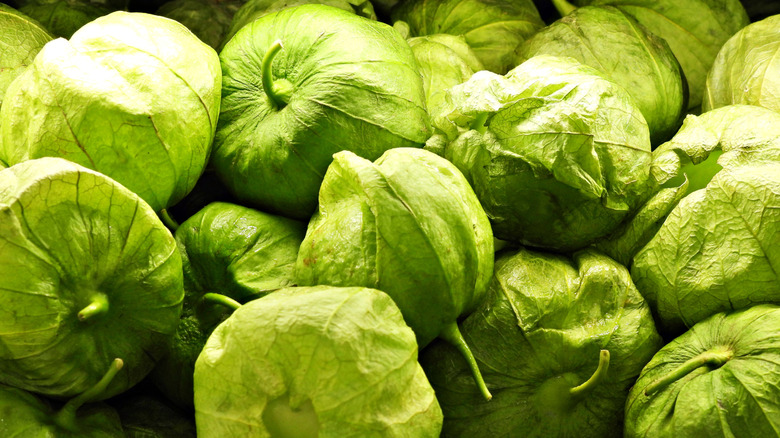
"Tomatillo is amazing for green sauces, salad dressings, and marinades. It can also be a great alternative to vinegar or lemon when you want a softer sour," Leonel Baizan advised.
You're likely most familiar with tomatillos as the requisite ingredient in salsa verde, but don't overlook all the other ways you can utilize this nightshade. As Baizan said, you can use them in other green sauces, salad dressings, and marinades, but they also find a place in chile verde, pozole verde, jocón de pollo, green enchiladas, and more. Not feeling Mexican tonight? Try them as a pizza topping, throw them on a salad raw, or make a tomatillo jam.
Just remember that tomatillos require a little hands-on care. You're going to need to remove that outer husk and clean them off. Rather than do that manually, take a shortcut and soak the tomatillos in boiling water for less than 30 seconds, to both clean them and loosen the husks all at once. Don't go through this process until you're actually ready to use the tomatillos, though. Storing them in their husks helps them last for a few weeks in the fridge.
Serrano chile
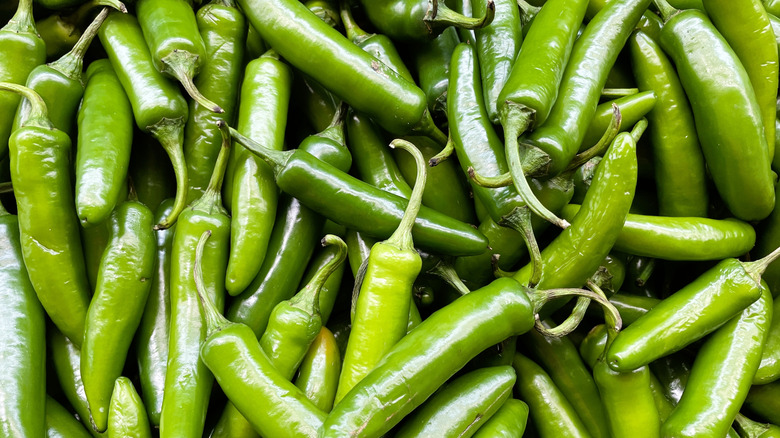
According to Chef Silvano Ramos Añorve, executive chef with Bahía Príncipe Hotels & Resorts, the serrano chile is the second most-consumed chile in Mexico after jalapeños, and using this ingredient isn't just a culinary decision. It provides a personal connection to his heritage.
"Cooking the serrano chili as a Mexican means cooking with respect — to the griddle (comal) and to the hands that taught us," he said. "Each recipe holds a story and a piece of our identity. We carry Mexico in every flavor we share."
The serrano chile is an excellent fit in an array of dishes. Add them to sauces, ceviche, or guacamole. They're a must-have for chilaquiles and huevos a la Mexicana. They also find a place in meat stews. Just note that serrano chiles are going to be hotter than the aforementioned pasilla and guajillo chiles, as serranos are considered to be slightly hotter than the average jalapeño.
Banana leaves
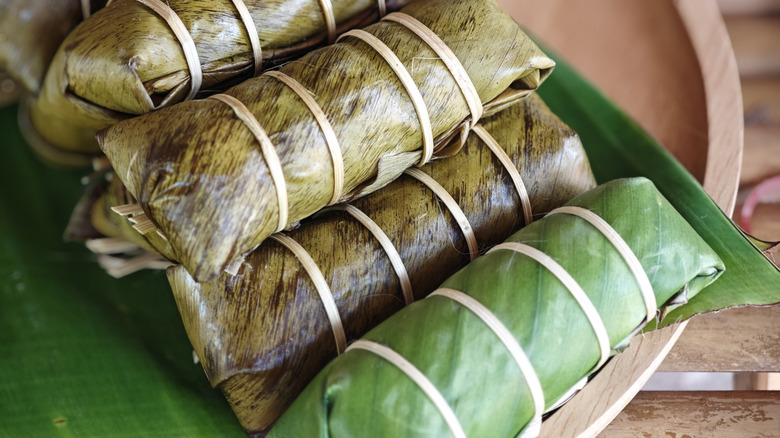
Silvano Ramos Añorve told us that banana leaves are used not just in Mexico, but throughout much of Latin America for cooking and medicinal purposes. You can use banana leaves to wrap homemade tamales, barbacoa, or fish, for example. Just note that you're not actually going to eat the banana leaves. Instead, they act as a wrap or base, whether you're baking, roasting, or steaming. Sometimes, the banana leaves are used for serving, too.
You can find banana leaves in Mexican markets, as well as Asian markets like H Mart. You may additionally be able to find them at American chains like H-E-B or Walmart if you live in a diverse area. They're sold both fresh and frozen, but the latter option will require thawing before use, acting gently so that they don't tear. Once the banana leaves are ready to be worked with, they'll need to be washed and cut down to the appropriate size. Fresh banana leaves should also be softened for easier use, which can be done by holding the leaves over direct heat from your stovetop, tossing them under the broiler, or soaking them in hot water.
Achiote
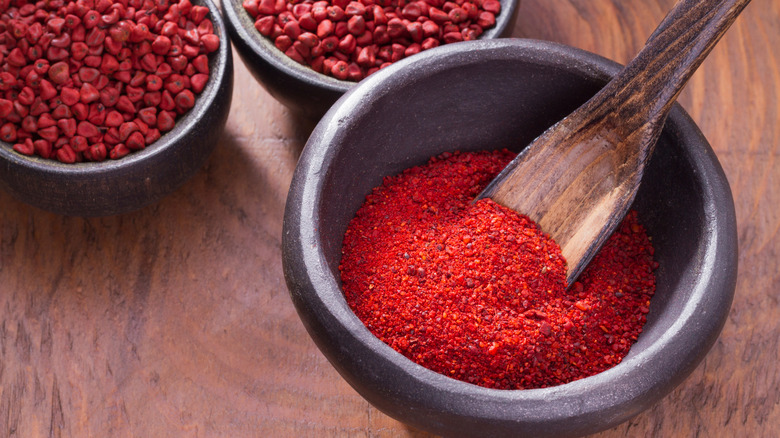
Achiote (which you may also know as annatto) paste is made by pressing the seeds of the annatto tree. "It's great to marinate chicken, pork, and shrimp, but it can also be used on fish such as halibut or even salmon," said Chef Hector Peniche of Hector's Bistro in Mazatlán. To make an achiote marinade, he recommended combining the achiote paste with orange juice, tomato paste, honey, and your favorite chile, then seasoning the mixture with salt before blending, and finally applying it to your protein of choice.
If you want to combine two new-to-you Mexican staple ingredients into one dish, you can even use your achiote marinade with banana leaves to make mixiotes — steamed, marinated meat inside banana leaves — per Silvano Ramos Añorve's suggestion. You can find achiote used for lots of other Mexican dishes as well, such as in tacos al pastor, adobo sauce, or cochinita pibíl (a slow-roasted Yucatan pork).
Mexican oregano
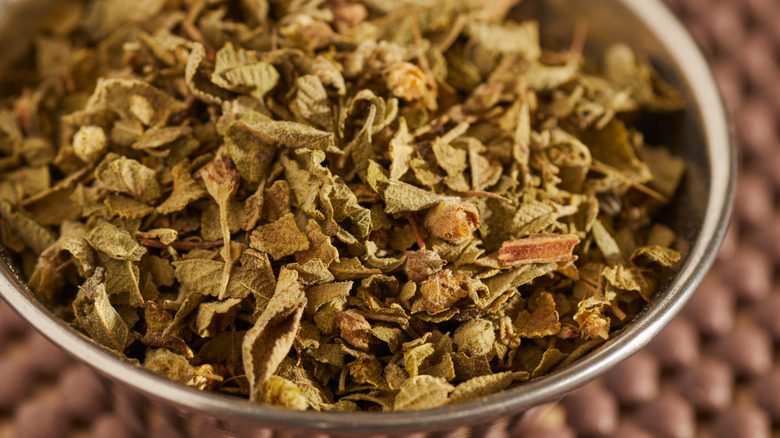
"Once you have Greek oregano and Mexican oregano side by side you will notice the difference," said Hector Peniche. "Although [Mexican oregano] is mostly used as a seasoning herb [in dishes] such as mole, pozole, and tomato sauce, you can use it as one of the main ingredients. To make Oaxaca-style pollo en oregano, take a generous portion of oregano, garlic, and olive oil and make a marinade. Marinate the chicken for a few hours and then bake."
So what's the big difference between Mexican oregano and "regular" oregano? For one, Mexican oregano comes from a totally different plant family, which is the verbena family rather than the mint family. As such, Mexican oregano has more of a floral flavor profile than its Mediterranean counterpart. Discussing the differences on Reddit, those familiar with the herb said that Mexican oregano is likewise more "earthy," with a stronger flavor and aroma. You can use Mexican oregano in many recipes beyond Mexican cuisine, and while it's not a good swap for traditional oregano, some use it in place of cilantro – especially if they're one of the unlucky few who find cilantro comes with a certain soapy flavor.
Chiles de árbol
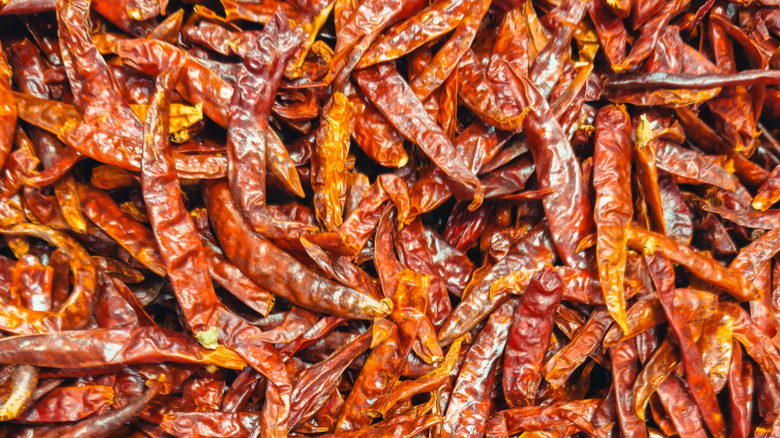
Not finding quite the level of heat you'd like in the chiles mentioned above? Consider chiles de árbol. The thin, few-inches-long chiles are sometimes called rat tail or bird's beak chiles, and they add a nice amount of kick, as they're slightly hotter than serrano peppers. "Chiles de árbol add heat and depth to salsas, dressings, and marinades. Toast [them] lightly to bring out their smoky notes without overpowering the dish," advised Ignacio Sanabria.
While you can grind or rehydrate these chiles just like any other, they're also a favorite for infusing various other ingredients, such as spirits, oils, or vinegars. Their small, slender shape makes them easy to drop into a bottle you already have on hand. Other creative uses for these chiles beyond the typical Mexican fare? Try making some chile-infused milk and adding it to your mashed potatoes. Or, make a homemade chili crisp or chile-infused aioli for pumped-up condiments. You can even blend the ground chiles into homemade ice cream.
Cacao
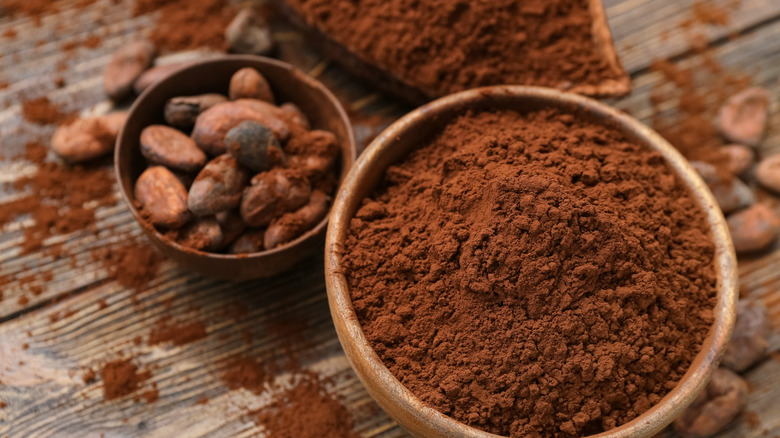
First of all, let's clear up any confusion regarding this ingredient. Cacao is not cocoa, and neither technically counts as Mexican chocolate. Cocoa is created from roasted, pressed cocoa beans. Cacao is less processed, made by cold-pressing raw and fermented beans. Mexican chocolate, meanwhile, is a mix of cacao, sugar, and cinnamon. Both cacao and Mexican chocolate are used throughout Mexican cuisine, and not just in the baking projects that you might resign your own box of cocoa to. According to Ignacio Sanabria, "Beyond desserts, we incorporate it into mole sauces and dressings for a subtle, rich umami flavor that balances savory dishes."
If you're interested in incorporating cacao or Mexican chocolate into more savory dishes at home but aren't sure where to start, go for a straightforward mole such as mole sencillo, which literally means "simple mole." Beyond Mexican cuisine, Mexican chocolate is also a hit in coffee, sauces, marinades for slow-cooked meats, and chili (the stew, not the pepper).
Avocado
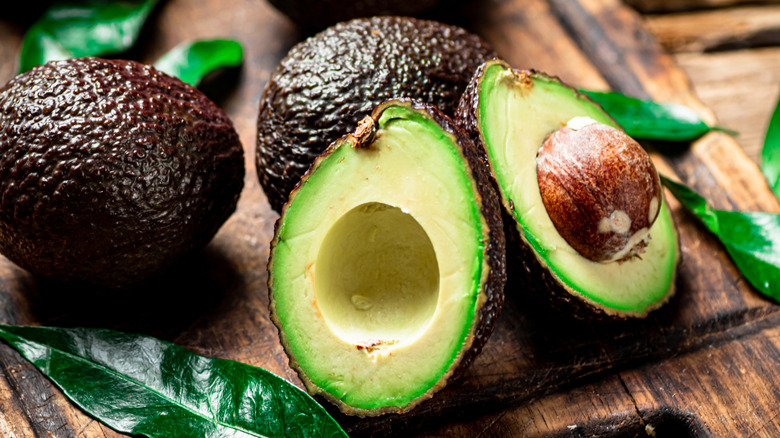
Okay, you know the avocado. Even if you're not attempting to cook beyond your typical recipe rotation, avocados probably end up in your grocery cart. However, Silvano Ramos Añorve urges you to look beyond the typical uses for this Mexican fruit — while also still using it in some traditional ways, such as in guacamole, tacos, and salads.
"The avocado is not just for guacamole," he said. "Use it as a base for healthy chocolate mousses, as a butter substitute in your baking, or as a cream base for your pastas. In today's home cooking, the limit is your imagination."
Avocado chocolate mousse requires minimal ingredients: avocados, cocoa powder, milk, a sweetener, salt, and vanilla. However, if you don't care for the thought of mixing chocolate and avocados, you can ditch the chocolate and just make a straight avocado mousse by running some cut avocados through a food processor until mousse-like. Then, use it as a dip or spread. Swapping butter for avocado in desserts couldn't be any easier, as you can make the change at a 1:1 ratio — though you should expect a different texture in your baked goods if you make this adjustment.