

Walmart Owns More Brands Than You Realize — Great Value Is Just The Start
We may receive a commission on purchases made from links.
Soon after the first Walmart opened in 1962, Sam Walton's retail chain spread throughout the American South. Over the next few decades, the foundation was set for the regional giant to morph into a national mega-corporation — and, in a way, the embodiment of commercial America.
It was a later watershed moment that served as a massive propellent: In the 1980s, Walmart began to create its own private label products. This move would become a game-changer in the truest sense. Privatized goods no longer had to be procured from outside parties. They were made in-house, in control, and — because of Walmart's accrued economic clout — able to compete with anyone else in manufacturing, and distribution.
What does it all mean for Walmart's bottom line today? The private labels rake in between $100 billion and $200 billion for the company every year — which is not bad. In fact, it's about the same as the total GDP of the country of Ecuador. So, what are these lucrative Walmart properties, you ask? We've got a list of them right here, for your question's convenience. The next time you're at Walmart (including literally this moment, on your phone) look out for the following brands on the shelves. It may mean more savings, and good quality. It may mean a successful shopping trip. It may even mean better Walmart drone delivery.
bettergoods
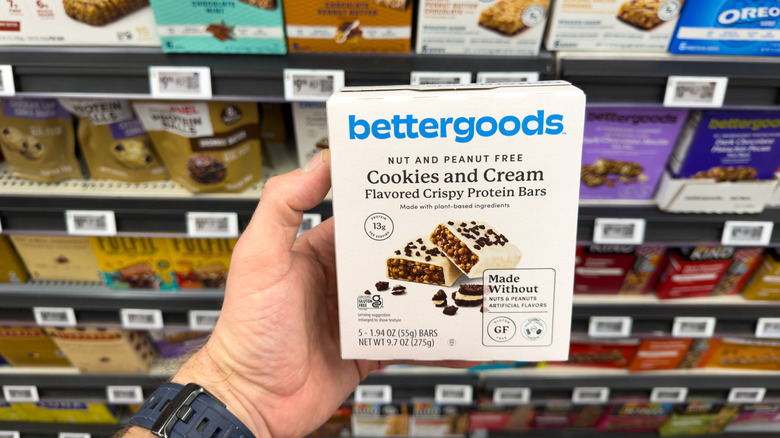
This is Walmart's newest private label brand, offering quality, zeitgeist-friendly products with clean, non-additive ingredients geared toward Millennial and Gen X consumers. Launched in 2024, it was also the company's biggest brand debut in about 20 years.
Bettergoods products are more than 300, and counting, spread out over a wide range of categories. If you're looking for vegan fare, it's got you covered with chick'n nuggets, salted caramel oat milk ice cream, vegan mozzarella, and a bunch of other plant-based dairy, drinks, and proteins. The fusion-style artisanal snacks are also a hit, with chips coming in flavors like smoked gouda mac n' cheese, roasted shishito pepper and garlic, and heirloom veggie.
Bettergoods has been designed by Walmart to essentially take over your entire kitchen, and all your cabinets, with pantry items, bread, beverages, coffee, and even candy rocking the label. It can also load up your freezer with Italian five cheese pizza, chicken wings with garlic butter dry rub, mushroom asiago risotto, cacio e pepe riceballs, and sorbet flavors like lemon-strawberry, and pineapple-mango. With so many options already available, it's safe to say that Walmart's newest baby might be its most ambitious.
Marketside
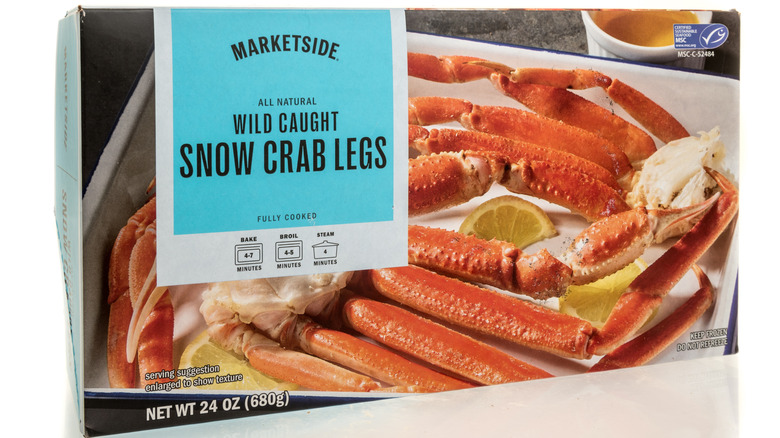
Marketside started in 2008 as a chain of four grocery stores around Phoenix, Arizona. The brand was focused on convenient, expeditious, and quality meal-building from the start — and was, at the time, in direct competition with Tesco's Fresh & Easy stores. The name, and logo, sported no connection to its parent company until 2009, when the stores were changed to Marketside by Walmart, in an attempt to boost lukewarm sales. The strategy didn't pay off, as all four stores wound up closing in October of 2011. But Marketside lives on as a Walmart private label brand, and a successful one at that.
In fact, Marketside has become one of Walmart's best-selling brands, and one of the most profitable private label brands of any grocer in the country. In 2024, Marketside items were purchased by nearly 70% of Walmart-shopping households. The label, like the defunct brick-and-mortar stores, offers customers quick, easy-to-prepare, and pre-made eats; everything from soups to sandwiches to salads to pre-cut produce, all ready to be chowed down upon. The same goes for the array of Marketside baked goods, including a panoply of rolls, cakes, and loafs. Even the offerings that still have to be heated up, like pizzas and pre-cooked proteins, just need a quick trip to the microwave.
Freshness Guaranteed
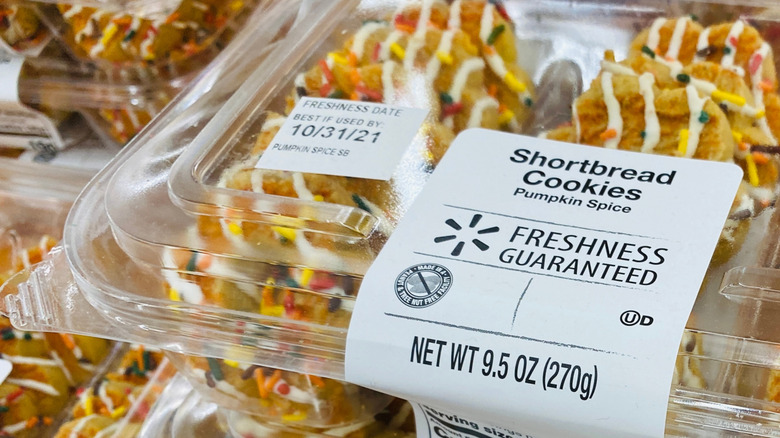
Unlike the other private label brands from Walmart, Freshness Guaranteed was actually spun out of a corporate initiative: a company-wide effort to ensure Walmart customers that they were always getting products of the highest quality, and optimum freshness. The fresh produce guarantee was first publicized in 2013, followed by a re-emphasis in 2017. It included revisions to Walmart's logistical approach to its supply chain, and quality control processes. The company refined its dedication to purchasing and delivering produce directly from growers, regular inventory checks at thousands of stores, and expanding produce training programs for its staff.
Eventually, the Freshness Guaranteed label evolved into Walmart's own line of products, officially joining its roster of private label brands. What started as a focus on optimizing fruits, and vegetables, has since grown to include snacks such as Yummy Chow; ready-to-eat meals like pre-cooked lemon pepper rotisserie chicken; baked goods à la s'mores pie; sides including pasta salad, deviled egg potato salad, and pico de gallo; and even breads (the French loaf, for example).
One of the main components of the original Freshness Guaranteed policy was a 100% refund on produce to any customer not satisfied with the product, as long as they simply show the receipt. This policy still stands today.
Ol' Roy
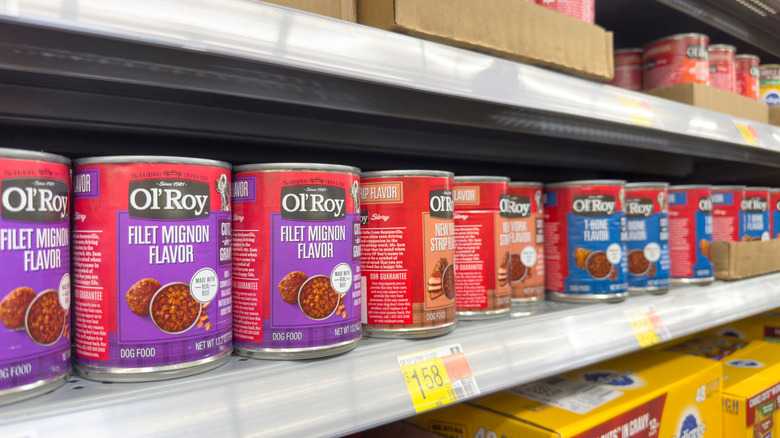
It was 1980 when Walmart decided to officially launch its very first exclusive in-house brand, and it wasn't in the realm of produce or beverages or lawn chairs. It was, in fact, pet food. Actually, "launch" may not be the right word, since the brand technically already existed in Walmart stores, in nameless, white packaging labeled simply "dog food." But with its rechristening as Ol' Roy, a private label brand was born, and Walmart shelves had itself an identifiable mainstay. By the time 2004 rolled around, Ol' Roy was the best-selling dog food in the country.
The brand was named after Walmart Founder Sam Walton's English setter. Now, we're not sure if that dog was always named Ol' Roy, even as a puppy, but either way, the beloved best friend became something of a packaging legend. Eventually, however, the brand underwent a makeover, and Ol' Roy got the heave-ho in favor of a repertory cast of pooches. Today, the Ol' Roy brand covers an array of dog food, and supplies. Dog's old rivals are also well-represented at Walmart, with the exclusive Special Kitty brand for cats (which debuted not long after Ol' Roy, in 1983.) No word yet on whether either brand plans to be on the cutting edge, and start selling meatless pet food.
Parent's Choice
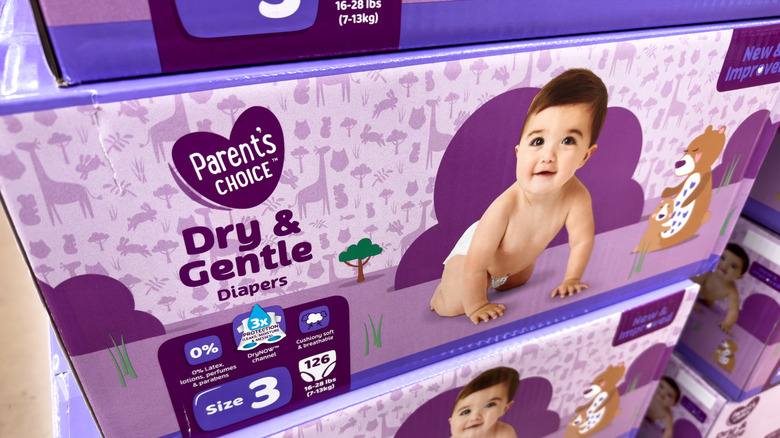
It's fair to say that Walmart is happy dominating your existence, from the moment you're born, to the moment you pass on to the great grocery store in the sky. This is what's led it to earn the most revenue on Earth of any company, generating upwards of $700 billion per year. That doesn't happen by accident, or by anything less than strategic board room ambition. All of life's biggest moments can be easily supplied by the superstore (although you may want to think twice about buying a birthday cake from Walmart.) It goes to reason, then, that Walmart might have a big say in the rearing of your young baby.
It was back in 1998 that Walmart launched the Parent's Choice brand. Initially, there was just one, lone item under that label: baby formula. As time passed, and people kept having, well, babies, the product line grew accordingly. Any kind of cost-effective yet trustworthy product line for children is going to be flocked to, and Walmart knew that. That's probably why, 20 years into its existence, after it became Walmart's top-selling baby brand, Parent's Choice received an infusion of corporate backing. Relaunched with around 300 products, it now offers everything you need for your little one: diapers, wipes, blankets, powder, silicone nipples, safety gates, sippy cups, and bath soap, among a multitude of other items.
Member's Mark
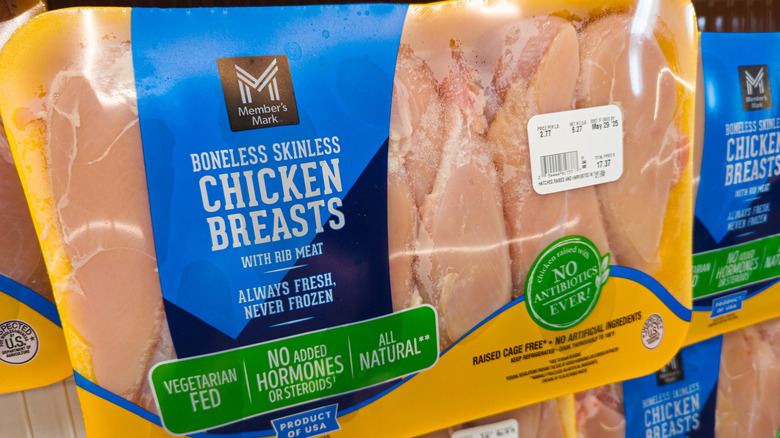
If there was ever a cage match between Walmart, and Costco, it would probably be bloody, merciless, and without any kind of clear winner. The two shopping T-rexes are engaged in a constant battle on a number of fronts: the stock market, the advertising landscape, and the hearts of the public. In this way, the rival brands are forever entwined — so it's no wonder that Sam's Club, Walmart's wholesale warehouse chain, debuted the same year as Costco did in Seattle. The latter was started by people from Price Club, the original warehouse that both Walmart, and Costco, directly emulated.
Costco started its Kirkland brand in 1995, and Walmart followed up with its own version three years later. The resultant Member's Mark label that's exclusive to Sam's Club is a direct salvo at Costco's famed in-house brand. And, while it's true that Sam's Club has hits and misses, the epic duel has certainly continued on this front. Member's Mark is promoted as a brand that's elevating the everyday, meaning that shoppers shouldn't need to get any of their stuff anywhere else (especially not at Costco) at any time. Clothing, seasonal items, dishware, everyday living products, and (of course) alcohol — sometimes a heated topic, given Utah Walmart shoppers' battle against 3.2 beer — are readily available under the wholesale private label brand.
Equate
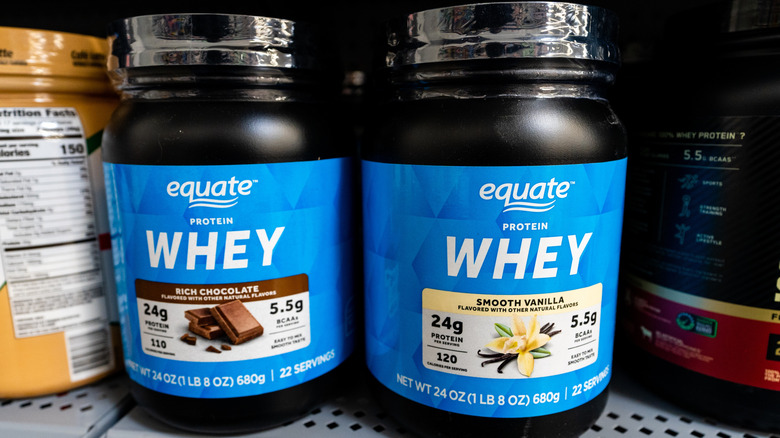
You didn't think you were going to get into health, beauty, and personal care without Walmart trying to muscle into the supply chain, were you? Of course not. This is Walmart we're talking about. If it could sell indulgences, it would. A global market that's worth a number in the trillions is a gold mine that Walmart is all too happy to do a Scrooge McDuck-style dive into. And so it did — not with a homegrown brand, but an outside purchase.
A onetime independent brand, Equate, was started by the L. Perrigo Company in 1987, and sold several years later to a keen-eyed Walmart. It was bought with the intention of emulating other leading lines from other giants like Johnson & Johnson's Aveeno. The label has since swelled to include a bevy of wellness products, especially consumable pharmaceuticals like vitamins, supplements, digestive aids, OTC medication, oral care, health bars, and nutritional shakes. As of 2024, Equate stood tall as one of Walmart's leading private brands, its items regularly bought by 75% of Walmart households. With the health and wellness industry on the up and up overall, Equate is likely to continue raking it in.
Oak Leaf
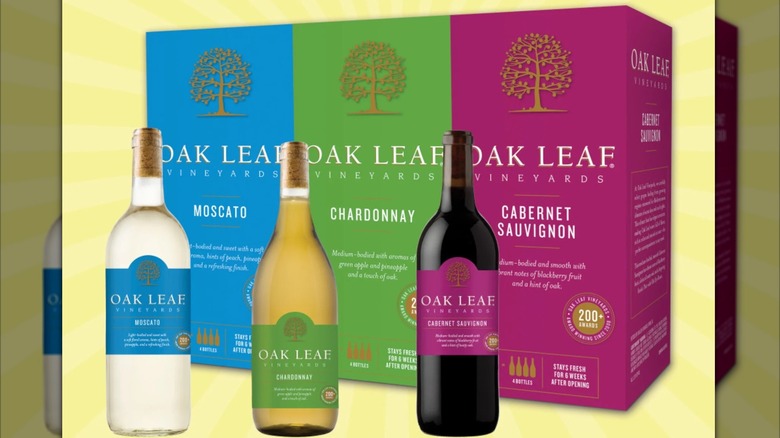
Humans have been making wine for (by some estimates) nearly 9,000 years. From that time forward, Europe has dominated the global wine game, and it still does. But In 1976, at the famous Judgment in Paris, California wines beat out French wines in a seismic taste test that solidified America's standing as a world leader in vino. So why wouldn't Walmart — America's leading retailer — tap the renowned winemaking regions of the Golden State for its first foray into the vineyard game?
Yes, we're talking about Oak Leaf, one of Walmart's private wine labels. It was officially launched in 2008 by the superstore — or, to be more accurate, Walmart outsourced the wine through Livermore, California-based The Wine Group, which is responsible for the actual production of Oak Leaf to this day. Seeing how Trader Joe's "Two-Buck Chuck" had taken off, Walmart started to sell its own take on the TJ's signature, along with a mildly upmarket version retailing for $10 a pop. Oak Leaf makes it possible to get your affordable shiraz, pinot, cab, or chardonnay on the same shopping trip as your bed sheets, and barbecue meat. And, by releasing more private label wines, like Winemakers Selection, Walmart continues to read the room when it comes to the fermented favorite. (Pro tip: If you prefer your wine pink, try Walmart's $5 bottles of rosé.)
Clear American
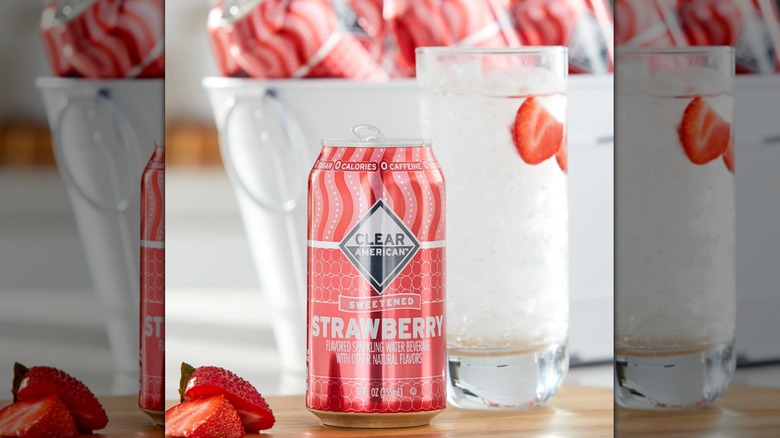
When English physicist Joseph Priestley poured the first ever sparkling water, made from a sulfuric acid and chalk mix, through a pig's bladder in 1767, he knew not what he had wrought. In the 350-odd years of sparkling water history since, it's been an unstoppable behemoth in the beverage industry, valued at almost $65 billion, and rising exponentially. Much of this has to do with the consumers (⅔ of them, in fact) who prefer no- or low-calorie drinks — especially if they also have a bit of flavor. San Pellegrino may have the lion's share of the global market today, but right behind it in sales are the combined private label brands of major retailers: Kroger's Kirkland, and Simple Truth, collections — and, of course, the Clear American brand from Walmart.
Bottles of Clear American entered Walmart's inventory in 2004. They clearly sold well, because in 2007, the company added a half-dozen new flavors to the line: fuji apple, orange, lemon-lime, black cherry, strawberry, and peach. Over the years, more creative variations — such as green tea, and cucumber melon — came as trends dictated. Some of those flavors went as well; cotton candy was discontinued in 2023, much to the chagrin of many a Walmart shopper. These days, you can nab Clear American flavors that include blue raspberry, blackberry lemonade, key lime, rainbow fusion, and even red-white-and-blue pop.
Prima Della
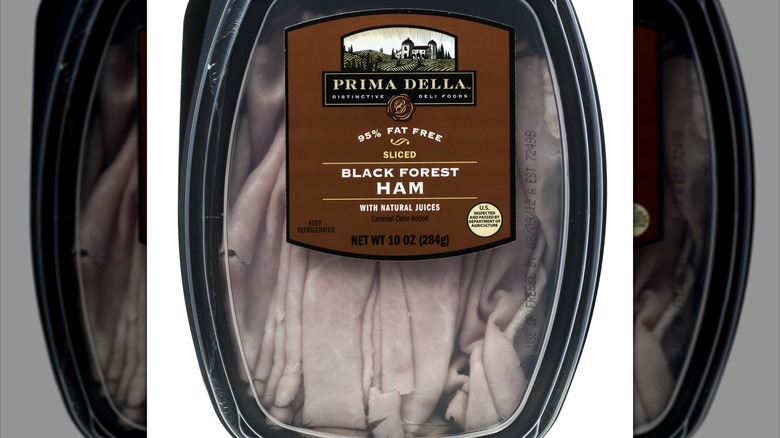
Similarly to many other supermarkets over the years, the first Walmart Supercenters sliced their own deli meat on the premises. So, it's fair to say, Walmart has always been into the bologna-and-cheese side of things. To this day, its stores sell exclusive deli meats under private labels Great Value, Marketside, and (especially) Prima Della. Although the first two generally have a lower price point, and come across as a bit more generic, Prima Della is considered more refined, and it therefore can justify a more expensive price tag.
The idea is that you're getting high-quality deli fare here. While the Prima Della line of cold cuts has got all your sliced ham, turkey, and roast beef needs taken care of, the oven roasted chicken breast seems to be the favorite. You can also get your classic cheese slices as well as miniature, cracker-sized slices of Colby jack, baby Swiss, and provolone. And, although Prima Della isn't one of Walmart's top-selling private labels, mostly because of its niche output, it has certainly cornered the (super)market when it comes to high-end Walmart deli. Of course, when shopping for sandwich fixings, you may want to consider the nutritional downsides of pre-packaged deli meat.
Sam's Choice
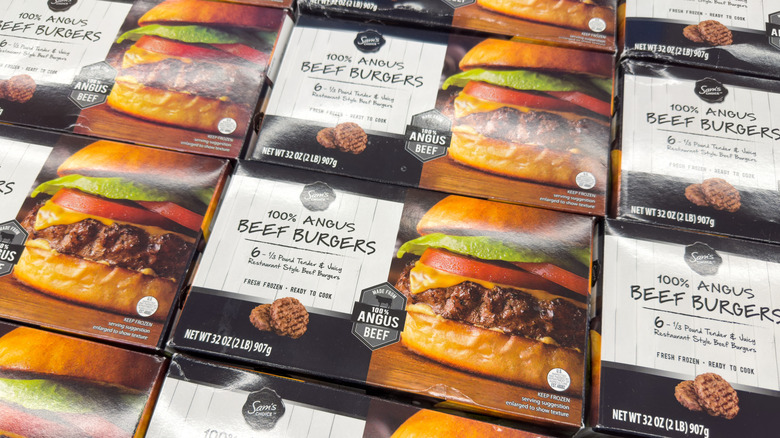
With Walmart's rollout of fancy, new private label Bettergoods comes the phasing out of the superstore's wily, old vet, Sam's Choice. It's a rather momentous occasion, actually, as the Sam's Choice line was part of the first wave of major private label brands that Walmart launched, forerun by the release of Sam's Cola in 1991. At the time, the soda was called Sam's American Choice — which inspired both the moniker, and the company's overall approach, for the Sam's Choice label.
One of the people involved in Walmart's original soft drink brain trust has claimed that, if it weren't for that flagship soda becoming a success, private brands like Great Value would have never existed. The Sam's Choice name would go onto adorn a wide range of products outside of beverages, from seafood to hamburger buns.
As of 2025, the line is still available in over 4,500 stores. But with the evolution of discerning consumer tastes, and competitors like Trader Joe's, and Whole Foods, capitalizing on that phenomenon, Walmart felt like it had to make a move, and rebrand-slash-reenergize many of the incumbent Sam's Choice items — namely by transmuting them over to the Bettergoods line. Although Bettergoods is the corporation's priority now, Sam's Choice has had a helluva run.
Tasty
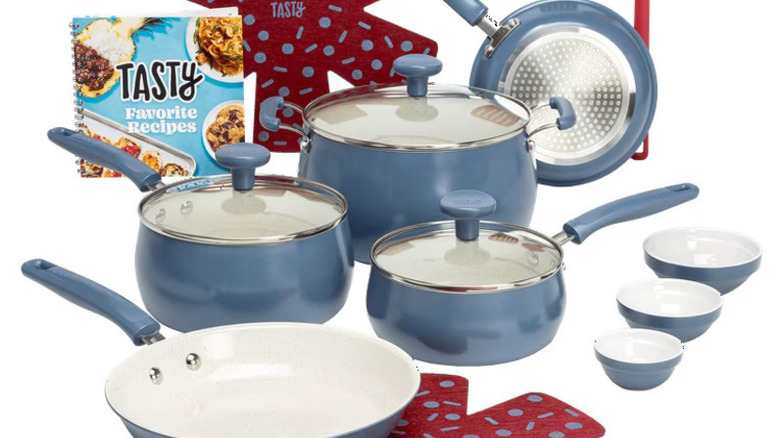
Walmart has established itself as one of the grand old companies of America, a symbol of the country's economic might, and it hasn't done so by staying behind in the game. Sure, it may not be a step ahead of trends, but the company will certainly position itself to benefit from whatever fashionable sentiment is rising — even openly collaborating with a media-savvy entity to start a private label.
So is the tale of Tasty, one of the more stylish Walmart brands. This product line covers all manner of kitchen supplies, and cookware, and its name derives from the store's collaborator in the venture: BuzzFeed. The publication's Tasty network of food-centric media has found a lucrative teammate, the idea being that you can watch a Tasty video, get inspired, connect to the Walmart Grocery app, and (voila!) find the necessary items already in your cart, ready to be delivered. The accompanying product line, meanwhile, includes popcorn makers, stainless steel knives, charcuterie boards, and salad choppers. Who says Walmart isn't hip?