

The Red Flag That Made Me Walk Out Of A Bar As A Former Bartender
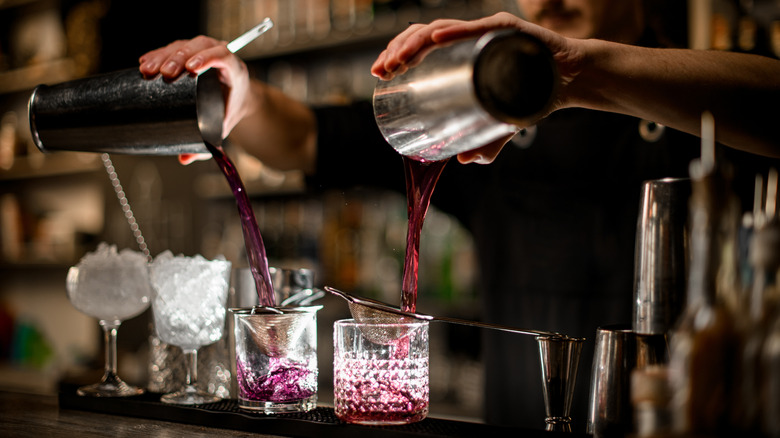
Everyone has an idea of what makes the perfect watering hole. For some, it's iconic dive bars with seedy histories and curated jukeboxes. Others gravitate toward swanky cocktail lounges with speakeasy vibes. I'm here for all of it, but, with more than a decade working in bars, there are certain things I look for when I walk in as a customer — and one red flag that almost always makes me turn tail and run.
Scanning the bottles behind the bar reveals if there is a spirit that the bar specializes in. A collection of unique liqueurs and elevated garnishes hints that the bar mixes refined cocktails, while a bin of bright red maraschino cherries in a plastic tray indicates it probably doesn't. There are other subtle clues that help determine whether it's a place to order underrated classic cocktails, a house creation, or a pint of beer. However, if I see a crowd milling around struggling to order drinks, it's a clear indication that sticking around is likely to be a frustrating experience.
When bartenders can't keep up with orders, it's usually a sign of poor training and a lack of preparation. It's not a problem that will solve itself. Wait times are likely to increase as the staff tires and the crowd swells. A packed bar isn't always a bad thing, but it requires a bartending team with the endurance of distance runners and the precision of an F1 pit crew to manage the hordes of customers.
What makes a high-performing bartending team?
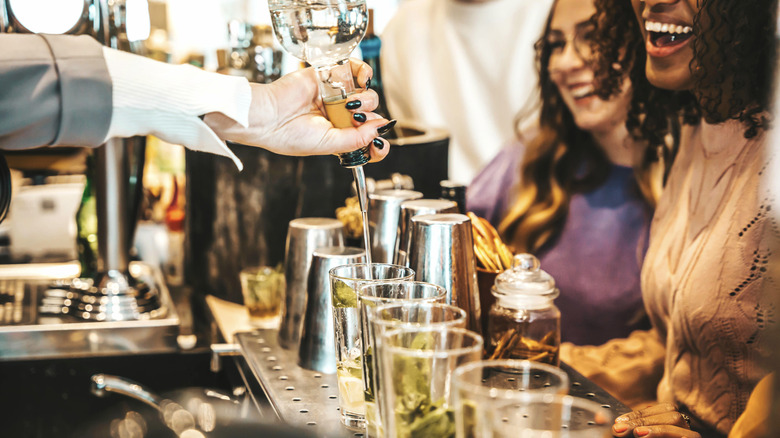
I got my first bar job when I was 18. The interview consisted of two questions: Do you know what a barback does, and, can you start right now? I got one answer correct, and over the next several weeks, learned that a barback is the engine that drives a successful bartending team. Exact duties vary, but can be summed up as doing the grunt work that allows the bartenders to focus on serving customers. This includes restocking liquors, changing kegs, and washing glasses. Even a good bartender will struggle on a busy night if there isn't a solid barback supporting them.
If the barback is the engine, the bartender is the driver. Being a good bartender requires a multifaceted skill set, but perhaps most important is the ability to multitask. As a teenage barback, the veterans took me under their wing to teach me the tricks of the trade, and I was taught crowd control before we got to mixing drinks. Most bartenders can surprise you with a unique drink if you know how to ask, but there's more to the job.
High-performing bartenders easily distinguish between customers who are ready to order and those who have questions. They can simultaneously mix a round of drinks, take the next order, and chat up customers. Great ones not only make it look effortless, they make it look fun. Music and decor set the vibe, but it takes a bartending team to make a place special.