

11 Foods Most Likely To Be Contaminated By Listeria

Who of you readers would swing wide your front door for a stranger lurking in the shadows, waiting to cause you harm? Of course you wouldn't. Yet, many of us unknowingly do something surprisingly similar every single day. We make this common pitfall not by inviting in strangers, but by bringing certain foods into our homes without realizing what might be hitching a ride.
We're talking about Listeria, a bacteria that is sneaky, and resilient. Unlike many food-borne germs, Listeria can survive (even thrive) in cold temps, making certain foods higher risk, and making your fridge an ideal hideout for this unwanted interloper. While healthy adults may only experience mild, or no, symptoms if exposed, the bacteria can be especially dangerous for pregnant women, older adults, and anyone with a weakened immune system. For this reason, food safety experts are always on high alert, paying special attention to where Listeria most likes to lurk, and this is often how recalled foods are discovered. In fact, Listeria contamination is among the most common reasons for food recalls.
The tricky part is that Listeria is stealthy, and sneaky, just like that stranger you certainly envisioned skulking outside your home at our first mention. It does not announce its presence. It's not linked to spoiled or rancid foods, where look and smell could be telltale warning signs. Instead, Listeria is often hiding in plain sight. Here are 11 foods that are statistically more likely to be linked to Listeria contamination, and why.
Deli meats
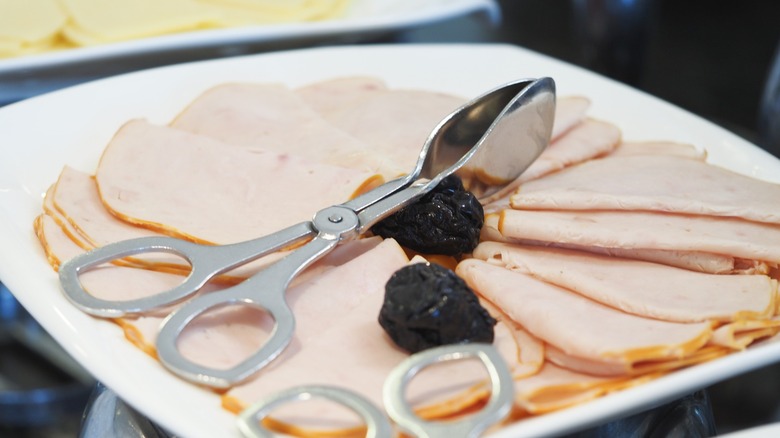
Let's talk deli meats, starting with this (not) fun fact: They are the most common source of Listeria infections, linked to roughly 90% of cases. That data alone should have us thinking twice before grabbing a package of slices from the deli. It's just so convenient, though, darn it. So, exactly why are deli meats recalled so often? Apparently, the crux of the issue is not the deli meat itself, at least not initially. Actually, these meats usually start out quite safe, with most having already been cooked during processing (a step known to kill harmful bacteria).
The hazard rears its ugly head during the next steps of the process, when the now-cooked meat is being sliced, handled, and packaged. When you think on it, this makes perfect sense, because delis are always buzzing with activity. Slicers are whirring, customers are ordering, and shifts are constantly shifting, which means that each new batch of workers poses a chance of forgetting a vital step in the handling process. This could be hand washing, disinfecting countertops, changing gloves between meats, or not wearing them at all. Suffice it to say, bacteria looks at a deli, and basically sees a party at the disco.
Cold cuts, hot dogs, and cured or fermented sausages (think salami or pepperoni) all fall into this category. The good news is that reheating deli meats until they're steaming hot can dramatically reduce the risk — but that doesn't help your daily cold turkey sammie habit, sadly.
Soft cheeses
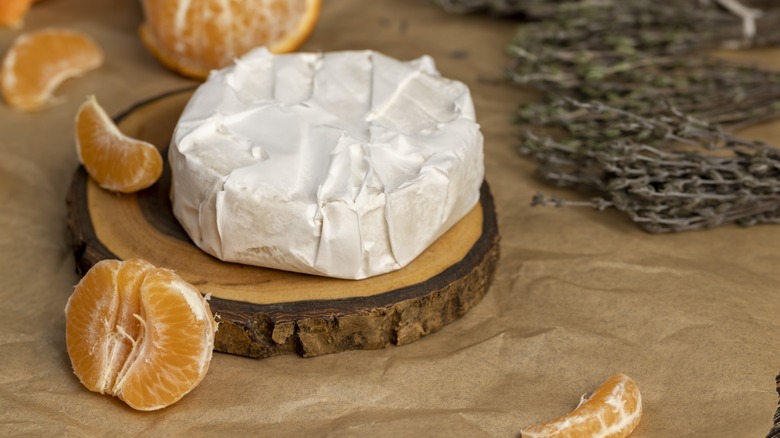
Soft cheeses are such a deliciously indulgent offering, especially when paired with winning accoutrements. That picnic spread with a wheel of Brie paired with figs, and honey? Those delectable, salty feta crumbles that make your Greek salad sing? You know what we're talking about. They're widely beloved from a palate's perspective, but food safety experts? They have a wildly different point of view on our sacred soft cheeses.
According to the professionals, Listeria also has a soft spot for soft cheese. The bacteria goes bonkers over it, actually, far preferring it to its harder counterparts. At least we know Listeria has great taste (dang it). The reason for this affection is not surface level. It's literally what's on the inside that counts for Listeria. Specifically, soft cheese has higher moisture levels, and lower acidity levels, which allow the ideal atmosphere for bacteria to lurk. Hard cheeses, in comparison, have gone through a lengthy aging process that helps to reign bacteria in. This difference explains why many of our beloveds (looking at you, Brie, Camembert, feta, queso fresco, and cotija) have been the subjects of the biggest cheese recalls. Add to the equation any soft cheese produced with unpasteurized (raw) milk, and the risk jumps exponentially, as pasteurization is the step specifically designed to kill Listeria. The good news is, if you bring the heat to this love match via melting, you can turn that cheesy red flag into a green flag.
Ready-to-eat poultry
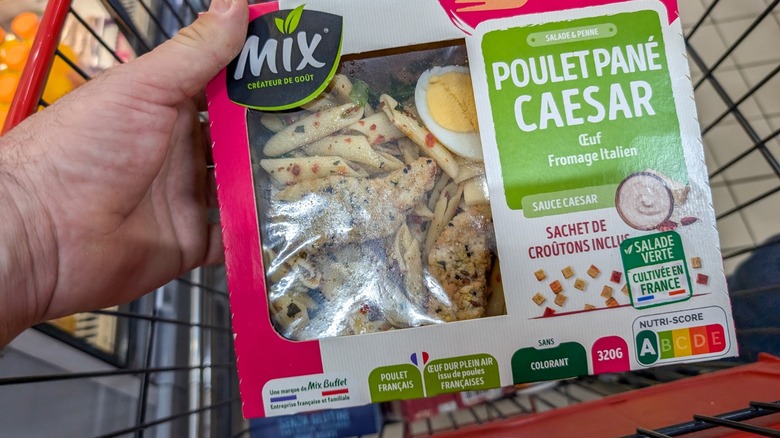
Pre-cooked chicken can feel like a total godsend convenience-wise, especially on those extra busy days when it feels like it would take superhuman strength to make anything more than a quick stop at the nearest grab-n-go case. We have all been there, which is why breaking this bit of news is no picnic in the park (which will decidedly have a more limited menu in a few seconds.) Sadly, it is the "ready to eat" (RTE) label on our poultry — yes, the same one that makes our lives so much easier — that is precisely why the protein poses a greater risk for Listeria.
Much like deli meat, although RTE poultry has been cooked, the contamination occurs after cooking. It happens — yep, you guessed it — during the processes of slicing, packaging, and storage. Listeria just loves it some deli countertops, and slicing machines. And when the now contaminated RTE poultry is then placed in the fridge, Listeria is left to go hog wild (chicken wild?) because it just thrives in colder climates. This means that when consuming foods like packaged chicken breasts, pre-made chicken salads, deli-style poultry, and even the cold chicken added to prepared meals, the chance of exposure is high, fam.
While this information doesn't necessarily mean you cannot reach for RTE poultry ever, it should make you mindful. Some good rules of thumb: Eat it sooner rather than later, be sure the fridge is cold and clean, and reheat your ready-to-eat item whenever possible.
Hot dogs
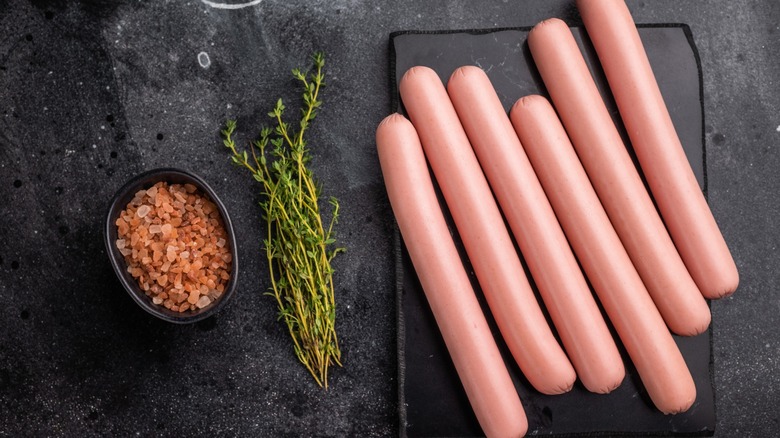
Hot dogs can be deemed extra dastardly on this list, as their looks can be quite deceiving. After all, hot dogs come already packaged, and pre-cooked, so they must be absolutely safe. Right? Wrong. Let's gab about our favorite franks.
While technically, hot dogs are okay to eat straight from the package they're sold in, the risk of Listeria still exists. There seems to be a growing pattern on this list, where an item — like hot dogs, in this case — will undergo a full cooking process, thus killing bacteria, only to be contaminated during subsequent steps before the ultimate sale. (Yeah, we're looking at you again, risky packaging or handling.) Another sticking point is that, because hot dogs are commonly categorized as ready-to-eat items, people don't always take the extra step to reheat them. (Think about the times you've added them willy nilly to cold snacks or makeshift meals. According to health experts, this is a no-go. Their recommendation is to reheat hot dogs until they're absolutely piping hot. This is the only assured way to effectively kill Listeria.
The landmines persist, however, with improper storage added to the risk list. Apparently, when left out at room temp, even for a short period, the risk of bacteria growth in hot dogs increases. Add to that the fact that, once opened, hot dogs' safe period of viability decreases quickly. After that, even freezing them won't eliminate the risk, though it sure might dampen the flavor, and quality.
Melons
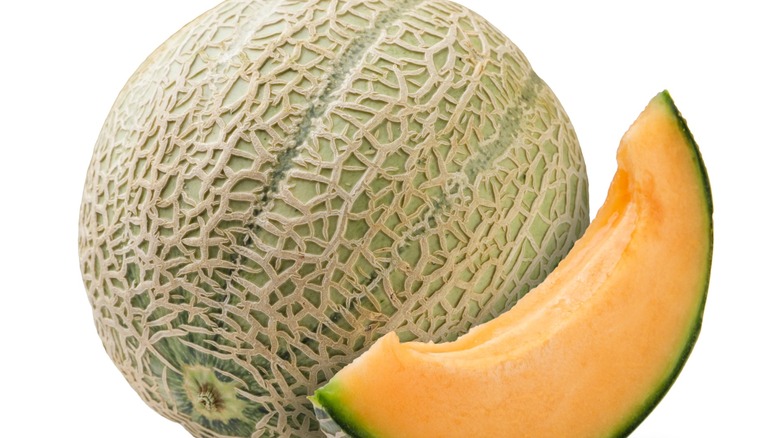
You've done it. You've kicked off that healthy eating plan, focused on incorporating more fresh fruits into your diet. Nothing can slow you down now — but wait, not so fast. That fresh, vitamin-packed melon may be bringing more to your table than top-tier nutrition. In fact, melons have been the reason behind some of the deadliest food recalls linked to Listeria, especially cantaloupes, and other netted varietals.
The red flag here is the composition of the outer rinds of the melons, which are more porous. And since melons are known to grow in soil on the ground, where Listeria naturally dwells, a few issues arise. Firstly, the textured nature of the melon rinds make it more difficult to properly clean away all possible bacteria, leaving that bacteria clinging to the rind via any crevice or cranny it can find in order to escape the wash. Then comes the next big problem: When we go to slice into the melon, any remaining bacteria will cling to our knife, then immediately spread into our melon fruit.
The danger only grows from there, as melons' low acidity makes them even more vulnerable to bacteria. Listeria can latch on, and grow, with any length of refrigeration only upping the ante. And that pre-cut melon from the store? That often poses the biggest risk, since it's already been handled by who knows who, and where, and how. If possible, purchase your melons whole, wash them thoroughly yourself, and eat them right after you slice.
Cold smoked seafood
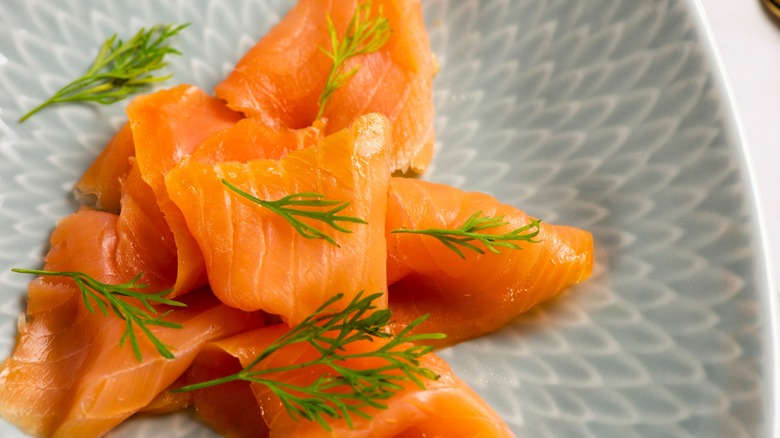
There is something about cold smoked seafood that just feels a little fancy. For that reason, our Sunday brunch spread of bagels would feel naked without it. We like to layer gravlax over avocado toast to increase its star quality, and add smoked salmon to, well, pretty much everything. It just feels right ... until it doesn't. And then you're writhing or retching in the bathroom mere hours later.
Before you throw all that fish into the soon-to-be-discarded bathwater, wait a minute, baby. The danger here lies in how the cold smoked seafood products are made, meaning that cooked salmon doesn't carry the same risk. While cold smoking creates smashing good products that taste incredible (looking at you, lox), it does little to crush bacteria. For this, you need high heat. That means that Listeria can be introduced at any and every step of processing, slicing, and packaging cold smoked seafood, without it displaying any of the telltale signs ... until it reaches your gullet.
Terms like lox, nova-style, or kippered are common descriptors indicating that a product has been cold smoked. These selections are often stored in fridges for days or weeks, which only gives Listeria even more time to move in, and really make itself comfortable. For safer seafood options, reach for shelf stable smoked fish or even canned smoked fish, which has undergone heat processing.
Pâté and meat spreads
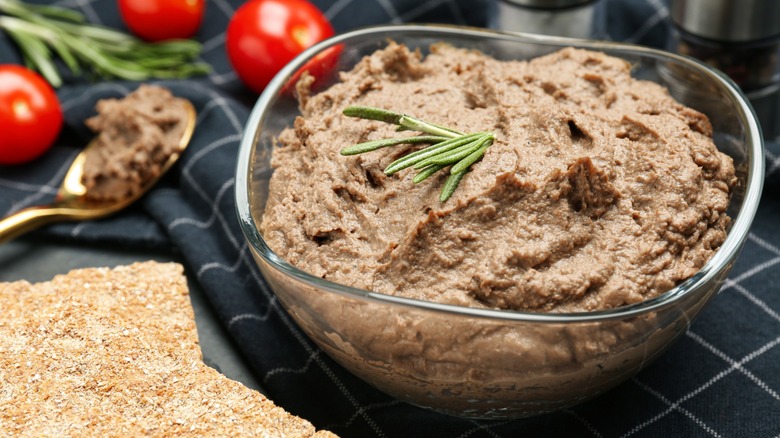
We can't talk about foods that feel a little fancy without mentioning pâté or other meat spreads that firmly land in that category. But while it may feel fantastic to roll up to that snobby coworker's holiday party with an elite appetizer that elicits audible awe, the potential risk accompanying the dish may not be worth the bragging rights.
While these spreads aren't necessarily hazardous when first whipped up, the journey from initial creation to actual plating is rife with risk. Refrigerated pâtés, and meat spreads in particular, are problematic as they aren't typically cooked again before consumption. This means that if Listeria is introduced en route via packaging, processing, or handling, there is nothing standing between you and that bacteria until it lands in your belly.
Suffice it to say, just like some really shady exes we've all dated in the past, spreads can start out as green flags, only to become glaring reds later on. The good news is that, just like in the dating pool of life, not all meat spreads need to be flagged for foul play. Shelf stable or canned meat spreads are generally safer, as they have been heat-treated, and sealed in airtight containers, both of which can curb Listeria contamination risk. So, when it comes to picking your next party spread, skip those bad boys in the refrigerated aisle, and stick with (shelf) stable options, because no snack is worth the heart (or stomach) ache.
Unpasteurized (raw) milk
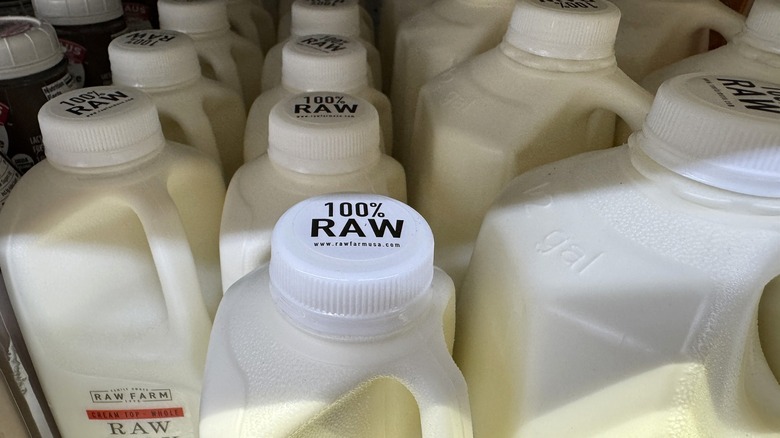
This next one is definitely gonna ruffle some feathers. It's a touchy, and tender, and (dare we say it?) raw subject for many. But while it may be trending on social media, toted as a miracle health hack, raw milk has a bad track record when it comes to Listeria risk. The problem isn't its nutrition, or obvious freshness factor (hello, talk about farm to table!) According to experts, the predicament instead lies in the pasteurization process — or, more specifically, the lack thereof.
You know pasteurization — the process that's literally designed to kill deadly bacterias lurking in our dairy? Thanks to Louis Pasteur, we know that we can heat milk to a certain temperature for an exact amount of time, and bad germs are nuked, while nutrients (and flavor) are left unfazed. Raw milk eschews this important process entirely, which means that — you guessed it — any, and every, minuscule bacteria that milk encounters on its long journey to cold storage (Listeria's fave) can glob on, and enjoy the ride straight to your next sip.
Now, before too many influencers or raw milk enthusiasts start writing angry letters: Outbreak data does not lie. Over the years, hundreds of illnesses, and hospitalizations, have been linked to raw milk consumption. And note, the shame or blame does not belong to farmers or reflect negatively on their practices per se, as even the most well run operations can't control natural microbes that exist — at least without pasteurization as an important precaution.
Raw sprouts
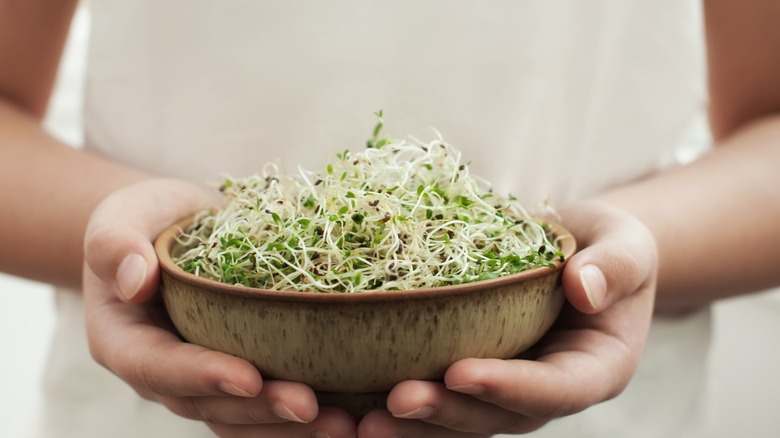
Just like with fresh melons, adding raw sprouts to your cart at the grocery store may give you a huge sense of pride. After all, they are jam-packed with nutrients. It's precisely the "raw" part of that equation, though, that can be problematic. Before you reach for a handful of those raw beauties to adorn your next salad or sandwich, stop for a second, and consider this: The way that sprouts are grown make these veggies particularly risky when it comes to Listeria contamination.
Specifically, the danger presents due to the fact that sprouts need warm, humid conditions in order to grow. You know what also thrives in these exact conditions? Bacteria, including Listeria. Even scarier than an initial contamination of sprout seeds while they're growing in the soil is the fact that, once the seeds are tainted, that bacteria can just keep multiplying as the sprouts themselves grow. And it gets worse. While other fruits, and veggies, have completely sealed outer skins or shells that we can wash, and then feel confident that we've rid ourselves of risk, washing raw sprouts can't reliably remove all doubt, as bacteria can end up inside, too.
Luckily, cooking changes the game, as heating sprouts will kill any Listeria, and render them safe to consume. Sadly, that still leaves the lovers of green salads, and sandwiches, with a tough choice to make ... and a beloved garnish that might just be "sprouting" more trouble than it's worth.
Pre-packaged salads
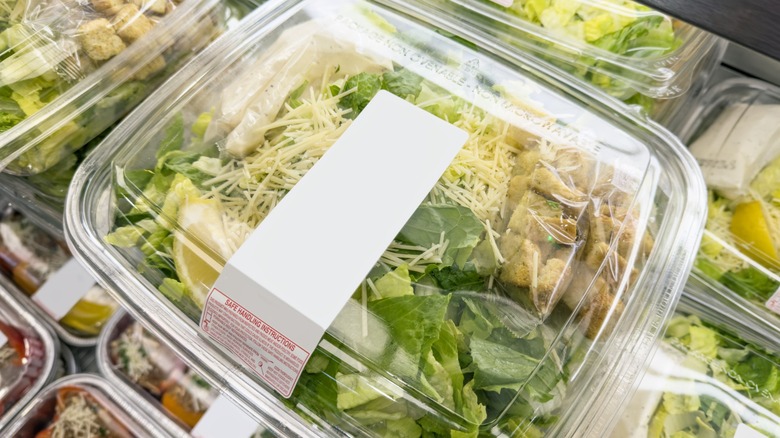
We've all been there, standing in front of the fridge with the predicament of what to reach for. We know that salad is always a stellar choice, but who has the time for all the washing, peeling, and chopping involved — especially when that leftover delivery pizza is just staring us down, with no prep required? It's just so much easier to reach for the slices.
This was a common pitfall before pre-packaged salads hit the scene. Now we have them, and they seem to be the miracle fix — but not so fast. While grabbing a bagged salad may feel like the healthiest choice, and it definitely earns kudos for convenience, the ready-to-eat item you're relying on to steer clear of last night's delivery might just deliver a heaping helping of Listeria.
As we've mentioned before, ready-to-eat meals possess particular food safety risks. To be more specific, once those salad greens are chopped, washed, and placed in ready-set-go packages, that's when the fun begins — for Listeria, not for you. We know that the labels declare the salads pre-washed, and ready to be eaten, but it's important to be mindful of how many opportunities Listeria has had to latch on, from initial harvesting to final bagging. The fact that no final heating happens before you enjoy your salad means that bacteria has been free to run amok, unchecked. By making your salads at home, where you control all the washing, and storage, you can significantly reduce the risk.
Soft serve ice cream

Sweet nostalgia often accompanies soft serve ice cream. Melting cones on lazy summer days with family, a chocolate dipped specialty while on a nervous first date, and myriad other fondly recalled reveries — soft serve ice cream has been a mainstay for most of us. This is why it stings a bit to bring you this PSA, and perhaps even crush some soft serve loving spirits out there.
The truth is, soft serve and Listeria are lovers. It's scandalous, we know. The attraction between the two lies in the fact that soft serve is stored, and dispensed, at temperatures higher than hard-frozen ice creams. These warmer temps create the exact environment that drives Listeria absolutely wild, leading it to latch onto soft serve with stalker-like tenacity. Once the door is opened for their relationship to kick off, Listeria never wants to let go.
What kick off this toxic pairing are dirty things — and not the fun kind. When a soft serve machine does not receive the meticulous, regular cleaning it requires, its every hose, nozzle, and tiny piece presents an open invitation for Listeria to make a love connection. Clearly, this does not mean that every single soft serve cone in the world is automatically in "stranger danger" territory; well-maintained machinery can be absolutely fine, and dandy. But it does mean that every time you reach for a cone, you're gambling with many unknowns out of your control. Only you can decide your tolerance for risk.