

Give Canned Tuna A Fancy (And Easy) French Flare Using The Confit Method
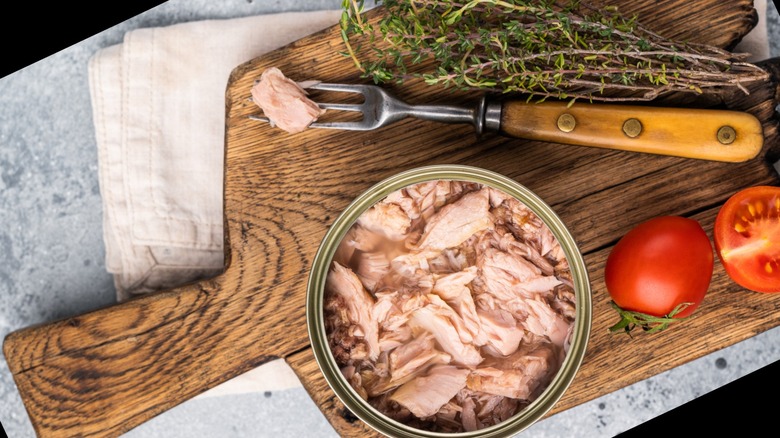
Canned tuna is like a reliable friend. It's adaptable, always there, and easy to deal with ... but it's not exactly glamorous. Well, what if that reliable friend went on a spontaneous weekend trip to Paris, picked up some of the language, and started wearing a beret? That's basically what happens when you give canned tuna an upgrade by turning it into a classy, French-inspired confit.
Originally used as a preservation technique for meat like duck or goose, a confit involves gently heating foods in oil at a low temperature for a long period. These days, cooks confit everything from fish to vegetables like garlic and onions, and the technique itself is a byword for quality cooking. And yet, according to Matt Gaudet, chef at Boston seafood restaurant Saltie Girl, using the confit method at home is super simple when working with canned tuna.
In fact, Gaudet noted, "Canned tuna is likely confit already [if] it is packed in oil. If you want to confit it coming out of the can, you could merely warm it up again ... " For a flawless tuna confit, don't forget to add your chosen flavorings and garnishes before warming.
Why you should bother with tuna confit, and how to do it
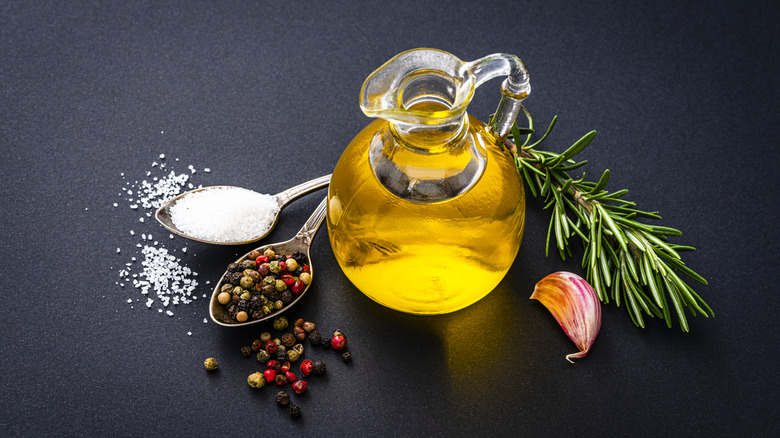
Although canned tuna is likely already confited, repeating the process is far from a waste of time. As chef Matt Gaudet put it, " ... When [we] confit in oil, the richness is preserved or even somewhat enhanced by the additional fat." This means using the confit method will turn your canned tuna from a go-to sandwich filling into a decadent, flavorful fish dish worthy of prime placement on a dream seacuterie board or star billing at a dinner party.
When you confit tuna, you also get to adjust its flavor profile to suit your palate. Gaudet suggested using a good-quality flavored or infused oil in the confit, along with "a selection of your favorite seasonal herbs and citrus zest, or favorite spices." As the oil warms, these will gently perfume it so the flavor gets deep into the dish. Describing the process of confiting, the chef likens it to giving your tinned fish a "nice, warm, seasoned bath." In other words, avoid heating your oil too aggressively — low and slow are the basic principles of a good confit, and temperatures should stay under 200 degrees Fahrenheit. If you crank up the heat too much, your tuna will simply fry, and that's far from chic.
Tuna confit can be served in a variety of ways, but as it's very moist and the oil is delicious in itself, good-quality bread pairs well with it. Fresh ingredients like salad vegetables and pickles are solid bedfellows for confits, too, as they cut through the richness of the sumptuous fish and oil. Is this a description for a tuna sandwich? It could be, but it would be a really, really good tuna sandwich.