

The Skin-Irritating Weed That's Packed With More Calcium Than Milk
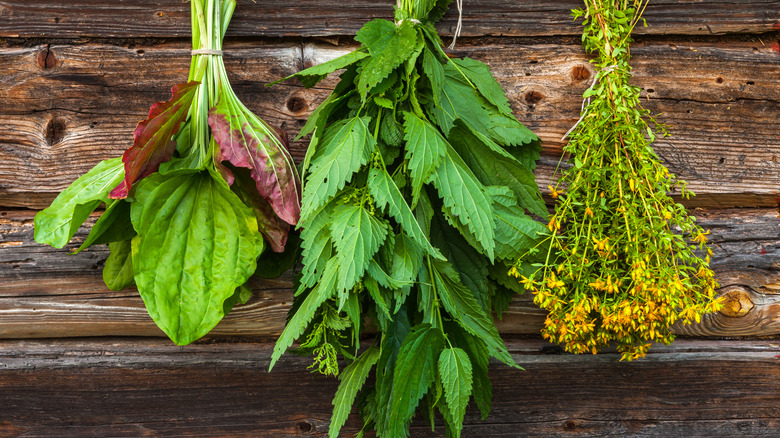
While the new U.S. dietary guidelines recommend we eat more full-fat dairy products, I'm going to increase my intake of weeds instead to meet my calcium needs — nettle leaf weeds that is. If you're not familiar with nettle leaf, also known as stinging nettle due to its skin-irritating properties, it's a tall weed that has been used as herbal medicine for thousands of years.
Some research suggests that nettle leaf could have anti-inflammatory effects and potentially help manage blood pressure, blood sugar, and cholesterol — its lesser-known attribute is its rockstar calcium content. Among the foods with more calcium than milk, 8-ounces of blanched nettle leaves contain 428 milligrams of calcium, compared to 275 milligrams in the same amount of whole milk — that's approximately 56% more calcium.
For some, a glass of milk may sound slightly more appetizing than consuming a weed. However, particularly in Europe and Asia, nettle leaves appear in soups, curries, and salads. They can be ground into a powder to be used in bread dough or steeped in water to enjoy as tea. For those who don't drink milk or consume dairy products, sipping on a cup of nettle tea can be a great alternative to help you meet you calcium needs. Nettle leaf also contains vitamins A, C, K, and various B vitamins, as well as iron, magnesium, phosphorus, and potassium.
How to prepare nettle leaves
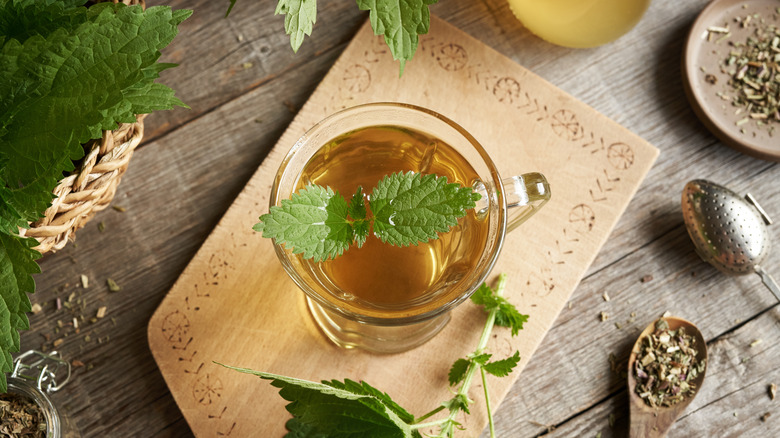
You can grow your own nettle leaves, forage them, or purchase them fresh or dried at farmers markets or herbal stores. Make sure to wear gloves whenever you're handling fresh nettles to protect yourself from stings.
The step you can't skip when cooking stinging nettles is blanching or drying the leaves first — this processessing is necessary to rid the leaves of their stinging effect. Boil them in a pot of water for a few minutes and then dunk them in an ice bath. Alternatively, you can air dry the leaves in a well-ventilated area away from direct sunlight for one to two weeks. An oven or dehydrator set at around 100 degrees Fahrenheit will also work well — it will take around 8 to 12 hours for the leaves to become fully dry and crisp. After processing, the leaves can be used immediately or stored in the fridge or freezer.
To make a calcium-packed glass of nettle tea at home, add either 1 teaspoon of dried or 1 tablespoon of fresh nettle leaves to 10 ounces of boiling water — you can also add other complementary herbs like mint. Remove the tea from the heat and let the leaves steep for 5 to 10 minutes. Once the tea is as strong as you like it, add your favorite sweetener or a squeeze of fresh lemon; enjoy hot or over ice.