

The Easy Way To Achieve Mexican Al Pastor Flavors At Home Without A Spit
We may receive a commission on purchases made from links.
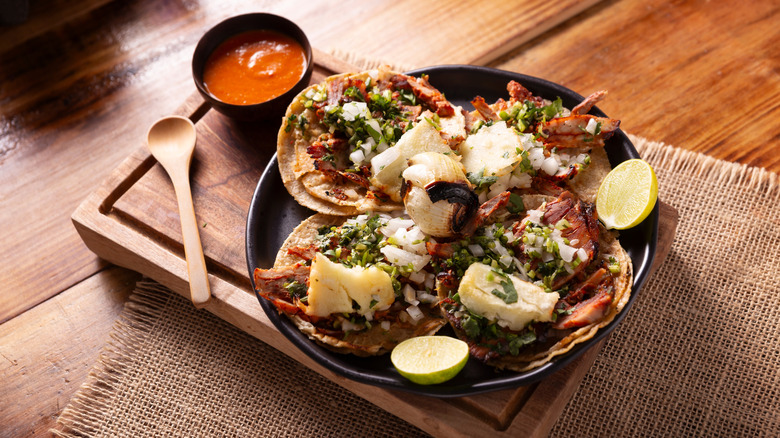
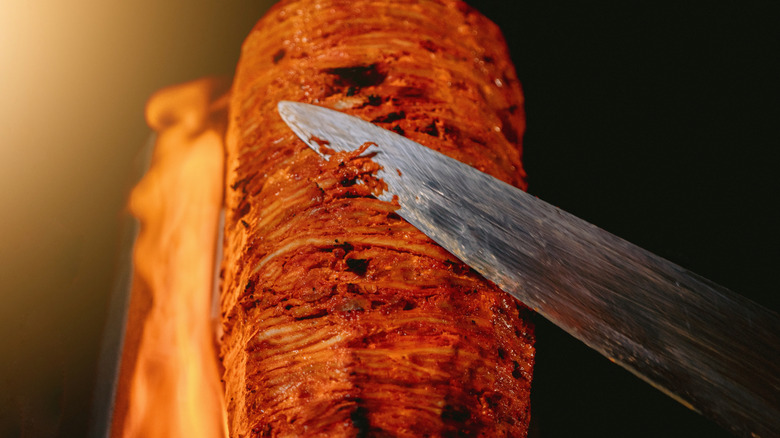
Every Mexican food aficionado knows al pastor, and almost everyone who knows it loves it. But real al pastor is cooked so specifically that it can be an intimidating dish to recreate at home. Within Mexico, large spits of al pastor meat turn on almost every street corner, topped with pineapple, cooking in the open air. The spits are known locally as trompos (named for a spinning top toy that's a similar shape). They're a little bit like a rotisserie, but vertical rather than horizontal.
For al pastor, trompos are usually layered with slices of pork, often fat-marbled cuts to help maintain flavor and moisture while the spit sits turning in direct heat that results in flavorful browning on the outside of the skewered meat via the Maillard reaction. The meat is marinated in pineapple juice and a paste usually made of achiote, deep, fruity chiles, and various spices, which permeates every layer stacked on the spit.
Get this marinade right, or as close as possible with ingredients available to you, and you're halfway to great al pastor. The rest, of course, is in the cooking technique, but if you don't have a rotisserie attachment in your air fryer, all is not lost. You can simply build a DIY spit using a skewer, and cook your pastor in the oven or on the grill for those classic Mexican al pastor flavors wherever you are in the world.
Building your pedestal skewer and perfectly cooking your pastor
If you're willing to spend a little money and wait patiently for a Prime delivery, you can purchase a vertical skewer in the size that works for you from DOLAMOTY on Amazon. If you'd rather work with the tools you have, though, you can make a spit using a thick wooden or metal skewer. Skewers with looped ends won't work, as they have to sit on the surface of a roasting tin or low-sided oven-proof pan.
To assemble your DIY spit, push a thick disk of grilled pineapple down the skewer to create a firm base. From here, add marinated pork slices on top of the pineapple in layers until you're almost at the top of the skewer. It's best to keep them a uniform size so that they cook at the same rate. Finally, top your homemade trompo with a final slice of pineapple to hold things in place and have the sweet juice drip down the pork while it slow-roasts in your oven or closed grill. For added smoky flavors, you can roast the pork skewer over hardwood charcoal.
When it's ready, your pastor should be caramelized and perhaps even a little charred on the outside. Remember to properly check the internal temperature of the pork with a meat thermometer, and, if grilling, keep the cooking temperature consistent using a grill thermometer. Once cooked, rest the meat for a few minutes before thinly slicing down the edge of your trompo to create shavings of meat, and tossing them in the juices collected in your pan. Traditionally, pastor is served in corn tortillas along with some slices of the pineapple that topped the trompo, diced cilantro, diced raw white onion, and a squeeze of lime.
Choosing the right ingredients for your DIY al pastor
For real pastor flavors, a DIY spit does a lot of work. But if you want to kick things up a notch, choose the right cut of pork and create a fitting marinade, too. Pork shoulder and sirloin are both great choices of meat, as they're well-marbled but not too fatty. Use whichever is available. Sirloin will be easier to slice thin, but if you buy your meat at a butcher's rather than a grocery store, you can probably ask them to slice it for you.
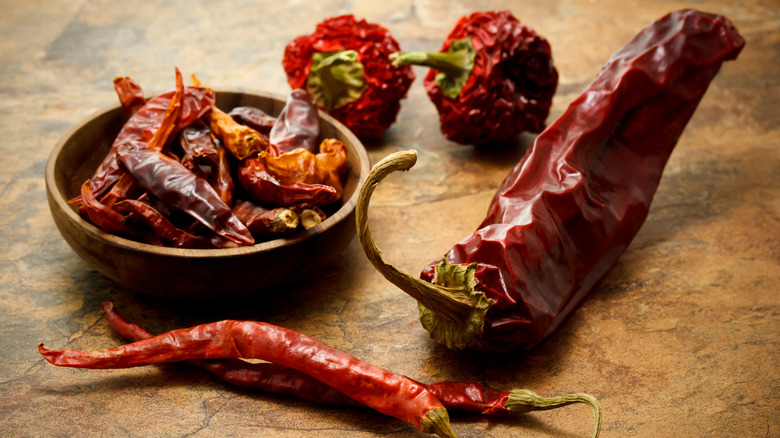
The marinade usually contains dried guajillo and sometimes ancho chiles along with chipotles in adobo and zingy achiote paste. Garlic and bay leaves are popular aromatics, while many people add canned pineapple juice along with spices ranging from cumin and black pepper to cinnamon and cloves. You might need to experiment, but while you want your pastor to taste like Mexico, remember that it's not a completely fixed flavor profile.
Eaten all over the U.S. and Mexico, al pastor is Middle Eastern shawarma reinvented, but as lamb (pastor means shepherd) isn't eaten in Central Mexico, pork took over. With all that in mind, there's nothing wrong with swapping chicken for pork, using plant-based meat if you're vegan, serving the pastor in a salad or sandwich, or making the marinade your own. Just remember to adjust cooking time to suit your new ingredients. And if you stray too far from traditions, you might need to come up with a new name — al pastor barely makes sense as it is.