

No, You Really Shouldn't Sharpen Your Blender With Eggshells — Here's Why
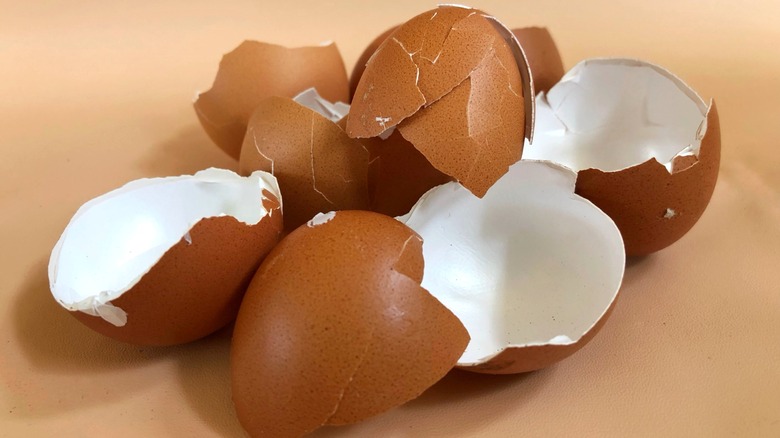
There's something to be said about heeding the wisdom of previous generations — just make sure to avoid falsehoods portrayed as sage advice. Some old-school kitchen hacks are about as reliable as the questionable culinary tips on social media (No, TikTok, pickles in Dr Pepper isn't good, and sharpening kitchen knives with aluminum foil doesn't work). One tidbit of knowledge that was passed down over time, and was somehow accepted as legitimate, insists that putting eggshells in a poorly functioning blender will sharpen the blades and improve its performance. Yet, according to Matt Abdoo — the executive chef and co-founder of Pig Beach BBQ featuring locations in Boston, New York, and Florida — the whole concept is a bunch of hooey.
While the idea might seem plausible at first glance, running a blender with eggshells could do more harm than good. "I don't believe blending eggshells sharpens blades -– if anything, it does the opposite by slowly dulling or damaging them over time," Abdoo said. "It's one of those kitchen myths that sounds clever, but is actually misleading."
The truth is, blender blades aren't supposed to be all that sharp in the first place. "They are more blunt and designed to create a vortex to bring whatever you are pureeing to pulverize it," Abdoo said. Well, if dull blades aren't to blame, why isn't my refreshing breakfast smoothie coming out with a consistently creamy texture? "If you are having any issues with your blender not performing well, it is usually due to a worn-out motor or bearings, a low-horsepower model, or worn or broken seals preventing that vortex from being created at the highest level," Abdoo explained. "Rarely is it due to the blades not being 'sharp.'"
Forget eggshells – focus on a robust blender vortex
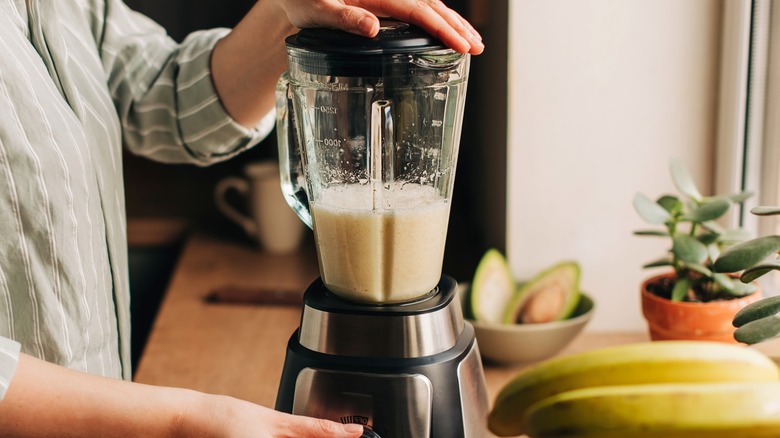
Tossing eggshells in a blender in hopes they will sharpen the blades is an exercise in desperation that's destined to end in disappointment (and a word to the wise, ice cubes won't sharpen blades either). Matt Abdoo recommends taking a different approach with a blender that isn't living up to expectations. Because dull blades aren't typically the problem, it's best to concentrate on filling it correctly.
"Very commonly, blenders are overfilled, not allowing for that full vortex to form and thus resulting in poor performance," Abdoo said. Besides avoiding a heavy hand when adding ingredients to the appliance, Abdoo shared a couple of other tips to help the blades pulverize anything that gets in their way. "For blenders that have variable speeds, it's always best to start on low and work your way up to high to fully establish the best vortex possible," Abdoo said. "Finally, add liquids in first to help establish that vortex so you are not starting with large chunks that have to be worked down before the true pureeing can occur."
Despite dull blades not generally being the culprit behind lumpy blender fare, they do wear down over time. However, figuring out a way to sharpen them isn't the ideal fix. "If there is an issue with the blade, typically it is best to send out for a new blade assembly, which can be swapped out by unscrewing the base and screwing the new blade assembly in," Abdoo said. "It is much cheaper than buying a new blender and will have a great result."