

The Foolproof Way To Organize Your Fridge (And Cut Down On Food Waste)
We may receive a commission on purchases made from links.
What if I told you that organizing your fridge wasn't just for aesthetics, but could actually save you money? Oftentimes, food and beverages are stored in the fridge with no rhyme or reason, allowing perfectly good items to get pushed toward the back or stored in improper places only to be forgotten. And we all can guess what happens next: spoiled food tossed in the garbage, along with the hard-earned money spent to buy it.
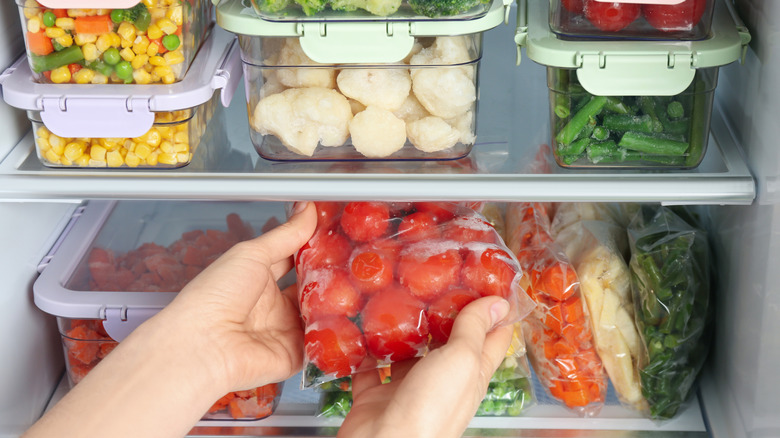
One of the simplest ways to prevent this from occurring is to categorize items and store them in containers and bins. This organization method makes it easy to see what you have, but also helps temperature-sensitive food stay fresh longer when placed in the right spots in the fridge.
First, go through your refrigerator and ensure there's no spoiled food or items past their expiration dates. As you do this, group your items based on their type — condiments, salad dressings and marinades, juices and waters, dairy products and eggs, raw and cooked meats and seafood, and vegetables and fruits. Before buying new containers, get creative with the bins you already have hiding in your cupboards. Clear containers make it easy to see what's inside, and glass is ideal since it won't absorb or transfer odors like plastic can. For example, glass mason jars can be great for storing leftovers and prepping meals, or can hold packaged items like cheese sticks.
Where to put what in your fridge, how, and why
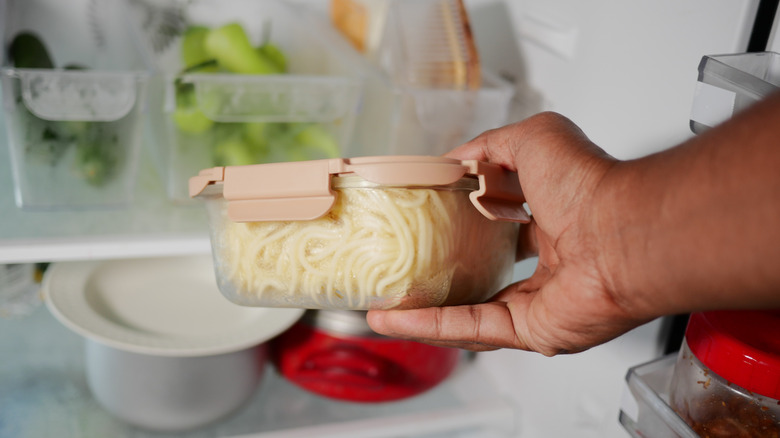
Now that you have your groceries sorted and containers ready to go, how you organize your fridge is key to cutting food waste. The warmest places in the refrigerator are the top shelf and the door, making them best for items that are less likely to spoil. Place prepared or cooked foods like leftovers on the top shelf, and non-milk beverages, condiments, dressings, and marinades in the door.
For fridges without a designated egg and dairy section, place these products — cheese, butter, yogurt, or cottage cheese — on the middle shelf. Store each item in its own bin for easier access and a neater appearance. Milk should go in the back of the fridge, where it can stay cold. Refrain from following ridiculous egg-storing hacks — instead, transfer them to a bowl or an egg container like this crate. Raw and cooked meats should be stored on the bottom shelf. You can use casserole dishes or opt for bins specifically designed for meats. Store deli meats in separate airtight containers or wrap them tightly in plastic wrap.
If your fridge has crisper drawers, keep produce like apples, pears, and avocados in the low-humidity drawer. Store strawberries away from these fruits that produce ethylene gas, since berries can be sensitive and spoil quickly. Produce prone to wilting — like leafy greens and herbs – should be placed in the high-humidity drawer. For fridges without crisper drawers, you can purchase containers like this Femoliyes refrigerator organizer or these stackable refrigerator drawers. After a few weeks, you'll fall in love with how streamlined your fridge feels — and how much less food goes to waste.