

For The Crispiest French Fries, Don't Reach For A Fresh Bag Of Potatoes
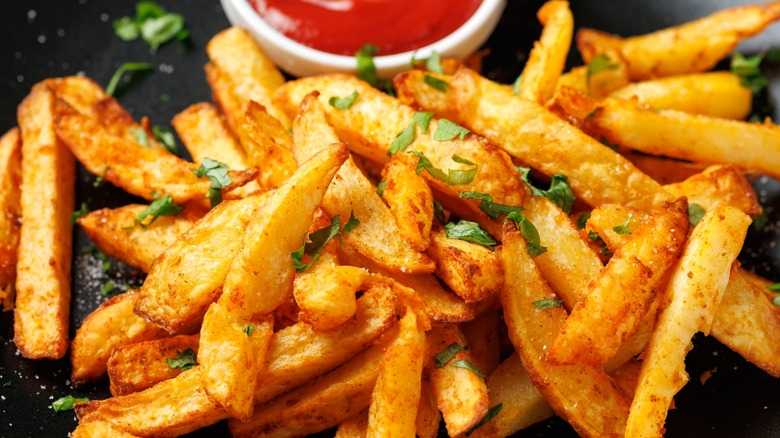
For being such a beloved American staple (it probably comes as no surprise that they are McDonald's best-selling menu item) french fries really don't have that much going on. One primary characteristic that keeps folks reaching in for another helping is crispiness. Without that crunch, a french fry is really just a bland, limp veg saturated in oil. Unfortunately, achieving that very feature is what often vexes people attempting to make them at home. The Takeout asked Edmund "Ed" McCormick, the founder and CEO of food science company Cape Crystal Brands, for some tips on making the crispiest french fries around, and he stressed that the makeup of the potatoes themselves deeply impacts the crunch factor.
Instead of trying out the latest oil trick for crispy at-home fries, look first to how old your potatoes are. "As potatoes age, some moisture is lost, and starch concentration effectively increases," McCormick said. "That helps crisping." However, McCormick cautioned, "That's not the same as 'the older the better.'"
Potatoes don't age like a fine wine. While their starch content may rise as they sit around, it doesn't happen in perpetuity. You want those spuds to reach the sweet spot before hitting the point of no return. "You want a potato that's slightly dehydrated, not shriveled. Firm, maybe a little dull looking," McCormick said. "Once it's heavily sprouted, soft, or smells off, you're past the useful window."
For crispy french fries, treat potatoes right
Folks can get a head start on increasing the starch within their spuds by purchasing russets, which are lauded as the best potatoes for making french fries because of their elevated starch content. Aging them on top of that is a solid tactic, but don't assume you can rush the process. Even if your only goal is to transform those spuds into extra crispy bites of goodness, Ed McCormick said they still need to be stored properly. "Store older potatoes cool, dark, and dry. Not in the fridge," he said. "Refrigeration changes sugar levels, which can lead to excessive browning and off flavors when fried."
Some folks may have heard that putting a potato in saltwater and seeing if it sinks will clue one in to the starch content within the veg, but McCormick warned people not to take too much stock in that hack. "The saltwater test gets exaggerated online. Denser, starchier potatoes will sink faster, but it's a blunt tool," he said. "I've tested this before; variety matters more than the float test."
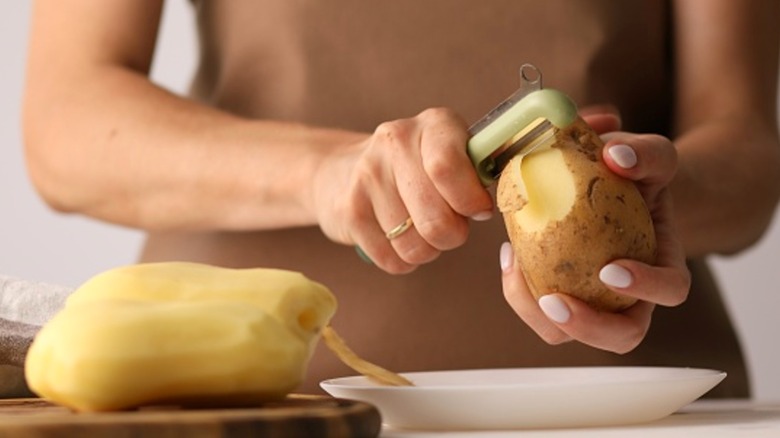
Still, even if you're sure you have starchy potatoes in hand, they won't make perfectly crispy french fries if certain procedures aren't adhered to when preparing them for the oil. The overall process of making french fries at home impacts the crispiness more than any singular factor. "That's usually where these fry conversations go sideways, people focus on one trick instead of the whole chain of steps," McCormick said. "Peel if the skins are tough, rinse or soak to remove surface starch, dry thoroughly, and fry in stages if possible," McCormick said. "Even with good potatoes, sloppy prep ruins crispness."