

You May Want To Avoid Stone Crabs If They're On A Seafood Menu — Here's Why
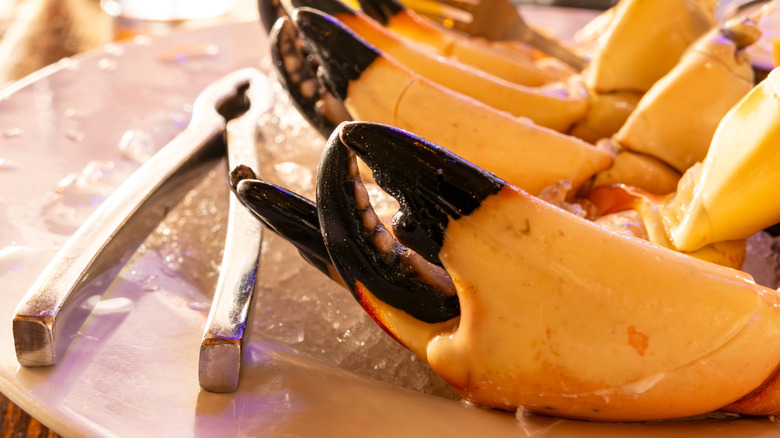
Crabs are common critters across the globe, and crabs harvested for seafood come in a wide range of prices: canned crab is much cheaper than fresh crab, while stone crab claws can fetch luxury market prices. If you're in Florida though, where nearly all stone crabs served in the U.S. come from, it's perhaps best to avoid them on a restaurant menu. According to the Monterey Bay Aquarium Seafood Watch database, which tracks ethical practices in the fishing and seafood industries, the Gulf stone crab and Florida stone crab are both presumed to be overfished along the Gulf of Mexico and central Atlantic Ocean.
These stone crabs are caught by traps laid along the seafloor, and then fishing crews remove the crabs' claws before tossing them back, alive. Even though returning them to the water sounds like it would sustain the crab population — and stone crabs can regrow lost limbs — this regeneration takes several rounds of molting and most wild crabs have a drastically lower chance of survival after being fully declawed. Beyond that, Seafood Watch calls out some of these Florida-based fishing operations for lacking safeguards against overfishing in general (though businesses in the industry still insist stone crab harvest is done sustainably), and for carelessly capturing and harming federally protected bottlenose dolphins while crab fishing.
Declawed stone crabs struggle to survive
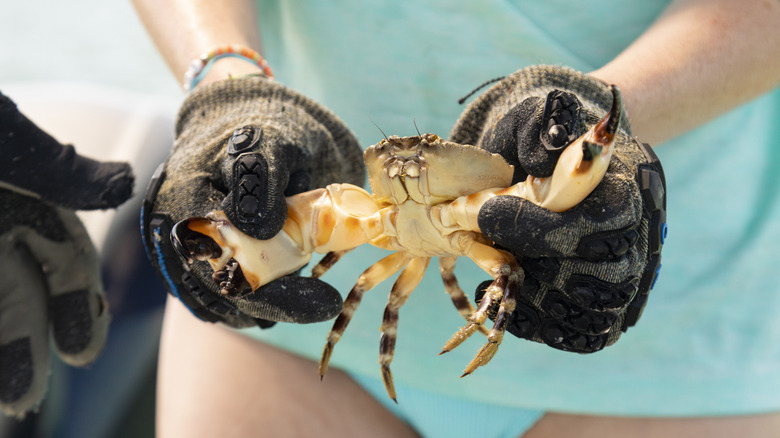
Stone crabs aren't especially difficult to find, particularly as you get close to Florida, but they're certainly not cheap: bargain prices can be $30 per pound for crab claws, while market price usually adds an extra $10 per pound, at minimum. They're considered a delicacy because there are already government regulations in place which restrict stone crab fishing season from mid October to May; and a stone crab's claws must be at least 2 ⅞ inches long before it can be harvested. Despite the rules already in place, stone crab populations are still declining. Rising sea temperatures could be contributing to this, as a declawed crab has an even lower chance of surviving in hotter waters than in cooler waters.
All of this likely raises a natural question: what might you eat instead? Short of biting into imitation crab meat made of minced fish, you still have options. Along the East Coast, the Monterey Bay Aquarium Seafood Watch suggests that blue crabs caught farther north in Alabama, Delaware, Maryland, and New Jersey are the best options. (Further south, blue crab fishing traps run a bigger risk of catching vulnerable diamondback terrapin turtles by accident). Blue crabs are a popular choice for crab boils, but their claws alone can be slightly cheaper. On the West Coast, you'll find a wider variety of sustainable options for crabs from the Pacific, like Dungeness and rock crabs, so you won't have to miss out on your favorite seafood while restoring the populations of the sea.