

The Unexpected US State With A Rich Whiskey History
Nearly every state in the union has at least one whiskey distillery (even Utah, which barely drinks alcohol for religious reasons), but there are two states, Tennessee and Kentucky, that are widely recognized as the leaders in whiskey production. After all, there's no classic country song called "Rhode Island Whiskey." For a number of reasons, Kentucky produces the vast majority of bourbon in the United States. But just as North Carolina was once the bourbon capital of America, there's another state that's had a rich, spirited history: Pennsylvania.
The Keystone State is renowned for its rye whiskey which was often used for bartering with Native Americans before becoming one of the young nation's most popular spirits following its independence from Great Britain. Although rye was not usually the first choice for whiskey distillers, the Scottish and Irish immigrants who settled in Pennsylvania made do with the hardy crop and turned it into a lucrative and (for a time) iconic industry. The distilleries along the Monongahela River were famous enough that they are mentioned by name in Herman Melville's "Moby-Dick" (a book which also inspired the name for Starbucks).
Prohibition destroyed Pennsylvania's whiskey industry, but it's making a comeback
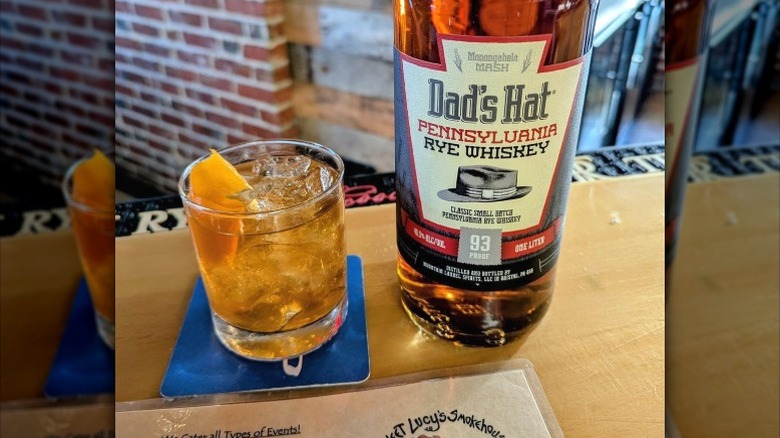
So, what happened to Pennsylvania's place in whiskey culture? Well, Prohibition certainly didn't help — it was a challenging time for just about everybody who made alcohol, and Pennsylvania rye distilleries were no exception. Adding to the problem, the U.S. government began to heavily subsidize corn around the time Prohibition was repealed. Corn was less finicky than rye, and considerably cheaper, which meant most distilleries switched to it. There are a few surviving remnants of rye whiskey's heyday, including Michter's and Old Overholt, but both are now produced in Kentucky.
But what is dead may never die, and a new crop of Pennsylvania rye distillers is trying to keep the tradition alive. There's Dad's Hat, a distillery based in Bristol, Pennsylvania which incorporates the classic 80% grain and 20% malt recipe that sustained the state's rye makers for over a century. There's also Stoll & Wolfe, an old-school distiller in Lancaster County that uses a mix of rye and corn as well as Eight Oaks Distillery, which focuses on sustainability and heritage grain. We'll raise a glass to that.