

If You See This Fish On A Seafood Menu, It's Best To Avoid It Completely
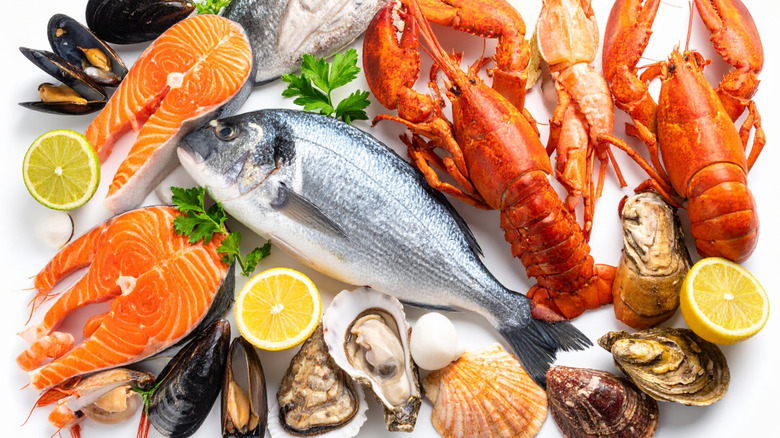
For those with minimal experience eating it, knowing the difference between good fish and bad fish can be a bit challenging. While restaurants are generally more capable of cooking up delicious fish than you can at home, there are certain types of fish that, if you see them on a menu, you should skip regardless of the quality of the restaurant. It's well-known that avoiding certain types of cheap fish is a good habit, but one red flag fish that you should look out for is the Atlantic cod.
Atlantic cod is one of the two most popular species of cod, alongside the much better-to-eat Pacific cod. If you see Atlantic cod on a restaurant's menu in any form, you're better off avoiding it altogether as the fish has experienced extreme overfishing in recent years. We spoke about this with Eric Fernandez, the associate director of culinary at The Culinary Edge, who explained what to expect from Atlantic cod and why it's best not to buy it. "In U.S. waters, major Atlantic cod stocks (Gulf of Maine and Georges Bank) have been overfished for decades, with severely reduced quotas on fishing that has really shrunk the size of the fishery itself," Fernandez noted. "Don't order it unless the menu (or staff) can tell you exactly where it's from and how it was caught — line caught is best, but is rare."
Why it's important to avoid eating overfished seafood
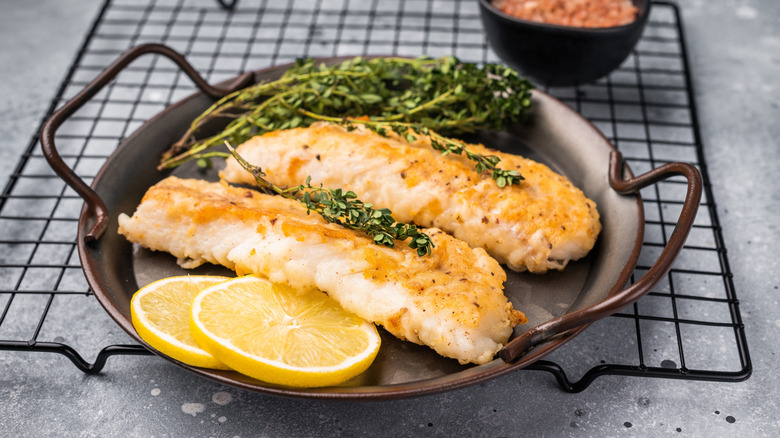
Many people think overfishing is purely an ecological and environmental issue (which it most certainly is), but it also has an impact on the quality of the fish that arrives on your plate. As Fernandez noted, overfishing (which often affects larger, more valuable fish) has resulted in exclusively smaller Atlantic cod being left in the ocean, and far fewer of them at that. Overfishing has been such a problem in recent decades that the species has rapidly evolved to produce offspring that mature to a smaller size to avoid being fished. These evolutionary changes and dwindling populations have been the outcome for many different fish species in recent years and are one of the biggest reasons why sustainability has become such a major issue to address in the seafood industry.
Keeping sustainability in mind when at a restaurant is ideal for both the environment and the quality of your meal, and avoiding Atlantic cod is one of the first steps to doing so. Luckily, Fernandez noted that lovers of cod dishes can find sustainable alternatives to the overfished species if they look hard enough. "Haddock, Alaska pollock, hake, whiting, and (often) Pacific/Alaskan cod can deliver a similar flaky, mild profile," Fernandez reminded. "Sustainability depends on fishery/gear, so look for a named source and catch type."