

The Unique Struggles Seafood Restaurants Face
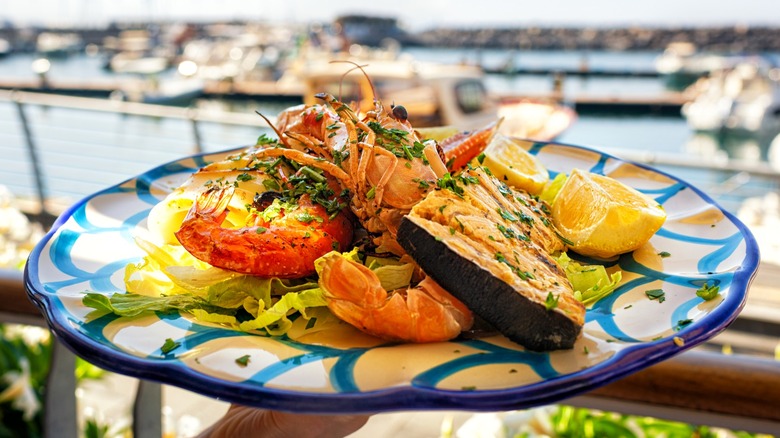
Owning a restaurant is not for the faint of heart. Working demanding schedules for what are often razor-thin profit margins is just how the industry operates. Couple that with the fact that roughly 8 out of 10 restaurants shutter their doors within five years of opening and it can be an intimidating, stressful undertaking. Some establishments, like those that serve seafood, have a unique set of challenges that can exacerbate that stress.
One of the struggles seafood restaurants face is sustainability. Customers are largely aware of overfishing practices and prefer to see menu items sourced from abundant populations in a way that has a limited negative impact on the environment. Yet, customers aren't always educated about which types of fish are sustainable. Salmon farms were designed to reduce the effects of overfishing, but some claim the industry is doing more harm than good by releasing antibiotics and diseases into local ecosystems. This has created uncertainty around eating farm-raised salmon. Salmon farms are striving to correct course by utilizing indoor tanks which won't affect natural ecosystems while many proudly display an ASC (The Aquaculture Stewardship Council) certification on their products as proof they comply with rigid environmental guidelines.
Still, while some folks don't have any problem ordering farm-raised salmon, others will snub an establishment that doesn't source and serve wild-caught, which costs more. That cost is inevitably passed down to the customer, creating a conundrum of sorts for seafood restaurants. On the one hand, people want sustainable options. On the other, they don't want sticker shock when presented with the bill. These aren't the only challenges seafood restaurants encounter, either.
More challenges for seafood restaurants
Offering customers seafood that's in season can help blunt the financial impact of sustainable sourcing, but then another challenge rears its head. Attempting to sell dishes featuring only seasonal ocean fare requires constantly changing the menu. That presents a chore to the staff, but it also leaves patrons with inconsistent menu choices which they may not appreciate. Many people are hoping to see crowd-pleasers like calamari and lobster in a seafood restaurant, but if they only serve in-season fare those won't be on the menu year-round. So, again, there is a choice: Serve farmed fish that's readily available year-round (which isn't necessarily a sign of a bad seafood restaurant) or risk losing customers over unpredictable menu options.
One somewhat odd challenge that seafood restaurants and the seafood industry as a whole has to deal with is branding. For example, the Spiny Dogfish (a species of shark) has a thriving population and tastes incredible, according to seafood aficionados. And yet, many people are unfamiliar with the unappealing name and would have to be feeling adventurous to order it off a menu.
Likewise, if a restaurant owner were to proudly display Patagonian Toothfish on a menu, it wouldn't be surprising to see folks turn their noses up at the option. That's why the Patagonian Toothfish was rebranded. Today, people pay top dollar to enjoy a dish featuring Chilean sea bass, the name someone wisely chose to replace a moniker that sounds like you're going to be served some sort of monstrosity. Given all the unique factors they face, it's no wonder so many seafood restaurant chains are struggling these days.