

Is Cardboard Microwave Safe? What You Need To Know Before Hitting Start
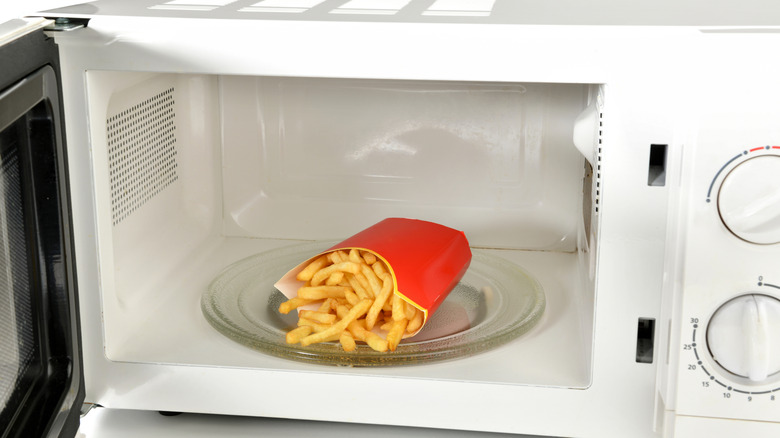
When reheating leftovers, it can be tempting to leave the food in the cardboard box when you pop it in the microwave. Before you do this, it pays to know what kind of cardboard you're dealing with, because it might be one of the many things you should never put in a microwave. There's more than one type of cardboard container that shouldn't be microwaved, with the reasons ranging from fires to chemical leaching. Thick cardboard boxes, like personal pizza boxes, can be highly flammable. The dry material and the amount of grease that's usually soaked into the box make them a fire hazard when exposed to extremely high temperatures. If the box has any metallic ink on it — usually the logo and phone number — or a plastic or wax coating, it can cause sparks and ignite the cardboard.
Aside from the fire risk, some cardboard boxes can leach chemicals into your food when microwaved. Containers with adhesives, wax coating, or plastic lining can melt under the intense heat and release chemicals that shouldn't be consumed. Cardboards with inks and dyes, potentially containing volatile organic compounds (VOCs) or heavy metals, can also get into your food once heated.
You should also refrain from microwaving any cardboard containers that have metal handles, such as Chinese takeout boxes, unless you want a guaranteed disaster. Not only is reheating non-microwave-safe cardboard a microwave mistake that will ruin your food, but it could also cause other major damage at the same time. This doesn't mean that all cardboard containers aren't microwave safe, though.
What kind of cardboard is microwave safe?
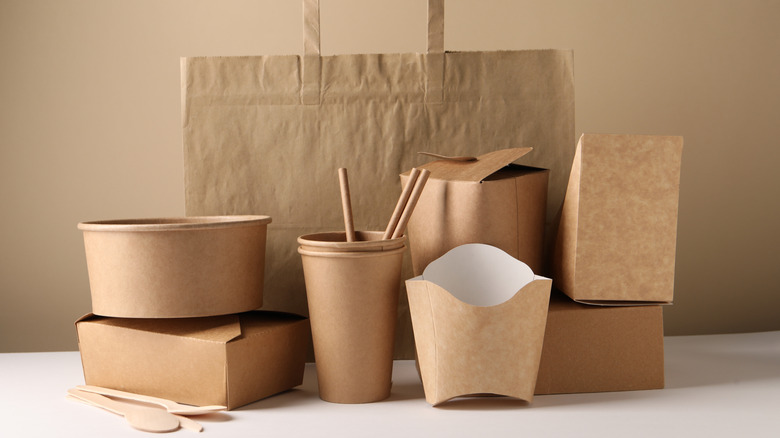
Cardboard containers that are typically microwave safe are those that are made of pure cellulose, a plant-based fiber that can withstand temperatures up to 400 degrees Fahrenheit without releasing any chemicals. Some other common microwave-safe containers include molded fiber takeout boxes, usually made with compostable plant-based fibers like sugarcane, and paper plates made with pressed paper pulp — though, it's always a good idea to check the label before microwaving just to be sure.
When checking whether a container is microwave-safe, the label can vary slightly, but generally consists of a few horizontal wavy lines over a rectangle symbolizing a microwave, and the words "microwave safe," or "microwave oven safe." However, not all containers will have such labels, or the label will be on the packaging that houses the food storage boxes or paper plates, and not the boxes or plates themselves. If you don't see a label or don't have access to the packaging, the safest bet is to transfer the food to a different dish or container that's definitely microwave safe before reheating it.
Remember that even microwave-safe cardboard shouldn't be heated up for extended periods of time. Don't put cardboard in the microwave for longer than 120 seconds at most. Don't put the container in the microwave and walk away either. Instead, check on the food every 30 seconds or so to make sure the cardboard isn't overheating (and also to perform the most important microwave step of stirring your food). Next time you get leftovers or takeout, make sure to take a closer look before reheating to mitigate any potential risks.