

11 Essential Tips For Baking With A Convection Oven
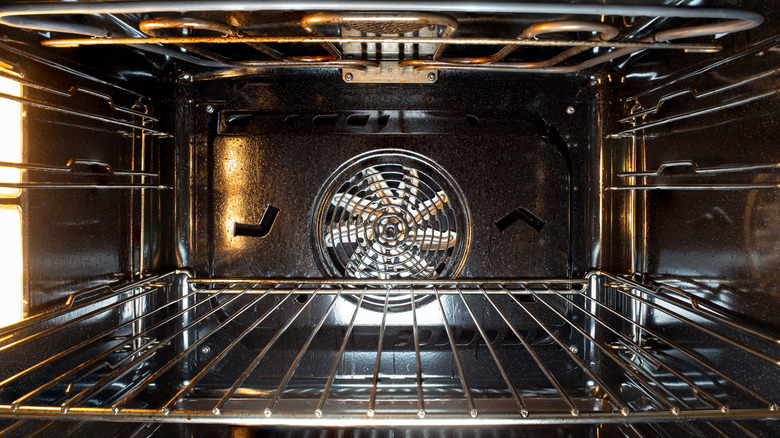
Convection ovens are almost standard additions in home kitchens today. Promising faster baking and more even results with the turn of a dial, these ovens are full of potential. But, great baking has never been about simply popping something in, twisting a knob, and expecting magic to happen. There's science at play behind any successful recipe, and understanding how things work and why certain steps need to be taken is what separates a lucky fluke with reliable results.
That's where expert guidance becomes invaluable. To unpack how best to use convection ovens, we turned to two chefs who blend creativity and precision on a daily basis. Chef Seth Tuma, the Louisiana-born executive chef at Little Fawn in Oceanside, California, began cooking and baking alongside his parents and grandparents at the age of 8 before entering professional kitchens. Joining him is Chef Vivian Villagrana, from Toshi Kizaki's talented pastry team at Sushi Den and Izakaya Den in Denver, Colorado. Together, their insights remind us that even the most familiar kitchen tools deserve a closer look and that there's nothing quite like learning from those who rely on them every day.
Use convection when browning and crust actually matter
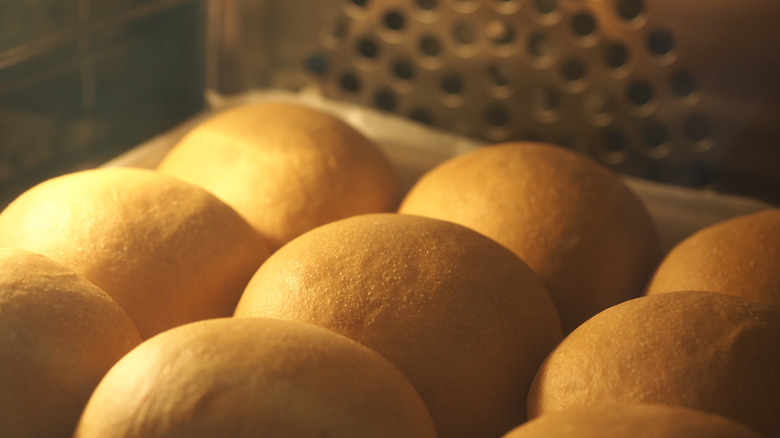
We asked our experts what bakes the best in convection ovens and if there are any recipes that lend themselves to better results. Both chef Seth Tuma and chef Vivian Villagrana agreed that convection ovens do their best work when the recipe calls for an even, crisp, caramelized surface texture.
Chef Tuma explains that pastries where you want "good crust or browning like pies, biscuits, and cookies" respond particularly well to convection, and that bread baking is where it truly shines. For him, it's consistency that is at play here. "The circulating air helps the oven maintain an even temperature, so you have even cooking and crispier texture."
Chef Villagrana echoes this, noting that foods with a hard crust and those requiring browning on the outside, such as cookies, pies, and store-bought puff pastry, benefit most from convection settings. For example, she explains, "if one were to bake a whole tray of cookies in a conventional oven, those might burn hotter on the upper left-hand corner, resulting in a fourth of your cookies to burn faster whereas the rest are still underbaked." A convection oven would mitigate this and help the cookies to bake evenly.
Don't avoid delicate bakes, learn to tame the fan instead
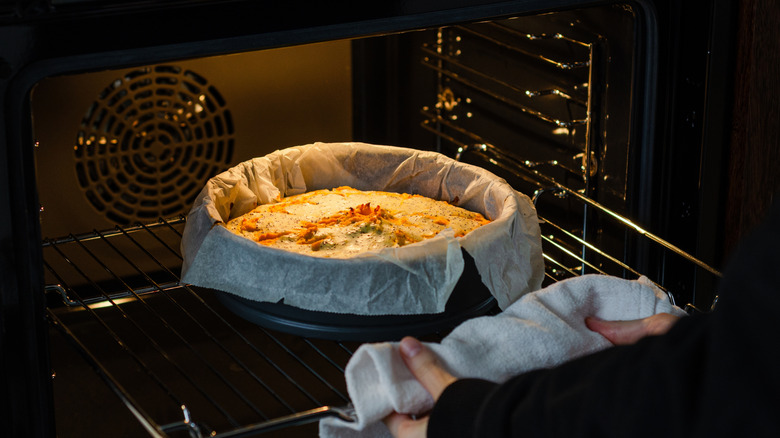
On the flip side, we asked if there are any recipes that one should avoid when using a convection oven. According to the chefs, while there is not, understanding how your oven works and learning to adjust the temperature in your favor is key.
Typically it is recommended that delicate bakes are be treated as incompatible with convection ovens, largely because the circulating air can be too aggressive and elevate the internal temperature of the oven. For example, when faced with extreme heat, soufflés, cheesecakes, and custards, like a crackling crème brûlée, could rise unevenly, develop cracks on the surface, or remain uncooked internally. Chef Seth Tuma acknowledges this risk, but encourages you to "still bake these in a convection by lowering the temperature. I go about 50 degrees less to be safe when I make desserts in our restaurant." The name of the game here is not avoidance, but adjustment. Lowering the temperature creates a milder oven environment, where the internal structure of a delicate recipe can develop gradually.
Chef Vivian Villagrana agrees, arguing against avoiding recipes and for making modifications to successfully bake in a convection oven. She recommends you "adjust the temperature, fan speed, and hydration levels. Failures are most likely to occur due to a high fan setting and higher temperature bake." Rather than fearing the fan, learning to control it turns convection into a precise tool.
Assume convection is hotter than the dial says
If it hasn't hit home by now, convection ovens run hot. Trusting that dial at face value is ill-advised. While the numbers on the display may read like a regular oven, one has to understand that the environment created within the oven cavity is completely different. The fan causes a constant circulation of hot air, and what this means is the rate of heat transfer also increases. As a result, food cooks faster than expected. Chef Seth Tuma candidly admitted to us that he often forgets to lower the temperature, which results in his staff benefitting from desserts that are too overcooked to serve to guests. This only highlights how easy this oversight is, even for professionals.
Chef Vivian Villagrana reinforces this point by drawing our attention to the combined effect of fan speed and temperature. A setting of 350 degrees Fahrenheit with a high fan does not behave like a standard oven at the same temperature. It creates an almost aggressive heat that can push baked goods past their ideal doneness before you realize what's happening. It is preferable to reduce the temperature by about 50 degrees Fahrenheit, unless the recipe is specifically written for a convection oven, in which case we suggest you stick to the temperatures prescribed.
Treat convection ovens like a dry climate
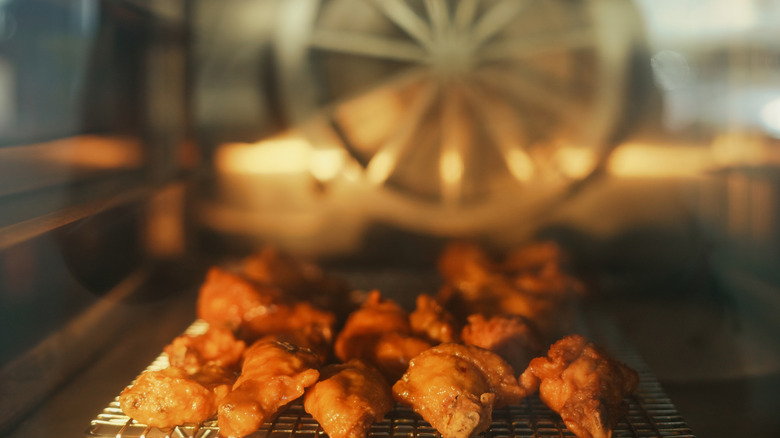
Another challenge posed by convection ovens is that they are a fundamentally drier cooking environment than a conventional oven. Chef Vivian Villagrana explains that "convection ovens, like a desert on a windy hot day, or in the winter when heaters are turned on, decrease humidity in the air." Basically what the circulating air does is remove any moisture from the space around the food. This, in turn, can have a pretty dramatic effect on both texture and appearance, if you are not anticipating it. Chef Seth Tuma echoes this point, noting that the combination of circulating heat and airflow accelerates drying. While this is ideal for crisping and browning, it can be a problem when dealing with delicate or moisture-sensitive baked goods.
This dry oven environment means that foods cook differently than they would in a traditional oven. For roasted meats, like chicken, this can mean crispier skins and quickly caramelized exteriors, which is a win. For pastries and pies, a uniform golden crust can be yours in no time at all. At the same time, items that rely on internal moisture, like custards, soufflés, or quick breads, can and will dry out more quickly if temperatures are not tweaked accordingly. Alternatively, you could increase hydration slightly by using hot water baths or covering pans with foil to retain moisture. The drier air also shortens cooking times, making it important to be vigilant during baking to prevent overcooking.
Let fat work for you in laminated and enriched doughs
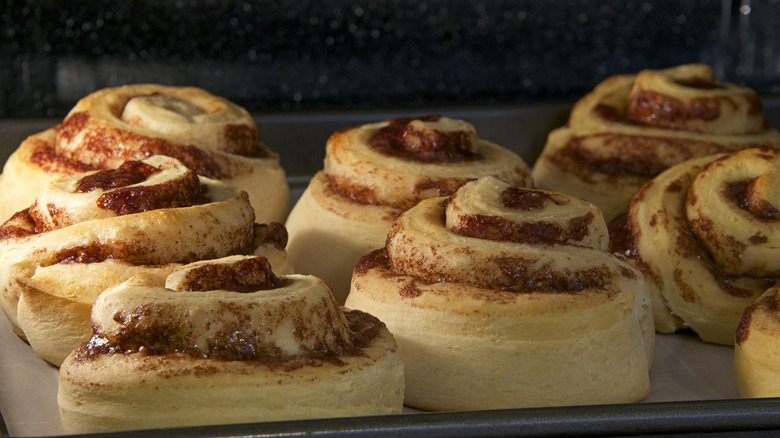
There are some types of high-hydration bread doughs, such as sourdough or other artisan breads that pose a unique challenge when baked in convection ovens. Thanks to the dryness and heat, a dough with high water content, but little or no fat, can struggle under convection-only settings. Chef Vivian Villagrana explains: "A laminated pastry with lots of butter benefits from the high heat a convection oven has to offer by creating bursts of oxygen from the melted butter that lift the dough. A high hydration dough without fat, such as sourdough bread, suffers under convection only settings because of the lack of humidity." The solution lies in introducing steam at the start of the bake. Chef Villagrana suggests "adding a cast iron pan full of boiling water to increase humidity at the beginning of the bake."
Even if steam is incorporated by using a hot water bath, monitoring temperature and baking time remains essential. Don't forget that one needs to maintain a crucial balance between humidity and dry heat if you are aiming for a superior crust. As chef Villagrana sums it up: "The rule of thumb is to take note of the settings one uses and adjust only one element at a time to perfect the bake."
Choose bakeware to control airflow, not just shape
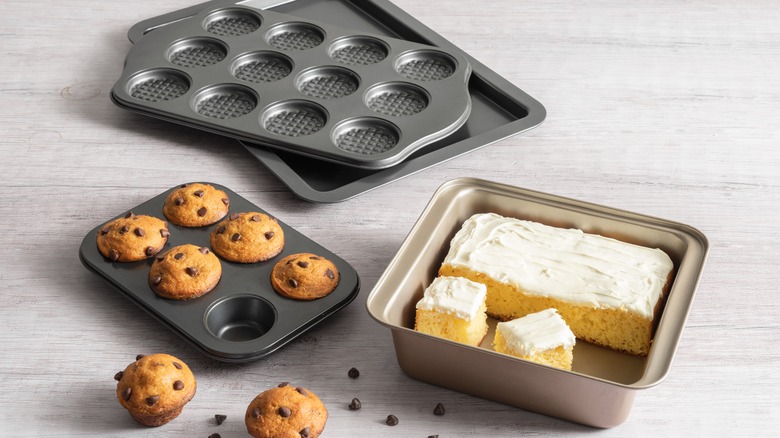
As chef Seth Tuma states, "the types of pans, what metals, Teflon, or ceramics matter more than the average home cook knows." When using a convection oven, choosing the right cookware is almost as important as the recipe itself. What you choose to bake or cook in directly affects how heat and air flow into and around your food. Chef Vivian Villagrana explains: "Consider how it affects cakes. A low sided mold will allow heated air to circulate over it freely without obstruction. High sided pans will trap more hot air along certain edges of the cake, it acts as a wall. Dark colors absorb and retain more heat than light colors do. Dark metal pans will bake faster and hotter."
While chef Tuma stays away from glass dishes because they can be inconsistent, chef Villagrana disagrees. According to her, when you intend to adjust the temperature of a recipe during the baking process, glass can be more susceptible to these changes at a faster pace "which can be great for applications such as certain types of cakes that need a hot and quick rise in the beginning, and then low and slow for the rest of the time." Both, however, agree that for anything that needs a crust, a light metal pan is best. By selecting the right bakeware and understanding how it reacts to heat, you can ensure even results and beautifully finished baked goods.
Use rack spacing and pan positioning to correct airflow
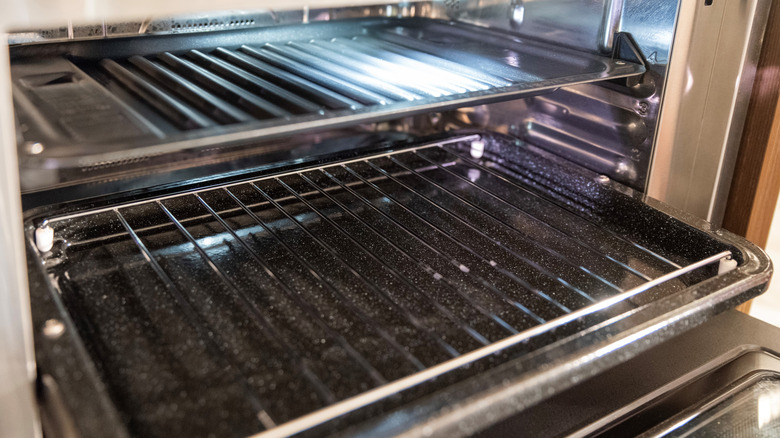
Any good baker knows that the key to ensure even baking results is to rotate pans mid-way through the process. This directly influences how heat and air circulates around the baked goods and avoids the recurrence of hot spots. Chef Seth Tuma highlights that also leaving ample space between oven racks allows the fan to push hot air evenly throughout the oven interior. "When I'm baking multiple things at once I'll off set the pans to opposite sides and rotate them halfway through the cook time. That helps with correcting the airflow."
Chef Vivian Villagrana emphasizes that rotation is essential if it's even cooking you are after. She recommends that, "pans should always be rotated at least 180 degrees either halfway through baking or after 3/4ths of the time it takes to bake, to ensure even baking." This simple practice can make a significant difference, particularly when baking several trays at once. Additionally, the chef shares that she places most baked goods in the middle rack for even heat flow, explaining that, "depending on the oven, if the heating element is on the top or bottom, then the temperature is at its hottest in those placements, therefore one side of your food will bake faster than the opposite." In other words, pan positioning is equally vital for a successful bake and can mean the difference between wondering if your dish will turn out right and knowing it will.
Secure liners and light pans against the fan
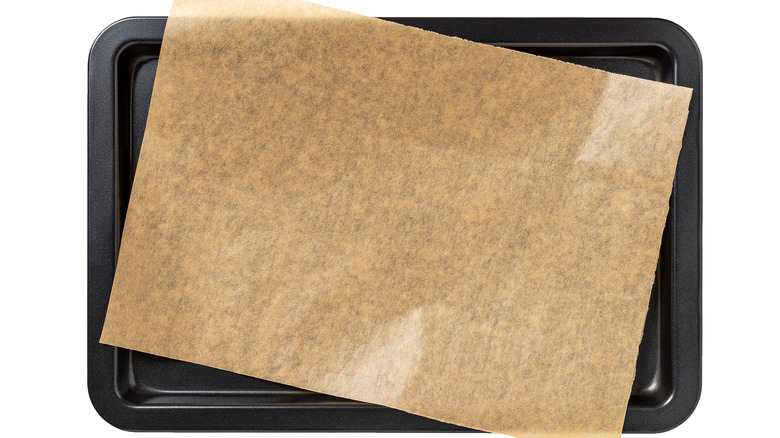
Chef Seth Tuma proclaims that he is a big fan of parchment paper, especially when using metal pans. Indeed, stocking up on parchment paper is necessary for any baker. But, a word to the wise when using a convection oven, sometimes the strength of the air flow can cause parchment paper and linings to fly all over the place. Chef Vivian Villagrana points out that "all liners should be cut precisely to fit the pan and lightly sprayed with oil to help them adhere." This small step prevents the liner from lifting or sliding during baking.
If you are baking smaller items and the pan is lightweight, it can be a double whammy of a disaster. Careful weighting of the pan by nesting it inside a slightly larger tray, for example, can help considerably. This is particularly important when multiple racks are in use and increased air flow can increase the potential for instability. This small attention to detail can mean all the difference between professional-quality results and a chaotic home baking session.
Diagnose a new oven with familiar recipes
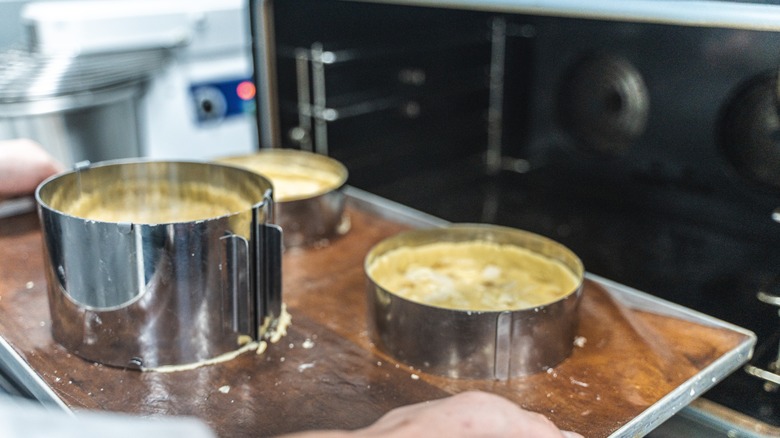
Everyone hears about how important it is "know" your oven. You are told to find out what the hot spots are and if the thermostat runs accurately. The real question is how to do this. We asked our experts for their suggestions. Chef Vivian Villagrana was adamant by saying, "Always rely on the same recipes so that you have a baseline or prior experience to work off of," like a tried and tested vanilla cake recipe or a trial batch of your favorite cookies. According to her, "both are great methods of testing an oven's characteristics ... A half sheet of vanilla cake is the most telling because it is light in color and will demonstrate browning at certain spots for you to look out for."
For chef Seth Tuma, every oven is definitely different and has its own quirks. For him, baking something familiar, like baguettes, allows him to see exactly how the airflow behaves, where hot spots occur, and how browning develops. Ultimately, diagnosing a new oven with familiar recipes helps build confidence. There's only so much an instruction booklet will tell you. This method lets you learn the oven's unique behavior through observation and experience.
Check early, rotate often, and trust your senses
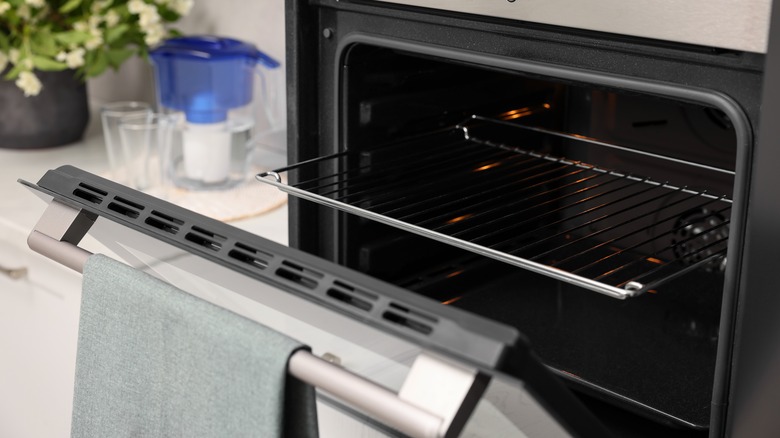
We asked our experts what the most common mistakes are that they see home bakers make with convection ovens. Both agreed that when it comes to baking in a convection oven, timing and temperature are the biggest issues. Chef Seth Tuma explains further, "I think most people have problems with the temperature control and then over cooking, if following a recipe exactly maybe you don't realize their ovens [are] different." He emphasizes the importance of reducing the oven temperature slightly and checking your food earlier than the recipe indicates. This could be anywhere between five to 10 minutes ahead of schedule. Convection ovens tend to cook faster than expected, and pulling food out early helps prevent over-browning or drying.
Chef Vivian Villagrana reiterates this by stating: "The most common mistakes are not adjusting the temperature, time, and fan speed setting on a convection oven when switching from a conventional one." Many recipes assume that you are working with a conventional oven, and are therefore formulated with those specific settings in mind. As such, she recommends you lower the temperature on a written recipe by 25 degrees Fahrenheit and decrease time by 25%. She also reinforces that you should "always check items for doneness before pulling them out too early." In practice, this means you need to keep a close eye on the oven trays during all stages of baking, making sure you are on hand to rotate or adjust them as needed.
When buying a convection oven, prioritize control over features
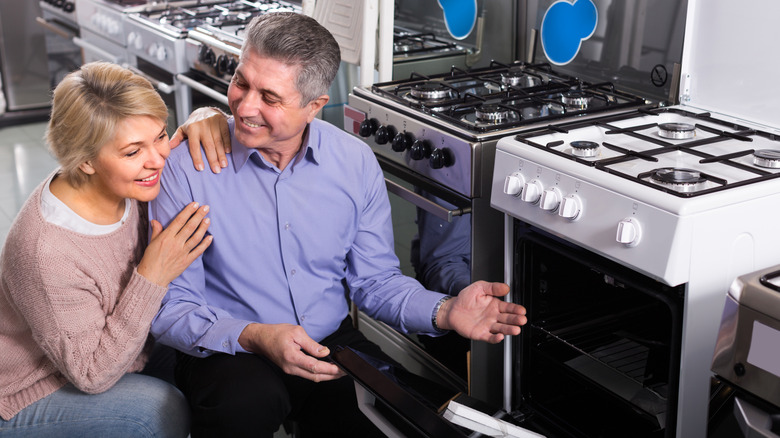
It's easy to get distracted by flashy features and high-tech gimmicks when buying a new oven, but both chef Seth Tuma and chef Vivian Villagrana stress that control is far more important. Chef Seth Tuma elaborates that while we all want an attractive, state-of-the-art unit, functionality is key. Bells and whistles will only take you so far. A convection oven should have a consistent temperature and controllable fans. For chef Vivian Villagrana, there are several essential features to look out for. These include settings such as convection, bake, broil, roast, and self-cleaning. These cover almost every possible scenario a baker would encounter, whether you are a professional or a home cook.
And, in order to ensure their ovens are in peak performance mode, our experts have their favorite tester recipes on the ready. "If I could have one thing to test it would be a whole roasted chicken. In my opinion being able to get a crispy brown skin and tender meat on a whole bird is the pinnacle of cooking," shares chef Tuma. For chef Villagrana, its her vanilla cake. "If the settings in the oven are set to the usual (temp, time, and fan setting) and it bakes flat, with no cracks, and a soft golden-brown crust on the outside then the oven is worth buying."