

The Best Deli Meat Thickness Is Ideal For Both Sandwiches And Charcuterie Boards
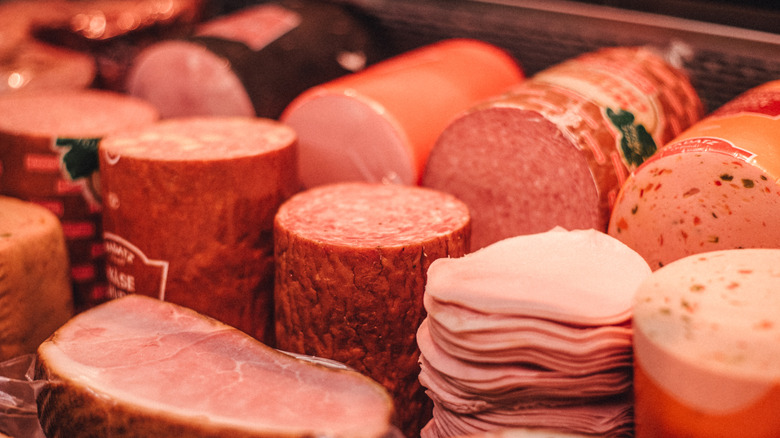
When you think about it, a charcuterie board is kind of like a deconstructed sandwich. The carbs might vary from soft to crunchy, but they both feature just the right amount of cheese and flavorful protein as the anchors of the dish. Slapping any ol' ingredients on either will suffice in a pinch, but the ideal outcome relies on using the best deli meat available. Some brands are better than others, but rather than focusing on the name associated with the product, hone in on the thickness of the deli meat for stunning sandwiches and charcuterie boards.
When The Takeout spoke with Elizabeth Ward, vice president of marketing at Boar's Head, she noted that a deli meat's thickness should be your principal concern. "The thickness of a slice is a primary driver of the overall sensory experience," she said. "While the meat itself doesn't change, the way your palate interacts with it does."
Preferences vary, but generally, the thinner the better. "When deli meat is sliced thin, you hit the sweet spot for ideal texture and flavor," Ward said. "Thin slices allow for more surface area and airflow, which enhances the aroma and ensures a delicious bite." This is especially beneficial for sandwiches. "When you pile thin slices onto a sandwich, you create tiny air pockets between the folds," Ward said. "This fluffing effect makes the sandwich feel more substantial and voluminous without being dense or heavy." Of course, "thin" is a somewhat subjective term. Ward elaborated, "A thin slice is flexible but holds its shape, making it perfect for turkey, roast beef, ham, or bologna sandwiches." Very thin, on the other hand, "Has slightly more structure than a shaved slice but remains delicate enough to drape," making it ideal for charcuterie boards.
Stop by your local grocery for the best deli meats

More often than not, pre-packaged deli meat is thin enough to work for sandwiches and charcuterie boards alike. Still, why not go thinner for a better bite by stopping by the deli at your local grocery store? You can avoid the worst grocery store deli by purchasing your meat from reputable establishments that offer certain advantages that can't be had in pre-packaged form.
Elizabeth Ward mentioned that one benefit is customization. "You can order anything from a single slice to several pounds of product — all sliced to your exact preference," she said. So how thin, exactly, should you go? Ward indicated that it depends on the type of protein. She said, "There isn't one universal industry standard for thickness, as it often depends on the type of meat, intended use, and individual preference."
For example, if you are picking up savory Serrano ham or salty prosciutto, it's thin for the win. Ward said, "These meats are aged to develop intense, complex flavors. Slicing them paper-thin allows the fat to melt on the tongue and prevents the texture from being overly chewy, which can happen if they are cut too thick." Other options — like those old-school deli meats we all forgot about — are best when sliced a touch thicker, particularly if they are going on a sandwich. "Dry-cured items, such as Genoa salami or pepperoni, are versatile. While very thin is traditional for charcuterie boards to allow the spices to shine, a slightly thicker sandwich cut is often preferred for a sandwich or snack tray for a more pronounced savory flavor and substantial bite."