

How Long Should You Steam Couscous? Here's The Ideal Time
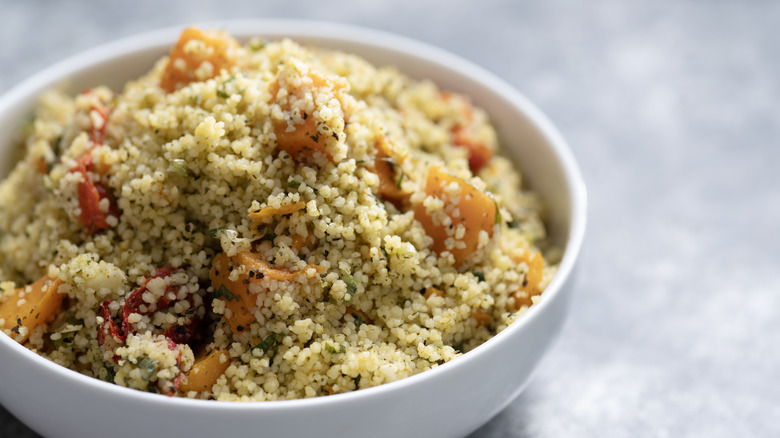
Originating in Northern Africa, couscous is a delicious food that deserves more attention from American home cooks. The pasta (yes, it's a pasta not a grain) is fluffy, tender, and can be cooked in just five minutes. It's a delicious and convenient dish that pairs well with meats and vegetables and can be used to make many different dishes including some regional Italian specialties. If you're not familiar with this semolina base, it's easy to over-steam it and make it too mushy, though. To help our readers avoid this, we spoke to David Davidov, Creator of The Cooking Foodie, about the best way to cook couscous.
Davidov outlines two ways to make couscous. The first is the traditional Moroccan method in which a special pot called a couscoussier is used to steam the ingredient. Most home cooks outside of Northern Africa will probably go for the modern method. "You start by placing the couscous in a bowl or pot and seasoning it lightly, usually a pinch of salt and a touch of olive oil or butter so the grains don't stick together. Then you bring water or broth to a boil, pour it over the couscous, and cover it right away," Davidov explains. "Once the grains have absorbed the liquid, you uncover it and gently fluff it with a fork. After fluffing, you can let it rest for another minute or two and it becomes beautifully light and airy."
Making great couscous
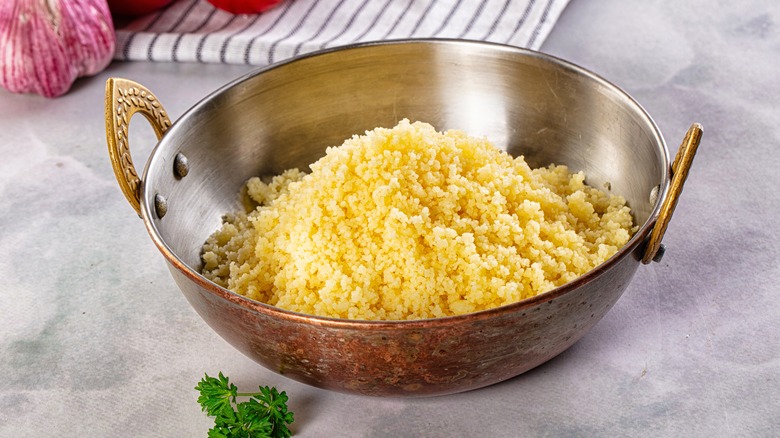
Like pasta and rice, couscous is fairly simple, yet knowing a few tricks can take this dish from fairly good to amazing. The most important thing might just be not interrupting the steaming process. As Davidov says, "The resting stage is important because couscous doesn't finish cooking the moment the hot water hits it; it continues to hydrate as it sits. If you uncover or stir too early, you interrupt that process and the texture can become sticky or uneven." A little patience will go a long way into getting the couscous texture right.
Davidov also had some advice for flavor. "Cooking couscous with vegetable or chicken broth instead of plain water instantly gives it more depth and warmth. A small drizzle of olive oil or a bit of butter adds richness and prevents the grains from sticking together, almost like coating pasta before tossing it with sauce." You can also play with different spices and herbs like turmeric, cumin, coriander, and parsley. "After steaming, many cooks like to brighten it up with lemon zest or juice," he continued, "or use toasted nuts for texture. Dried fruits such as raisins or dates add a subtle sweetness that balances savory stews or roasted vegetables."
Couscous pairs well with almost everything. "The key is to treat couscous as a base that carries flavor rather than competes with it," Davidov concludes. Serve it with steamed vegetables for a classic dish or go a bit fancier with lamb tagine (which actor Simon Pegg loves).