

The Key Differences Between A Steakhouse And A Regular Restaurant
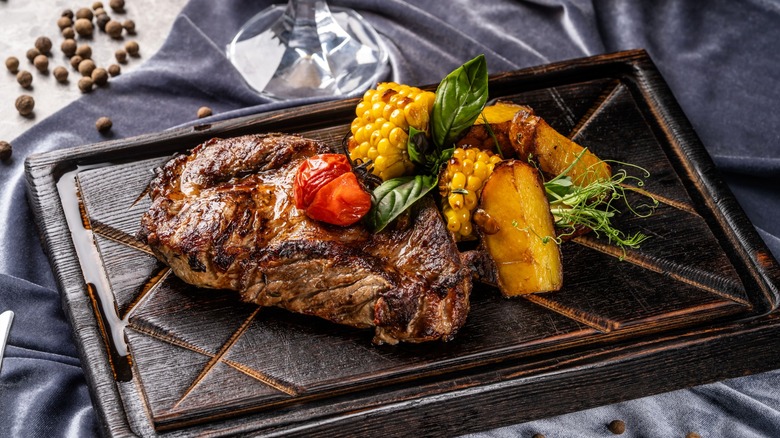
If there is one restaurant concept that just screams "American fare," it's steakhouses. There is an exceptional steakhouse in every state if you know where to look, teeming with extraordinary cuts of beef served to guests from wall to wall. Unlike other restaurants, steak is the star of the show, but having a menu centered around perfectly cooked meat isn't the only characteristic that sets a steakhouse apart from various other dining concepts.
From bistros to chain seafood haunts, many restaurants sell steak that would never dub themselves a "steakhouse." The real deal will typically boast menu options that can be hard to find at other establishments, like juicy bone-in prime rib and cuts that are challenging to cook, like tomahawk steaks. However, that doesn't mean that only mouthwatering beef is served. Just as a seafood restaurant might have beef options, a steakhouse will occasionally have some ocean fare on the menu, likely in the form of a surf and turf offering.
The types of accompaniments that accent premium steaks are also unique in steakhouses. Diners will frequently see sauces that aren't common in other restaurant concepts, such as creamy horseradish, Bearnaise, and chimichurri topping their meat. Rich side dishes like creamed spinach and fluffy mashed potatoes make you want to come with an appetite, and elegant wine lists, along with innovative cocktails, are refined options to wash down all that hearty fare. Still, while a steakhouse is primarily defined by the cuisine it serves, it's not only about the food.
A steakhouse will have a lavish ambiance
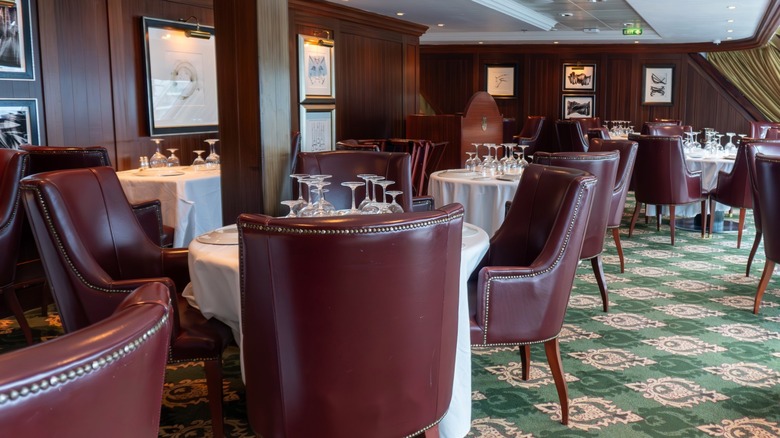
While it's not always the case at chain restaurants that take a simpler approach, steakhouses generally host a fine dining atmosphere. The menu options are usually costly, and the upscale ambiance in the building reflects the premium price you pay for a meal. Rich wood tones combined with ivory tablecloths and polished silverware create an environment that is inviting, but also implies you are going to be treated to an elegant experience. Faint lighting emits a sense of intimacy where many other restaurants are well-lit, and servers dressed in their best attend to a customer's every need while presenting refined plates of magnificence with a mannered charm.
However, some restaurants don't deliver cuisine using such a buttoned-up approach. Brazilian steakhouses serve meaty fare rodizio-style. There isn't an entree menu like a traditional steakhouse. Instead, staff members present various cuts of roasted meats to diners and offer slices tableside. There is also typically no limit on how much you eat. Red and green cards indicate to the staff whether you would like to continue sampling the assorted roasted meat options they serve or give it a rest.
Still, while a Brazilian steakhouse is technically a steakhouse, it's an exception to the traditional norm. The concept that originated in 17th-century England and started gaining popularity in the U.S. in the 1800s has evolved, but it has stayed true to its roots. What began as a type of restaurant offering customers a taste of high society remains so today, despite some modern polish and elevated menu options.