

Want Restaurant-Quality Roasted Veggies? These Simple Steps Make All The Difference
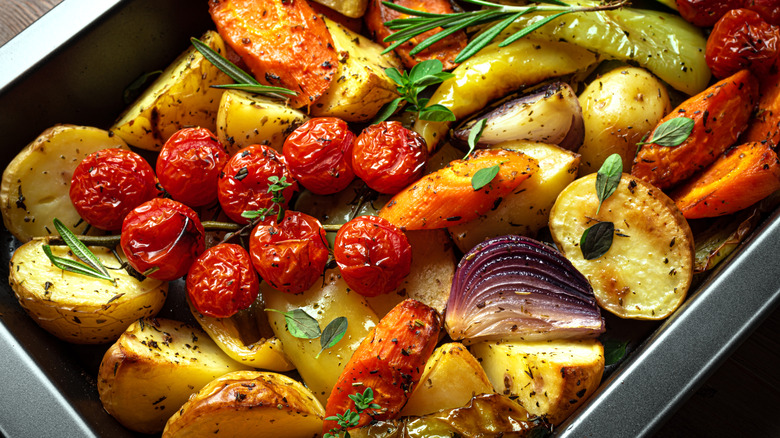
Many seemingly simple restaurant dishes taste much better than their homemade counterparts, but there's usually a reason for that. A few small adjustments can elevate your cooking, especially when it comes to roasting vegetables — a task that seems easy to do, but is ultimately quite difficult to master at the level of well-trained restaurant chefs. While some say that covering your vegetables with mayonnaise before roasting them is a unique way to maximize flavor, we spoke to Chef Harris Mayer of Cornerstone and Creamline in New York, who said that paying attention to anything that may interfere with the caramelization of your veggies is the biggest key to success.
"Good surface contact between the vegetable and the cooking instrument [will] maximize caramelization," Mayer advised. Placing vegetables in a single layer instead of stir-frying them in sauce allows heat to uniformly transform their flavors. This promotes caramelization — the natural browning goodness you see when sugars react to heat. With this in mind, make sure your veggies remain in contact with the (ideally non-stick) pan if you're cooking them on the stove or the baking sheet if you're placing them in the oven. For stovetop roasting, start by cooking your vegetables in oil or butter on high heat to initiate the breakdown of sugars, before lowering the heat and letting them cook with occasional stirring for up to 45 minutes. Alternatively, throwing your veggies in an oven set to 425 degrees Fahrenheit should get the job done within 10 to 20 minutes in most cases.
How adding seasonings can impact your roasted vegetables
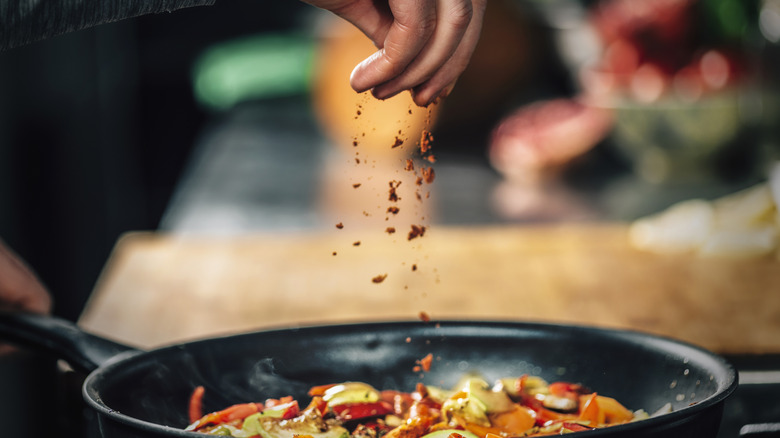
Using seasonings correctly is also an important aspect that restaurants get right and at-home cooks often get wrong. For Harris Mayer, timing is everything. When seasonings should be added depends on the water content of the vegetables you're cooking. "Don't season ahead of time because it will draw out the water, which is the enemy of caramelization," Mayer noted about vegetables like mushrooms and tomatoes, both of which contain a lot of moisture. "If too much water comes out from salt or from overcrowding the pan, you will not get any roasted flavor or color."
This approach is far from a catch-all methodology, as adding flavor before roasting — whether it's salt and pepper or a packet of savory ranch seasoning — can be ideal in some cases. Cauliflower and broccoli, for example, can benefit greatly from Italian seasoning and paprika before roasting. If adding parmesan, wait until halfway through the cooking process or right before serving so the cheese doesn't burn. Mayer says patience is key when roasting veggies, and generally advises against adding too much to the mix before cooking — including glazes — to maintain that ideal golden finish.