

The Devastating 2016 Frozen Vegetable Recall That Sent Consumers To The Hospital
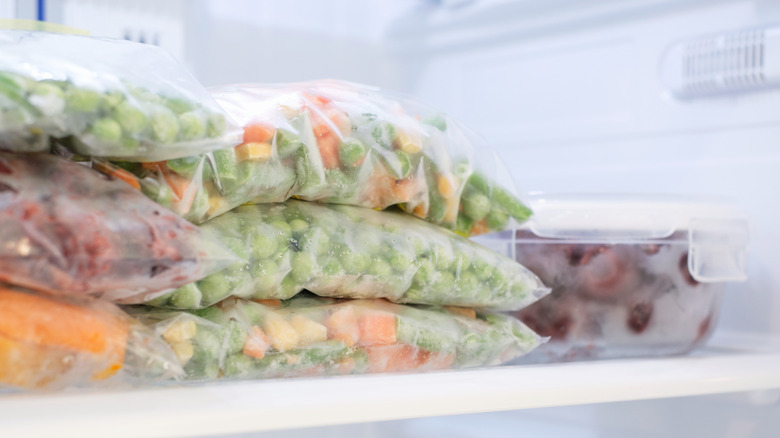
Food recalls are quite common. In 2024 alone, nearly 300 were issued over illness concerns. At least 487 people were hospitalized and 19 reportedly died in connection with contaminated foods that prompted the recalls. The United States saw several large food product recalls in 2025, including one that led to a vast, multi-level cucumber recall across 15 states. There are many reasons for food recalls, but among the most common is Listeria. In 2016, a widespread alert was issued across North America after authorities identified a possible Listeria outbreak affecting hundreds of frozen organic and non-organic fruits and vegetables. This would go down as one of the most devastating frozen food recalls in recent history.
At the time, the company at the center of the controversy, CRF Frozen Foods, voluntarily ordered the recall of 358 consumer products packaged and sold under 42 different brands. Among the products included in the recall were common grocery items such as carrots, potatoes, onions, kale, spinach, and berries. CRF first issued the voluntary recall after routine testing found Listeria in one lot of organic petite green peas and another lot of organic white sweet cut corn. The company quickly suspended operations in its Pasco, Washington facility where the affected products had been manufactured between May 2014 and April 2016. A stunning 98 other products by other firms which might have been contaminated by the CRF-recalled products were also withdrawn from stores.
Why Listeria contamination shouldn't be taken lightly

The massive frozen fruit and veggie recall of 2016 involved millions of packages shipped throughout the United States, Canada, and Mexico. The products were sold at major retailers including Costco, Safeway, Target, and Trader Joe's. Despite the scale of the issue, only nine people were confirmed sickened by Listeria. Six were from California and eventually recovered. Two deaths occurred in Maryland and Washington, but although they were infected with Listeria it was not the primary cause of their deaths. The last patient was from Connecticut and their death was unfortunately due to listeriosis. With only one confirmed fatality directly caused by the outbreak, the incident would hardly be considered among the deadliest food recalls to sweep the United States. Still, it was a good call for CRF to issue the wide-scale recall in cooperation with the U.S. Food and Drug Administration (FDA) and the Centers for Disease Control and Prevention (CDC).
Per the FDA, listeriosis is a condition that should not be taken lightly. The bacteria responsible for the infection, Listeria monocytogenes, can survive and flourish even when subjected to cold temperatures. Once contaminated food is ingested, a range of symptoms starts to manifest including fever, nausea, vomiting, diarrhea, and muscle aches. In severe cases, patients may experience headache, confusion, a stiff neck, and convulsions. Pregnant women, adults older than 65, and people with weakened immune systems are at a higher risk for severe infection which can result in lifelong health problems or death.
What happened to CRF Frozen Foods after the recall?
CRF Frozen Foods took a huge blow in the wake of the 2016 recall. The company didn't just suspend operations at its Pasco facility amid the investigation; it also had to lay off more than 300 of its workers. A typical recall costs companies $10 million or more. Given the wide distribution of the affected products, it wouldn't be a stretch to assume that CRF suffered a major financial loss due to the recall. Despite this, the company was determined to get back on its feet. CRF announced it was planning to reopen its facility after a reorganization. In 2018, CRF realized its plan through a joint venture between its parent company (R.D. Offutt) and agricultural supplier (J.R. Simplot). The venture was named Simplot RDO.
As part of the reopening, Simplot RDO tapped Fisher Construction Group for a $2.48 million project that would upgrade, retrofit, and expand the existing production facility. "Fisher's design and food processing MEP team designed significant upgrades and renovations throughout the facility. These included easy-to-clean walls and ceilings, a new ventilation system, in addition to point drains. All to accommodate Simplot RDO's new line of ready-to-eat blanched and roasted vegetable products," the construction firm said on its website. Meanwhile, J.R. Simplot spokesman Josh Jordan said they consulted with the FDA to ensure the reopened facility would meet, if not exceed, the highest levels of food safety standards.