

The Old-School Technique That Makes British Meat Pie Crust So Crispy
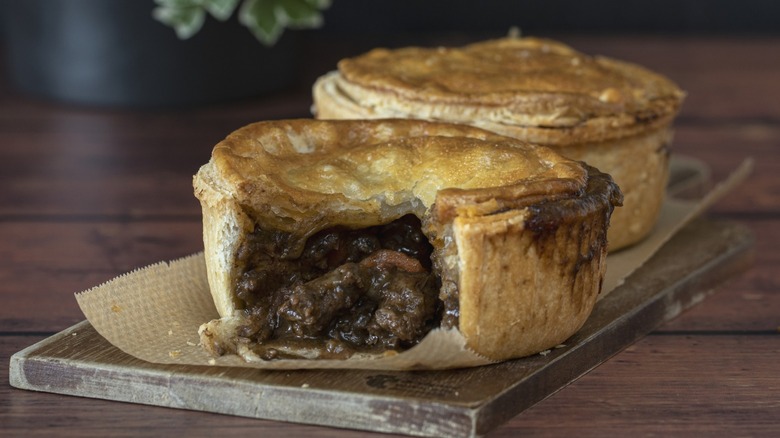
We can make fun of British food all we want — we can say it's boring and bland, turn our nose up at beans on toast, so on and so forth — but sometimes you really gotta hand it to 'em. Take meat pies, for instance. Sure, we have chicken pot pie, shepherd's pie (not to be confused with cottage pie), and all those other dishes where you top meat in gravy with pastry or potatoes and pop it in the oven. But a handheld pie, with rich meat encased in a buttery, flaky crust? Who could deny the simple pleasure of such a thing? And how do they get the crust just right? Well, it's a tried-and-true technique known as hot water crust pastry — it's a little different from what Americans are used to, but it's worth it.
Although us Yanks place a premium on delicate, flaky crusts that melt in your mouth, hot water crust pastry will give you a very different kind of pie crust. It's thick, sturdy, and toothsome, the kind of crust that gives a good crackle when you bite into it. By using hot water while forming pastry, the bits of fat and butter melt, resulting in a stout, hardy crust that doesn't need a pie plate. First you stir together the shortening (whether that's butter, lard, or suet) and boiling water, then you mix in the flour and let it chill in the fridge — and then, as the Brits say, Bob's your uncle.
Pie crusts originally served a practical purpose
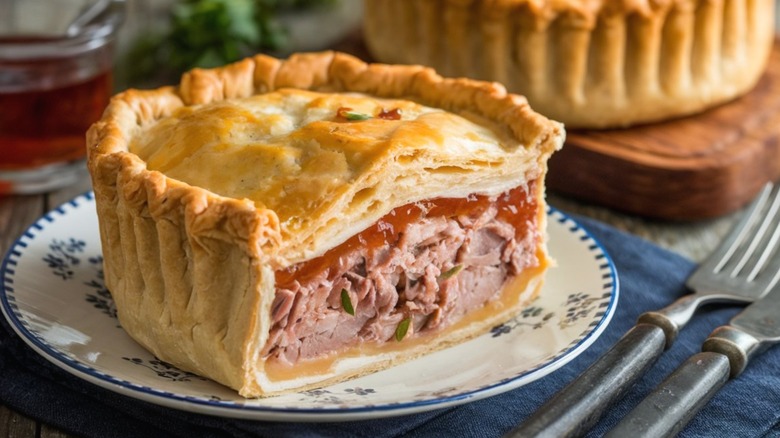
How did this technique come along? Well, it's important to understand how meat pies came about in Britain to begin with. In the Middle Ages, bakers didn't have fancy pans, trays, or any other kind of equipment for holding and storing baked goods. That meant pretty much everything had to be baked into a sturdy hot water pie crust if it was going to hold together at all. It was very convenient for storage and transport, but it wasn't necessarily the tastiest thing in the world. In fact, sometimes, the crusts weren't supposed to be eaten at all.
Eventually, though, bakers began to add fat, like butter or suet, while making their pastry dough. The result was something richer, tastier, and less likely to chip your tooth while eating. From there, the innovation spread, resulting in smaller, handheld pies as well as sweet and savory options. Even now that handheld pastry products — like Cornish pasties or a steak bake from Gregg's — make use of fluffy puff pastry or shortcrust pastry, hot water crust pastry still has its place in British cookery. Whether you're eating a pork pie, a steak and ale, or the vintage British "butter pie" popular in Lancashire, you'll find reason to celebrate this humble technique.