

15 Delicious Egg-Based Desserts From Around The World
Whether they're in a silky custard or a cloud-like cake, eggs quietly hold together some of the most beloved desserts on the planet. And when you've got a surplus? That's just one egg-cellent excuse to crack out the whisk. This list is a whirlwind tour across continents and cultures, where desserts take the stage, and the eggs are the main attraction. Think golden yolks transformed into luxurious creams, whipped whites rising to peak perfection, and more, all creating textures and flavors that earn insta-fans in all corners of the world.
From old-world classics to street-food favorites, and bakery icons in between, each of these global recipes relies on eggs as the mainstay to create dessert magic. So, whether you're staring down a fridge full of egg cartons, just looking for an excuse to bake something indulgent, or simply want to learn something new about global cuisine, you're in the right place. Get ready to whip it good and crack a few puns along the way. Let's travel the world together, discovering one glorious egg-based dessert treat at a time.
Pastel de nata (Portugal)
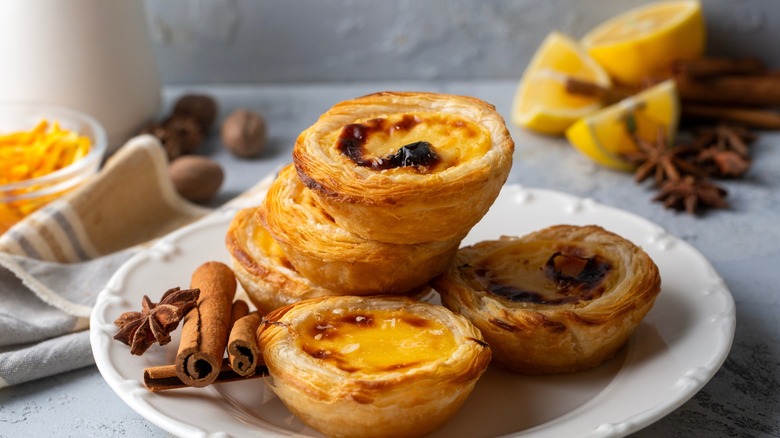
Pastel de nata is a hand-sized Portuguese egg custard tart. A puff pastry shell starts it all off. It is then filled with a creamy center that relies heavily on rich egg yolks, with milk and sugar playing supporting roles. A bold, golden, and proudly egg-forward Portugal mainstay, these pocket-sized pastries are often finished with a delicate dusting of cinnamon (sometimes powdered sugar).
Their origin story is thought to begin in 19th-century Lisbon, inside the Jerónimos Monastery in Belém. Monks used egg whites for starching clothes and winemaking, which meant the unused yolks piled up fast. So, they baked! Using yolks to create a silky custard and wrapping it in flaky pastry inspired by French techniques, these religious men created a tart so good that the recipe was soon all the rage.
When religious orders dissolved in Portugal, the monks sold their recipe to what became the bakery Fábrica de Pasteis de Belem, which started pumping out these precious gems. That same bakery still produces the originals today, and patrons come from all corners of the world to enjoy them with a strong Portuguese coffee.
Flan (Spain)
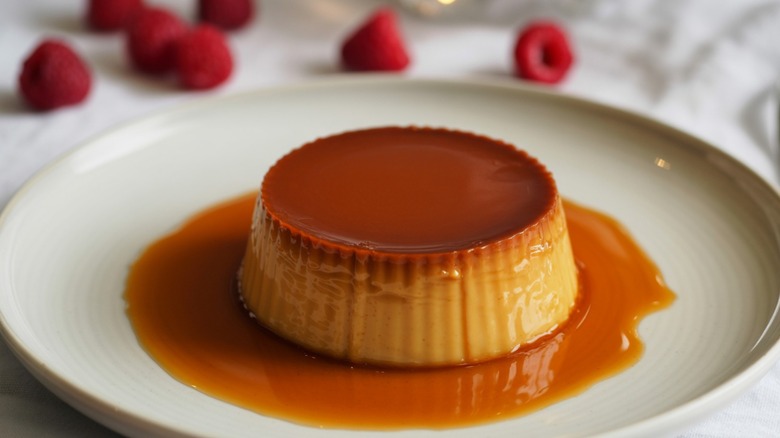
Ever wondered what it takes to make a proper flan? Silky, glossy, and gently jiggly, flan is a delicious dessert that relies on eggs to set its shape. Milk, sugar, and eggs do the most to make things happen here, while caramel shines as a dramatic sheen on top when its little flan world is literally flipped upside down.
The roots of flan date back to ancient Rome, where cooks turned extra eggs into sweet and savory custards. When all things Roman spread across Europe, flan went along for the ride. When that ride stopped in Spain, the nation fell especially hard for flan. Despite all that travel, the recipe (which some consider basically a topsy-turvy crème brûlée) has remained close to its original roots. Eggs provide the structure, sugar sweetens the mix, and the milk (infused with a slight whisper of vanilla) brings it all home.
Quindim (Brazil)
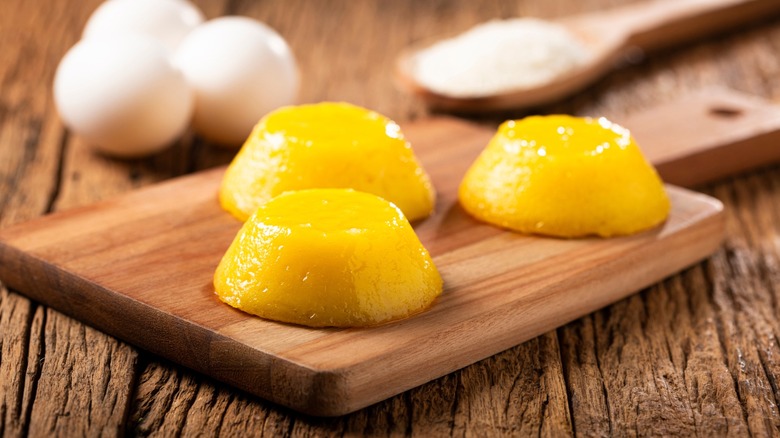
Bright yellow, glossy, and decadently rich, quindim is a cheery-looking Brazilian dessert that places egg yolks front and center. These main ovo divas are backed by sugar and a generous amount of ground coconut, all baked gently in a water bath before emerging in their united state.
It is really as if the Brazilian coconut egg custard is "born" with two distinct personalities formed from one single batter. While coconut floats upward during baking (browning a bit and forming a chewy, macaroon-like layer that becomes the base once flipped), the top sits pretty with a smooth, silky custard shell. The name quindim traces its roots through a Bantu language, and while its custard characteristics connect it to Portuguese egg-based cousins, quindim is thought to have been introduced to Brazil by enslaved Africans in the 17th century.
Patience is paramount when preparing Quindim, as the eggy pastry must cool completely before being flipped, or risk falling apart. Once inverted (shiny custard on top and chewy coconut beneath), these custards come CORRECT.
Liu sha bao (China)
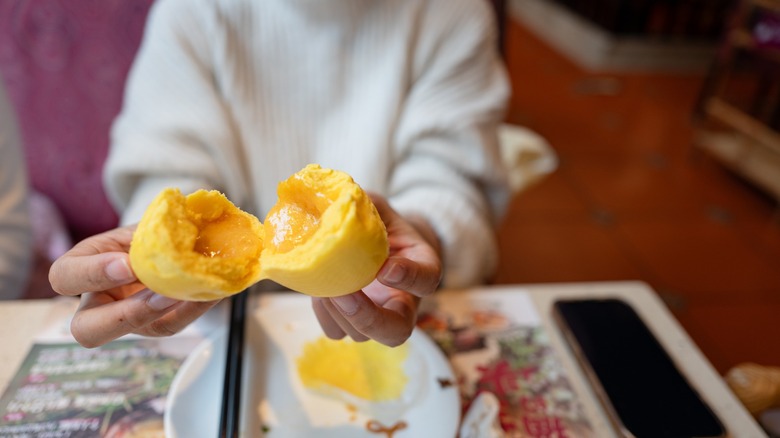
A mainstay of Southern Chinese cuisine, pick up any liu sha bao, and you are one bite away from some hot dim sum drama. This "drama" is delivered via a soft, fluffy bun, which, upon first glance, looks quite plain. But sink your teeth into that hand-held Cantonese treat, and a practically molten gush of golden custard surges at you in supremely sublime fashion.
Liu sha bao translates to "flowing sand buns," which is a moniker that fits with the shockingly good (albeit gooey), spurting center. These Cantonese salted egg yolk custard buns walk the fine line between sweet and savory, seemingly refusing to pick a side. The filling is rich and buttery and has a slightly salty tinge to it (thanks to the egg yolks that are often made by curing duck or chicken eggs in brine or salted charcoal for weeks). Surprisingly, the yolky middle melts beautifully into the custard, which stays fluid when warm (think hot lava) and holds more firm as it's allowed to cool.
Pavlova (Australia or New Zealand)
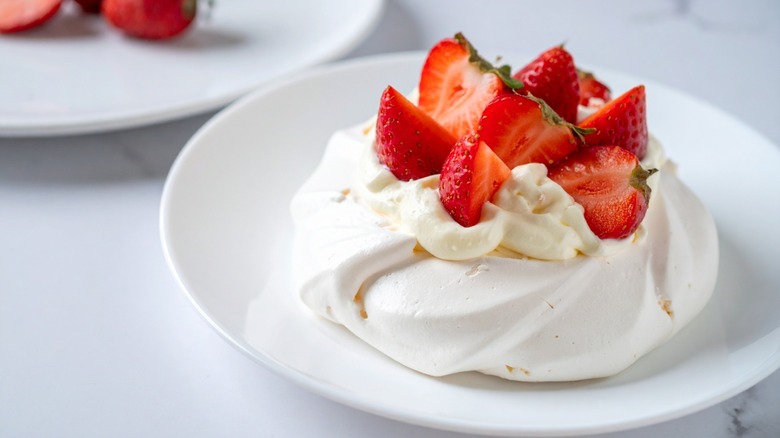
Pavlova is a pretty-as-a-picture dessert built almost entirely from egg whites and sugar. Traditional pavlova is a large baked meringue with a crisp shell and a soft, marshmallow-like center, often topped with whipped cream and fresh fruit. But there is a fierce debate regarding its ancestry. The two dogs in this fight are Australia and New Zealand, arguing for decades over which nation invented this dessert.
Pretty much the only thing both countries can agree on is the name, which is an homage to the Russian prima ballerina Anna Pavlova. Early written recipes labeled "pavlova" appear in New Zealand in the early 1930s, with the country insisting that a Wellington hotel chef created the dessert in 1926. Meanwhile, Australia points to Herbert 'Bert' Sachse, the chef at Perth's Esplanade Hotel, as the mastermind behind the cloud-like treat after allegedly creating the concept in 1935.
Talking about texture only fuels the fire, with Australians often favoring a crisper pavlova versus New Zealanders' preferred softer dessert. Either side you land on, egg whites are the main event in this pavlova prize fight.
Zabaglione (Italy)
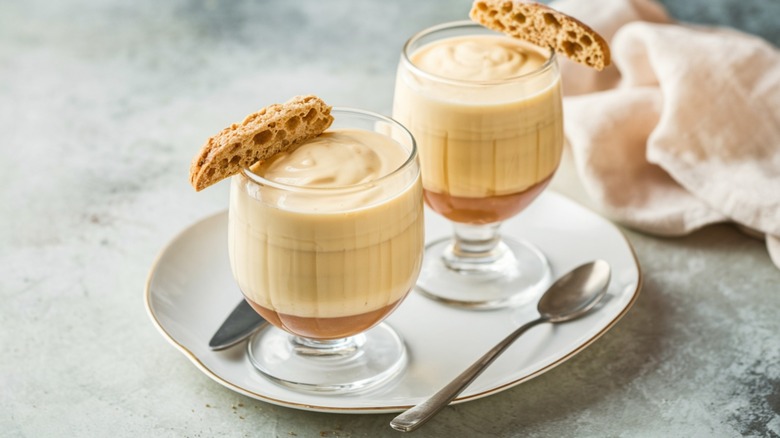
Zabaglione is a warm, frothy custard that consists of three ingredients: egg yolks, sugar, and sweet Marsala wine. Whisked gently over a bain marie, the mixture transforms into a lovely creamy foam that can't seem to decide whether it wants to be a custard or a sauce.
Sometimes made and served tableside, Zabaglione is beloved in Italy. Served warm in a cup, spooned over fruit, or paired with crisp biscuits, some prefer the dessert loose and pourable, while others like to whisk it within an inch of its life (aka until it nearly sets like pudding). There is no "right" answer between these two, so whisk away (or don't).
As for its history, a recipe appears in a 15th-century manuscript, and it was noted to be popular even in the court of Catherine de' Medici. Although France later adopted it under the name sabayon, and Argentina knows it as sambayón, zabaglione is the Italian OG. As for prep, there is a special copper pan made solely for making zabaglione, but it is the eggs that steal the show.
Suspiro de limeña (Peru)

Suspiro de limeña (or suspiro limeño) literally translates to "sigh of the lady from Lima." This dessert is meant to be as soft, airy, and sigh-worthy as its name suggests. Things kick off with a rich caramel custard base made from condensed milk, evaporated milk, sugar, and plenty of egg yolks. This core custard is topped with a fluffy meringue made from the leftover egg whites, whipped with sugar, and often flavored with port. The result is a delicious dual-layer of textures that tastes as divine as it appears (picture dense and creamy below, light and cloud-like above).
This egg-heavy dessert was created in the mid-19th century by Amparo Ayarza, the wife of poet José Gálvez. He famously named it for its sweetness and delicate nature, comparing it to a woman's sigh. Lima embraced it, and it remains a beloved symbol of the city's dessert culture. Earlier versions of the dish were once considered bland foods for the sick, even containing chicken breast and almonds. Thankfully, the modern suspiro we know today is decidedly rich and decadently sweet.
Lemon curd (England)
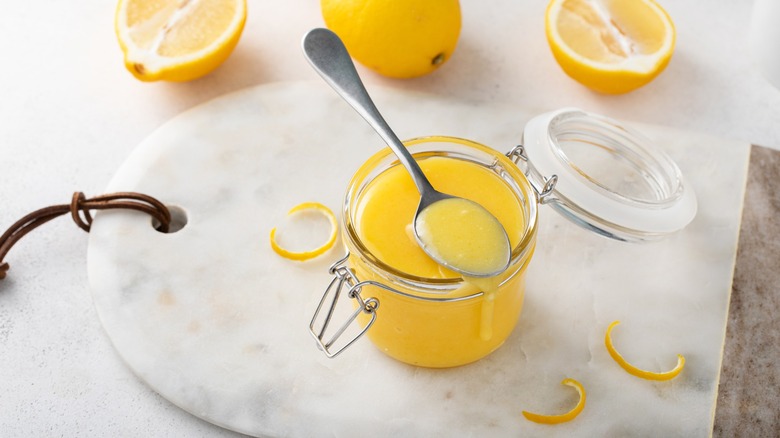
Bright, tangy, and smooth as silk, lemon curd is an English classic that blends eggs, sugar, lemon juice, and butter into a spread that settles somewhere on the same textural plane as custard. Sharp, eggy, and designed to wake up your taste buds with that telltale zing, this is one curd that will leave you wide-eyed, lips puckered, and absolutely in love.
Fruit curds first gained popularity in late 19th-century England, when they were most often served with scones at afternoon tea. Making lemon curd is simple, but it demands near constant vigilance and attention. Eggs are whisked with sugar and fresh lemon juice, then cooked gently until thickened. Butter smooths everything out, turning the initial acidity into a sumptuous, silk-like curd that sings. The process is delicate. Let things get too hot, and the eggs run the danger of scrambling. But when done right? That's one citrusy chef's kiss.
In the U.K. today, lemon curd is sometimes spread on scones and crumpets. You can even use lemon curd as an inventive topping to upgrade a grocery-store cheesecake. Whatever version you enjoy, you can thank eggs for their role in this lemony treat.
Ovos moles de Aveiro (Portugal)
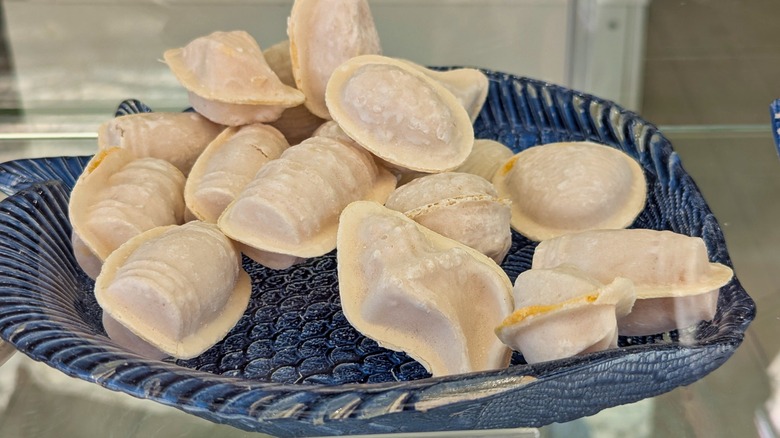
Ovos moles translates from Portuguese as "soft eggs," and the name does not exaggerate. This confection hails from the city of Aveiro and consists almost entirely of egg yolks and sugar, which are gently cooked into a thick, glossy cream. That creamed concoction is then tucked inside delicate edible shells made of wafer-thin rice paper, creating an indulgent dessert that is as aesthetically pleasing as it is deliciously decadent.
The contrast in the experience of eating it only heightens its effect on tasters. Immediately following that initial bite, the moment your teeth sink through the crisp shell and the silky yolk filling flows everywhere, bursting forth in all its smooth, rich, and sweet glory, you will likely be as gobsmacked as most who regularly gobble down this Portuguese dessert with glee.
Ovos moles originated in convent kitchens in the 16th century, when nuns used egg whites for starching linens and clarifying wine, leaving a near-exponential amount of yolks in abundance. Rather than waste them (frugality is the nun MO!), they transformed the yolks into sweets. The shells are often molded into shapes inspired by the sea, including fish and shells in a fitting nod to the city's maritime ties.
English egg custard (England)
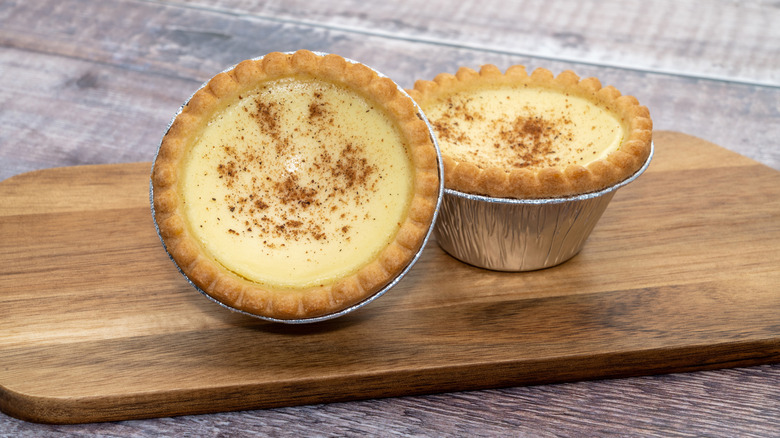
Let's talk English egg custard (the baked kind). Made simply from eggs, milk, and sugar, this classic dessert is gently set in the oven until just firm, with a texture closer to crème brûlée or a pastel de nata than a pourable sauce. Traditionally, it is baked in a dish or a shortcrust tart shell and most often finished with a light dusting of nutmeg.
While Britain is also famous for pourable custard served warm over puddings, that style veers closer to a sauce than a dessert in its own right. French crème anglaise, often confused with English custard, falls firmly into this category (looser, stirred on the stovetop, and designed to accompany other sweets rather than take center stage). English egg custard, by contrast, relies on slow, even baking to allow the eggs to set into a delicate, spoonable structure.
This distinction became blurred in the 19th century with the rise of custard powders and tinned versions, many of them eggless and marketed for speed and convenience. Over time, real egg custard gained an undeserved reputation for being fussy or old-fashioned. But make it once, properly, and the appeal is obvious.
Mooncakes (China)
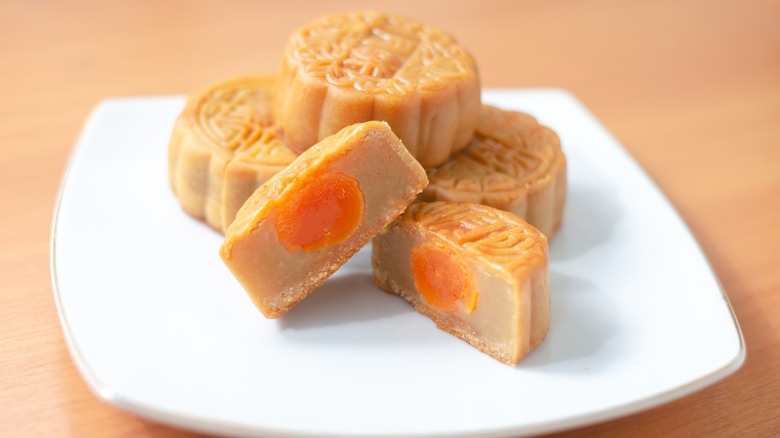
Eaten most often during the Mid-Autumn Festival, mooncakes are dense, rich Chinese desserts that celebrate reunion, harvest, and the full moon glowing overhead. At the heart of many traditional mooncakes sits a golden salted duck egg yolk, representing that same lofty moon in edible form. Salted egg yolks are cured for weeks to become the ultimate flavor bomb, transforming them from easily broken and fragile to firm.
Once baked inside a mooncake, the yolk becomes a bit crumbly (while still somehow staying, in essence, creamy). Before you fear that its saltiness may be too overpowering with its bold brine, Chinese bakers are way ahead of you, figuring that the addition of lotus seed paste or red bean paste can remedy that possible pitfall.
Speaking of lotus seed, it's this paste that remains the classic filling, though modern mooncakes now often feature more exotic flavors to add a twist (think taro, coconut, fruit, and tea, to name a few). And then there are snow skin mooncakes, which skip the baking process altogether. Regardless of the variations, the salted yolk has rallied to remain a core element, anchoring tradition even amid endless innovation.
Gyeran-ppang (South Korea)
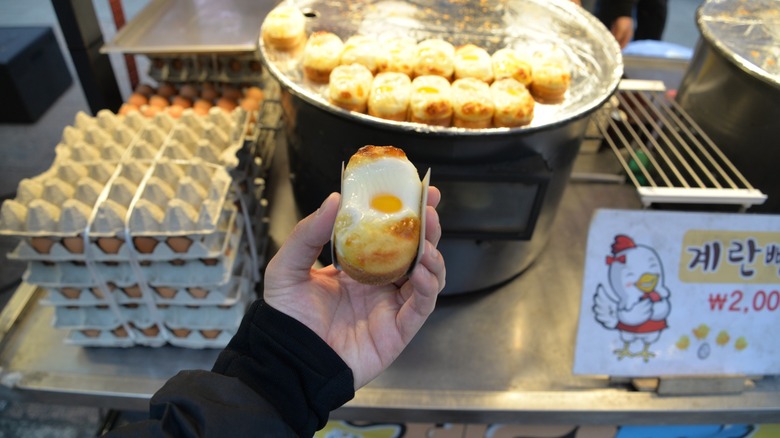
What is the best food to put an egg on? We nominate gyeran-ppang. Although its name is translated simply to "egg bread," the experience of eating it is anything but basic. This beloved Korean street food starts as a lightly sweet, vanilla-scented batter poured into small molds. Before baking, a whole egg is cracked directly on top, which then settles as the bread steams and bakes into a hand-held fist-full of heaven.
Vendors line busy streets in the likes of Seoul, pouring batter, cracking eggs at lightning speed, and flipping their fare with expert flourish, and patrons line up in droves to eat it all up. Most often wrapped in a cardboard sleeve, this Korean novelty is meant to be eaten immediately, burnt fingers be darned! The sweetness is restrained, not daring to outshine the egg. Modern iterations might even include corn, bacon, or cheese, but the heart of gyeran-ppang never changes. The non-negotiable? The egg is not mixed in.
Pots de crème (France)
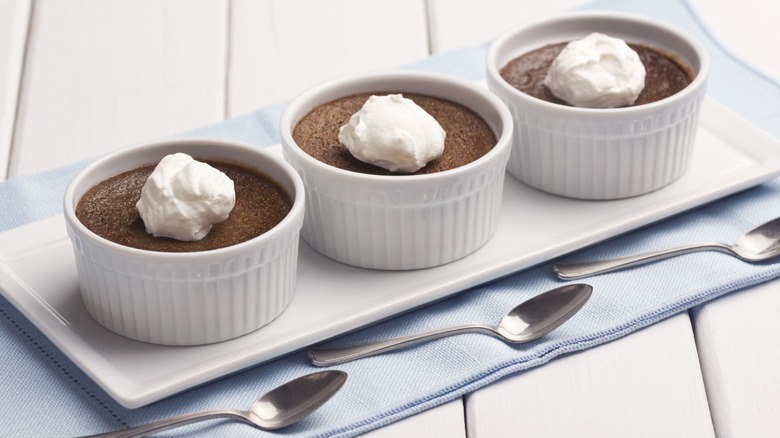
Pots de crème is a classic baked French custard that dates back to the 17th century and is thickened with eggs (specifically yolks). This clever recipe results in a rich, velvety pudding that is soft, spoonable, and absolutely meant to be savored (and it is). The dessert's moniker literally means "pots of cream," a name that refers to both the custard and the dainty porcelain cups made just for serving it in. It's true. As they grew in popularity throughout the 17th and 18th centuries, pots de crème were deemed important enough to deserve their own dedicated dishware.
Speaking of fancy dishware, this is a dessert designed for dinner parties (and hosts' ease), as they can be made in advance, chilled, and served with confidence, not stress. Not to be confused with crème brûlée (its thicker and caramelized cousin) or crème caramel (which is lighter and gets far more jiggly with it), pots de crème is more neutral, made of equal parts milk and cream mixed with a high ratio of egg yolks that creates something substantial enough to satisfy, but decidedly not stiff.
Purin (Japan)
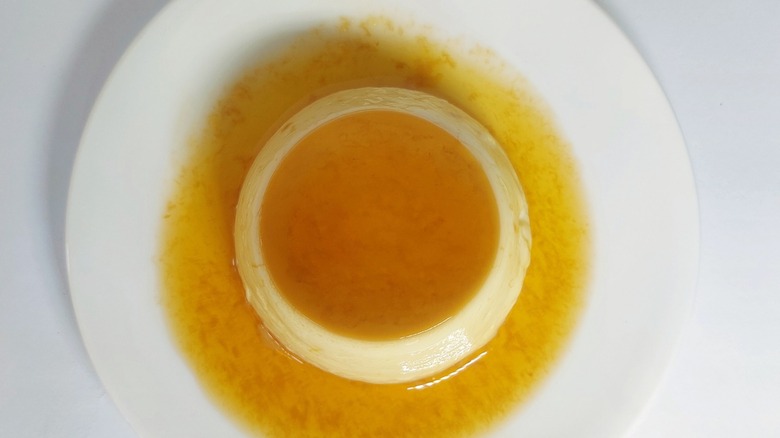
Gleaning inspiration from Western pudding, but refined into something distinctly its own, purin is a chilled custard dessert with a smooth, velvety texture and a gentle wobble. It is made with milk, sugar, and multiple eggs, giving it an extra level of richness. Unlike American pudding, purin is baked in a water bath, which results in its signature firm yet creamy consistency (think a teeny bit like flan in texture, but softer and more delicate). A caramel sauce sits on top of it all.
Purin is everywhere in Japan, from cafes to bakeries, and even in convenience stores, but nothing beats homemade purin. Slight variations exist (yaki purin is baked, while mushi purin is steamed). Each method highlights the eggs differently, but all rely on them for the lion's share of the heavy lifting with this lovely Japanese dessert. For many, purin invokes notes of pure nostalgia and comfort, kind of like spoonable sentiment akin to a plate of apple pie and ice cream.
Chocolate chip cookie dough deviled egg (U.S.)
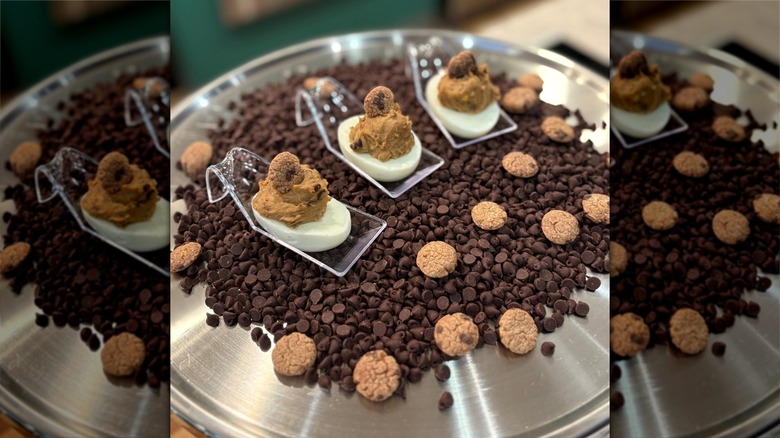
If the posh French pots de crème are eggs in a tuxedo, the chocolate chip cookie dough deviled egg would be more similar to eggs sporting a mullet and a tank top at a state fair. Speaking of state fairs, this quirky egg dessert first debuted as the 2025 flavor of the year at the Ohio State Fair. This quirky concoction unsurprisingly received immediate attention. In fact, it became a bona fide viral sensation.
Hard-boiled egg whites become the edible vessel in this deviled egg voodoo. The yolks are then whipped into a sweet, cookie dough–inspired filling dotted with chocolate chips. Is it confusing? Absolutely. Is it American? Entirely. Maybe this iteration should not shock us so much. After all, deviled eggs have always thrived on reinvention (think bacon, jalapeno, buffalo sauce, and maple syrup, all of which were added without half as much ado). Most who have tried the dessert report that the egg is mostly there for structure and shock value. It's the chocolate and spectacle that are eggs-actly what this dessert is scrambling for.