

The Absolute Best Money-Saving Tricks For Grocery Shopping

Are grocery prices pushing you to your limit? We're right there with you. These days, it seems like everyone's on a hunt for a good bargain — and while it's easy to cut costs on options like entertainment and extraneous expenses, it's much harder to cut down on cash spent on essentials like groceries. Still, most of us can agree that there are better ways to spend a Saturday than clipping coupons. As such, it can be helpful to have a few money-saving strategies up your sleeve to help save cash while shopping.
We're exploring tried-and-true techniques that can help you put an end to overspending at the grocery store. From store-specific perks to general food-buying tricks of the trade, this article aims to help you navigate grocery store aisles in a way that will benefit both your belly and wallet. If you're tired of un-bill-lievable prices, stick around — we're gearing up to reveal the absolute best money-saving tricks for grocery shopping, coming up next.
Sign up for rewards
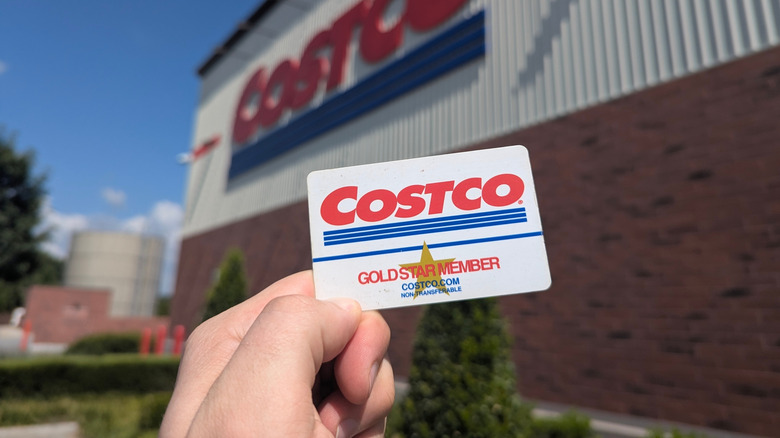
Signing up for rewards is one of the best money-saving strategies you can use at the grocery store. By opting into these retailer-specific programs, you can save big on purchases, often in a single swipe. Though every grocery store has its own way of offering perks to customers, many dole out debit or credit cards that feature cash back on qualifying purchases. In some cases, retailer-specific credit cards can be used at other locations. For example, some grocers, such as Sam's Club, provide cash back options for gas, food, or other purchases — and not just at Sam's Club. The amount retailers kick back to patrons varies, but it can sometimes be as high as 5%.
Aside from credit card offerings, some grocery stores may feature free loyalty memberships with a variety of great benefits. From digital coupons to free curbside and delivery, it pays to sign up. Of course, there are pros and cons to everything. Some markets offering stellar rewards will have stiff requirements, such as a paid membership or credit checks associated with opening a new credit card. As always, you'll want to do your research ahead of time to see which rewards programs will work best for you before you decide to commit.
Beware of sneaky marketing tactics
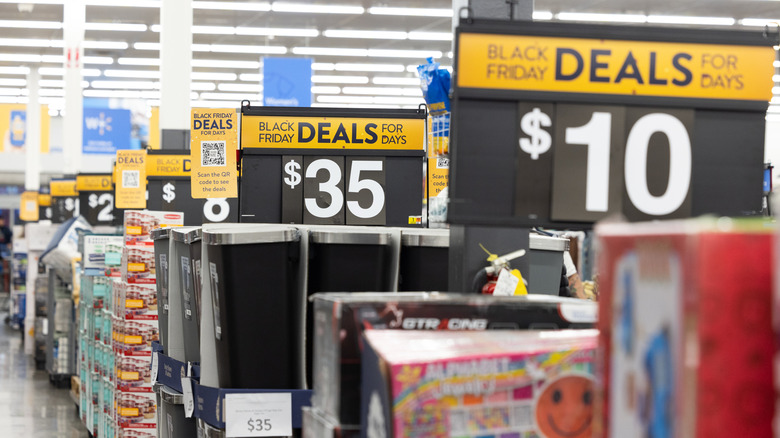
Marketing tactics are often utilized by grocery stores to trick customers into buying certain products, though the specific techniques used vary. One interesting way grocery stores deceive customers into spending more cash is by placing more expensive items at eye level and less expensive items at either lower or higher than the average height. This technique tricks patrons into spotting the costlier product first and, consequently, caving in to the purchase before any further examination.
Sadly, the shady things grocery stores do to get you to spend more money don't stop there. The endcap, also known as the displays at the end of the aisle, is often where new or more expensive items get placed, as their unique position makes them more likely to garner customer attention. In our experience, this can also be the place where clearance items are dumped — and though it's great to snag a discounted grocery item every now and again, it's not-so-great when that item was never a part of your shopping list to begin with.
Last, but not least, beware of attractive or eye-grabbing items. Packaging that features bold colors or fun patterns is attractively designed for a reason, making it that much more tempting to spend your hard-earned cash unnecessarily.
Use produce to bulk up your meals
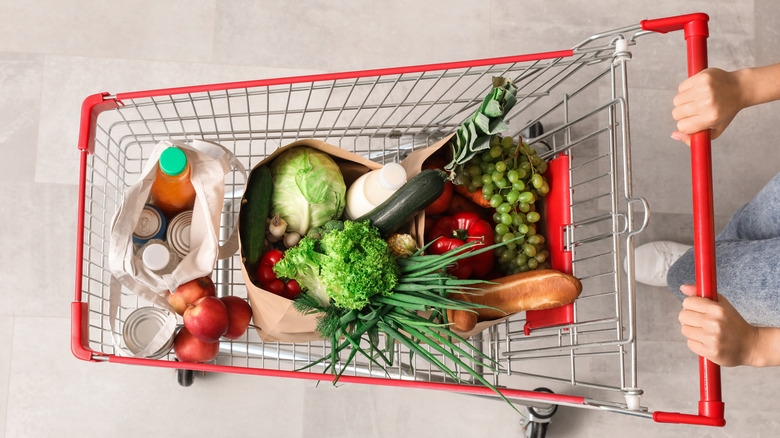
As prices continue to fluctuate in grocery stores nationwide, it's helpful to have affordable options available to help you feed loved ones. While we love meat-laden meals as much as the next person, there's something to be said about using inexpensive fruits and veggies to stretch a meal. Options like carrots and mushrooms can turn a plain casserole into one that's hearty and delicious, while tender broccoli florets stirred into creamy alfredo add texture and tons of satisfying, nutritious flavor.
In need of even more meal-stretching ideas? Consider throwing a bag of beans or lentils in your cart. These options can be tossed in anything from savory soups to burger patties or even vegetarian burrito bowls. You'll likely be surprised at how much further your food goes when using them, and your body will thank you for the extra nutrients and fiber contained within.
Purchase groceries through apps

In addition to rewards programs, perks, and loyalty memberships offered by grocery store retailers, there are some third-party apps out there that money-saving shoppers can also utilize to their advantage. One of the best apps for saving money that we've used on a regular basis is Fetch. By simply shopping and scanning receipts, you can earn points that eventually turn into gift cards that can, in turn, be used on your next batch of groceries.
Worried about keeping up with printed receipts? Companies like Fetch do the work for you by pulling information from your phone's grocery store apps and emails to help get you the rewards you deserve. Of course, signing up for third-party programs like these requires effort — though retailer-specific loyalty rewards and cash back cards typically rely on a quick swipe, third-party apps often require direct access to your smartphone apps and your email, especially when it comes to cashing in on digital receipts. Ultimately, it'll be up to you to determine whether or not you're comfortable with an app having this level of access to your emails and apps. If you feel unsure, you can always snap photos of printed receipts in exchange for more privacy.
Set a budget for impulse buys

Some may find the upcoming tip counterintuitive, but stick with us, we're going somewhere. When it comes to saving money on groceries, leaving a little financial wiggle room for the things you want (but don't necessarily need) is probably the farthest thing from your mind. Even so, setting aside a bit of "fun" money every week can actually help you save money, as doing so allows you to live a little, so to speak, without breaking the bank.
Exactly how much are we talkin' here? Honestly, the answer varies from person to person. Ideally, you'll want it to be a smaller amount — just enough for you to grab a few things without blowing your budget. But once you've spent that amount, don't go over it. Always stick to your set fun money amount, and you'll likely still save on groceries, even after purchasing things you don't necessarily need.
Stick to a formula for your grocery list

When the refrigerator's bare and you're short on time, it can be tempting to throw your grocery list together in a haphazard way. A loaf of bread here, ground beef there, Cheetos, and a tub of ice cream — that's everything, right?
Interestingly, the way you organize your grocery list can also affect your spending habits. There are multiple formulas and systems out there that people use to help save money, though the one that will work for you will strongly depend on your family size and lifestyle. A popular formula we've come across is the 3-3-2-2-1 grocery hack. The numbers represent three proteins, three vegetables, two fruits, two grains, and one dip or spread. A formula like this can make organizing your grocery shopping list easier and ensure you're getting the nutrition you need, all while saving cash.
Note that when using grocery list formulas, it is often important that the foods you purchase work in tandem with one another. You should be able to mix and match the foods you've chosen to create a variety of meals throughout the week.
Pay attention to unit pricing
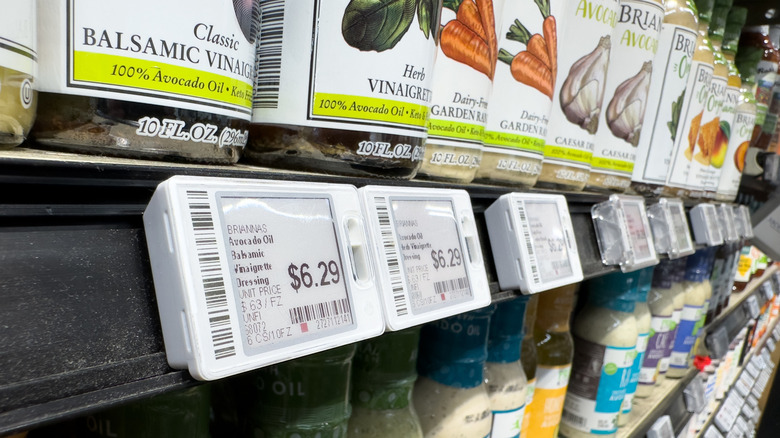
We admit, it's much easier to take price tags at face value, throw the item with the lowest price in your cart, and be on your way. Still, this isn't the approach you'll want to take if you're serious about saving money. Instead, you'll need to look at unit pricing to see which size or brand truly offers the best deal.
This concept may look different depending on the item you're looking to purchase. For example, when comparing the price of eggs, you'll usually want to calculate what you're paying per egg, while boxes of cereal are usually best compared using cents per ounce. Sometimes, retailers will do the math for you — you'll often find unit pricing detailed on the price tag if you look closely enough.
Keep in mind that, in most cases, items in a bigger box or purchased in bulk will work out to be cheaper than individually sold items in smaller packages, though this varies by store and brand. Do your research and shop around. You're bound to find a great deal when shopping by unit price, saving you tons of money on each shopping trip in the process.
Skip convenience and cook from scratch

Cooking from basic ingredients isn't nearly as intimidating as people think. From three-ingredient homemade sauces to easy stovetop mac and cheese, you'd be surprised what you can whip up with just a handful of ingredients. What's more is that many of the ingredients you need to pull together to make homemade classics can often be purchased in bulk for cheap. Shopping list items like flour, butter, sugar, salt, and potatoes are great places to start for building a pantry that will yield an endless amount of made-from-scratch meal options.
Before you get started, you'll want to learn as much as you can about scratch-cooking. Learning basic steps and procedures from cookbooks can help you create satisfying meals from virtually nothing. The best part? Scratch-made foods often taste better and pack more nutritious sustenance than convenience options. Who could argue with that?
Don't overlook membership-based shopping

Look, we know that paying money to shop isn't going to be everyone's jam, and to be honest, not all wholesale stores are going to suit the needs of every household. That said, if you find yourself buying certain items on repeat or are in need of large amounts of meat, toiletries, dry goods, or produce, it might be worth giving wholesale retailers like Sam's Club and Costco a shot.
Wholesale retailers sell items in bulk to customers, which typically results in lower costs for the shoppers. Remember the unit pricing we talked about earlier? Take some time to compare the price per unit you pay at your typical grocery store to what you'd pay in bulk at a wholesale retailer. In most cases, you'll likely pay less when buying in bulk, especially if you opt for store brands, such as Kirkland or Member's Mark. Combined with weekly sales and other membership perks, you'll quickly see why so many are willing to pay annually to join grocery store memberships like these.
Eat before you shop

Waltzing down grocery aisles while hungry isn't just a bad idea; it's a habit that can drain your wallet if you aren't careful. By visiting the grocery store in the midst of cravings, you're more likely to grab whatever catches your eye, even if it's something you didn't originally intend to buy. When done repeatedly, this pattern of behavior can wreak havoc on your finances while making it that much harder to stick to your shopping list.
Your best bet? Make sure to shop on a full stomach. If you don't have time to sit down to a full-blown meal, consider keeping a small snack on hand or picking up food at the in-store cafe, if the supermarket you frequent has one. A quick hot dog or sweet-tasting coffee may be all you need to stave off hankerings while you shop, thereby curbing the temptation to spend money based on cravings and not on need.
Take advantage of rotisserie chicken
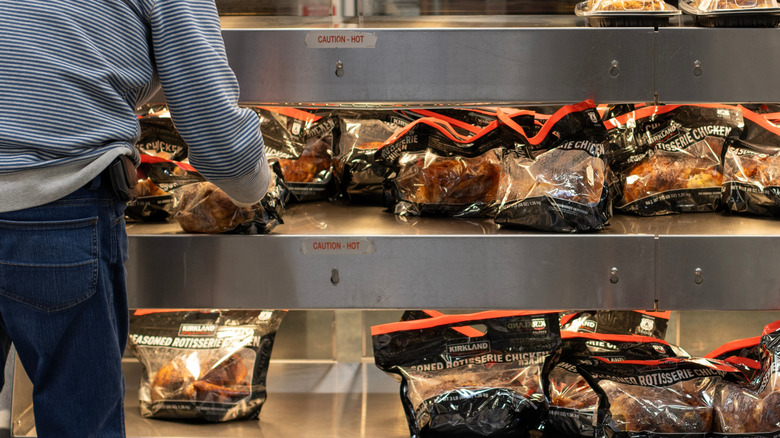
Rotisserie chicken is a cheap, high-protein option that's easy to overlook — until you learn how to use it, that is. There are a number of easy weeknight meals you can make with rotisserie chicken, making it an amazing pick when you're trying to save money at the grocery store. This money-saving option could be used in virtually anything savory. From stir-fries to soups, rotisserie chicken lends itself to over a dozen delicious opportunities.
To make the most of rotisserie chicken, start by picking the meat off the bone while it's still warm. After the meat has been removed, refrigerate the amount you think you'll use within the next few days before freezing the rest for future use. From there, simply substitute the cooked chicken for any recipe that calls for it. Be sure to watch out for the added sodium — because rotisserie chicken already comes seasoned, it sometimes graces dishes with additional salt, which might pose a problem if the dish already contains enough salt.
Also, don't forget to make use of the carcass. The bones left over from a rotisserie chicken can be utilized for a mean homemade chicken stock if you're willing to put in the time and effort.
Shop by sale, not by want
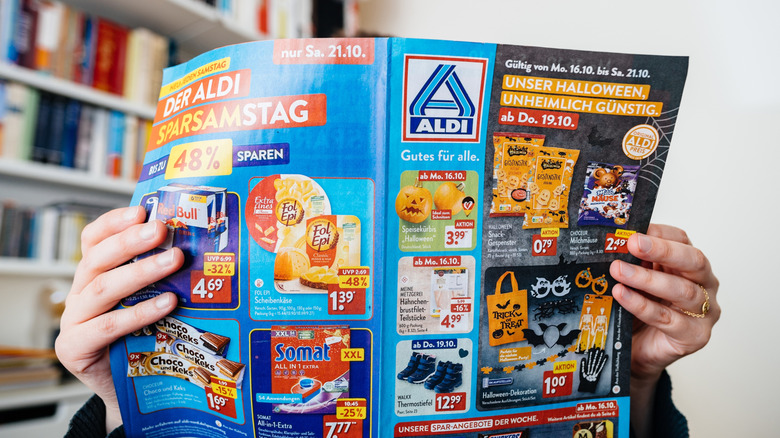
We know how hard it can be to resist making a grocery list according to your typical weekly menu, but if you're willing to be flexible enough to buy only what's on sale instead, you might end up surprised at how much you can save. Don't hear what we aren't saying -– of course, you can fill your shopping cart full of whatever you want! Doing so may cost you, though; while other types of produce, meats, and packaged goods are on sale, you may be stuck buying the same old stuff and, consequently, spending more than you have to.
What might be a better choice is to take a look at your local retailer's weekly flyer and compose a grocery list based on the items that are marked down. You can even use a grocery list formula like the ones mentioned earlier to ensure you're buying enough fruits, veggies, and protein to satisfy your nutritional needs. Aside from the fact that shopping by sale is often easier on the wallet, it also opens a window of opportunity to try new foods that you maybe never would have otherwise. The results? A more flavorful and exciting way to enjoy your meals, which is usually more affordable, to boot. Cool, huh?
Limit food waste by shopping your fridge and pantry

If you tend to make your grocery list without first assessing what you already have in your pantry or refrigerator, we need to talk. Approaching grocery shopping this way could be preventing you from saving money, particularly if you already have plenty of food on hand. Instead, you should try shopping your stash before heading to the market, as doing so has the potential to save you loads of cash.
The goal of shopping your fridge and pantry is to use up what you have in a creative way so you aren't having to make so many new purchases. Have a bag of rice and leftover broccoli that has yet to be eaten up? Add whole milk, cheddar cheese, and rice to your shopping list to make a delicious and filling rice and broccoli casserole later in the week. Remember also that you can freeze items like butter and cheese. Buying these items in bulk not only means you'll usually get them for less, but also that they'll be ready for use without you having to make frequent, repeat purchases.
Stick to your budget by shopping online
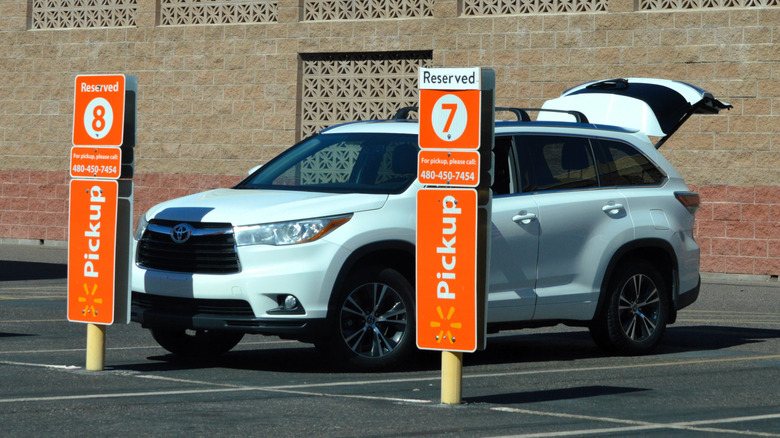
We realize that not everyone will agree with us here, but ordering groceries through curbside or delivery is an awesome way to save on cash. Aside from saving parents the hassle of squeezing through bustling aisles with screaming kids in the cart, ordering groceries online can prevent you from overspending. Gone too far over budget? No problem. Unlike at checkout, you won't have any sighing customers behind you as you nervously ask the cashier to remove grocery items from your order. Instead, you'll simply click "delete" on the items you don't want, and voilà — you're back on budget with no hassle involved.
Of course, online shopping isn't for everyone. The chances that the grocery store employee will make a mistake while fulfilling your order are definitely a possibility. Still, for those willing to take the risk, curbside and delivery for groceries can be an awesome money-saving strategy. Just make sure to be forgiving if the shopper makes a mistake or two.