

Beer Bottles Come In 3 Colors, And Here's The One You Always Want To Avoid
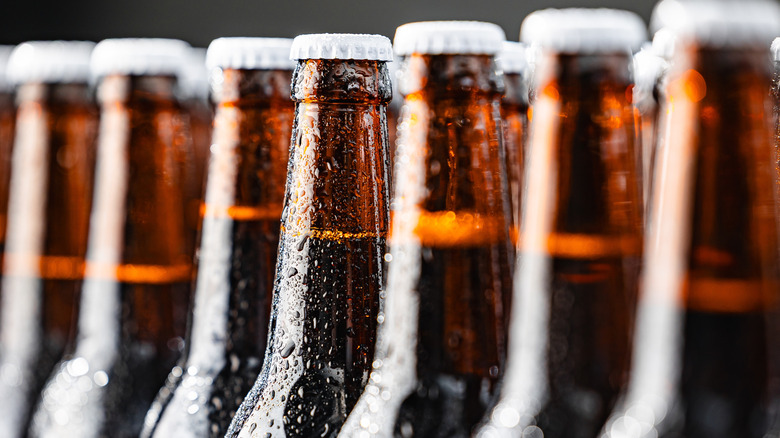
Packaging can be just as important a selling point for beer as the taste or brand. Brewers and distributors of cheap but delicious beers and obscure craft brews alike employ funky-sounding names, eye-catching label imagery, and other packaging strategies to generate interest and sales. One detail that may not rate much attention is the color of the beer bottle itself. Beer bottles almost always come in one of three colors — brown, green, or clear (though there are also amber, black, and even blue bottles, like Kronenberg 1664 Blanc). Brown beer bottles are by far the most common color choice, and for good reason. As it turns out, bottle color isn't just a surface-level aesthetic choice: It can seriously impact the taste and quality of the beer inside.
When beer is exposed to sunlight, ultraviolet (UV) radiation reacts with the hop compounds, producing a skunky, unpleasant flavor (this is why bottles stashed in the sun are a clear beer store red flag). Brown or amber glass provides the best protection from harmful UV light (as does black, though it's less frequently employed for beer). Green and blue bottles provide some light protection, but not as effectively as brown ones, and clear bottles are offer almost no protection from UV rays. As a result, beer that comes in clear bottles is far more vulnerable to skunking than brown-bottled brews.
Why does beer still come in green or clear bottles?
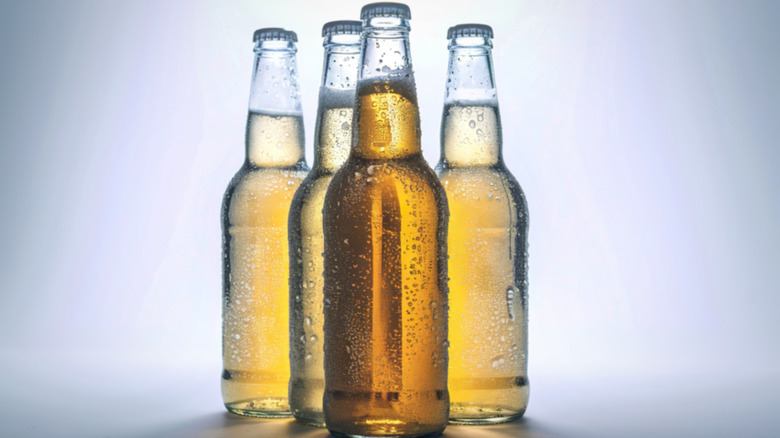
So, if brown glass is clearly the best option for preserving the flavor of this well-loved bottled malt beverage, why do green and clear beer bottles exist? The continued presence of clear and green beer bottles can largely be blamed on a combination of history, branding, and marketing. Many European brewers began using green glass bottles during World War II, when high demand for brown glass led to shortages.
Because green glass was known to preserve flavor better than clear glass, green bottles became something of a symbol of quality for many beer-makers, and the emerald hue remains an iconic part of the brand identity for brewers such as Heineken and Stella Artois. As for clear bottles, they're often used by brands like Corona to show off the beer's golden hue ; in other words, it's a crystal-clear (no pun intended) example of style over substance.
These days, many brewers treat bottles with UV protection coats, so the color isn't quite as important, but brown beer bottles still provide the best protection from skunking. However, if you truly want to avoid skunked beer, you might find canned beer tastes better, as cans completely block UV light. And no matter what color bottle or can it comes in, make sure to pour your beer the right way for the best sipping experience.