

Why Giada De Laurentiis Wants You To Eat Day-Old Pasta
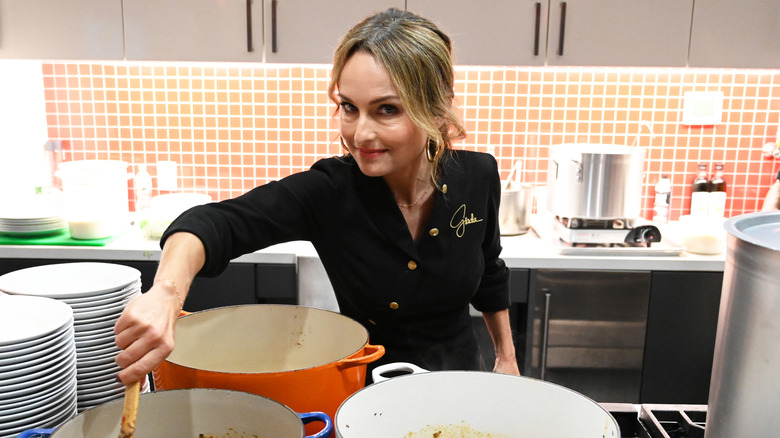
As a longtime professional chef who received formal training from Le Cordon Bleu in Paris, Giada De Laurentiis has the educational pedigree and formal experience to prove she's an expert in her field. Her bestselling cookbooks and her two decade career at the Food Network further establish her voice as an authority in modern Italian cuisine. And yet, every once in a while, we hear an opinion from her that instantly boggles our minds. We're specifically talking about her hot take on why it's better to eat pasta a day later. This is controversial for a handful of reasons. For one, who cooks pasta and doesn't eat it right away? Second, there's no way there'll be leftovers when pasta is cooked to perfection. So, unless you prepare a big batch to intentionally stack up leftovers in the fridge, it's unlikely for you to have excess pasta the next day.
Anyhow, according to the "Giada at Home" star, you should consider reheating and eating leftover pasta if you haven't yet because the day-old version might be healthier than the freshly cooked one. In a video she shared on Instagram, she explained this in detail, saying, "Did you know that pasta the next day is better for you? So when the pasta cools, the carbs turn into resistant starch which is easier to digest, which means you have a lower blood sugar spike and it's better for your gut. So, leftover pasta for the win."
The science behind pasta being healthier when eaten the next day
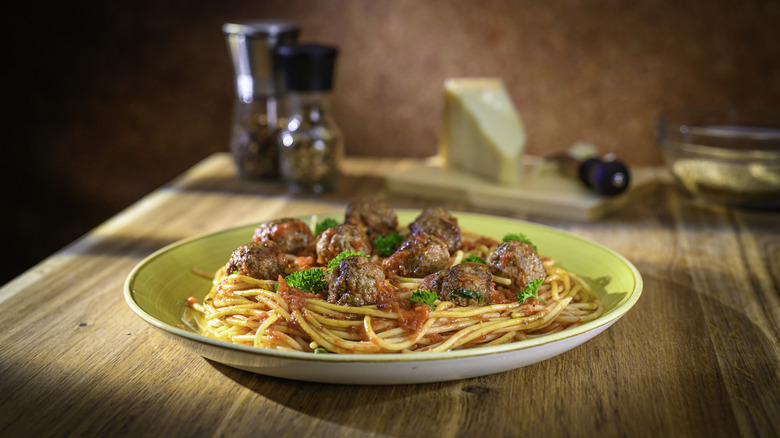
Pasta doesn't last long even when stored in the fridge, with the general rule being that it lasts three to five days before it starts going bad. That's why Giada De Laurentiis recommends eating leftover pasta no later than the next day to unlock and enjoy its healthier profile. It's true that, according to scientific data, pasta that's been chilled for a full 24 hours is less likely to cause a sugar spike in the bloodstream. As she pointed out, this is because the simple starch in the dish converts into resistant starch as the pasta cools down. The process takes at least a full day to complete. Once converted, the resistant starch can help regulate the release of glucose into the bloodstream which is beneficial for people with diabetes and other related conditions.
Resistant starch also takes longer to digest, making you feel full for an extended period. Dr. Denise Robertson, a scientist from the University of Surrey, explained to the BBC that this happens because the body treats resistant starch as fiber. As a result, fewer calories are absorbed. At the same time, more calories are burned during the process since the body is forced to work harder to digest the converted starch. When it comes to your health, it's a win-win situation if you eat leftover pasta the next day. Just be sure to avoid the most common mistakes when handling and storing leftover food before reheating it for consumption.