

This Unique Caviar Variety Is Actually Illegal In The US
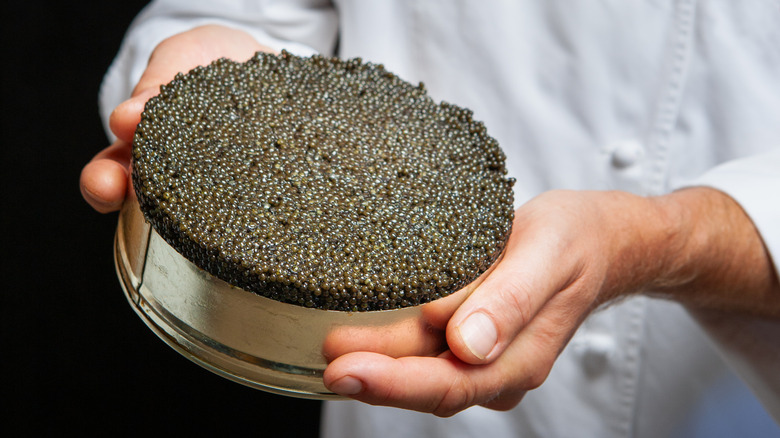
Caviar is seen as a sign of luxury and status. Whether it's served on a simple cracker or paired with crème fraîche and smoked salmon, it brings a salty, umami flavor that can't be matched. One type of top-of-the-line caviar is from Beluga sturgeon, a long, bony-plated fish with whiskers that can live in either saltwater or freshwater. One type of Beluga roe, called Almas caviar, can go for over $15,000 per pound, while the less exclusive Beluga caviar still fetches around $10,500 per pound. Other fish eggs, which are different from caviar, are still coveted, but none with such a high price tag. If you want to try this fishy delicacy, you might have to make a trip abroad for it because imported Beluga caviar is actually illegal to buy or sell in the United States.
Much to the chagrin of wine enthusiasts and restaurant owners across the nation, the U.S. Fish and Wildlife Service initiated a ban on all sturgeon products imported from the Caspian Sea in 2005. This included Beluga caviar, which was a slight shock at the time because the United States consumed 60% of global Beluga caviar exports.
Such a broad ban may seem unusual. After all, only a few products (like certain cheeses and meats) are illegal in the U.S. Farmed Beluga caviar bought from within the U.S. is fine, but at the time of the ban no one knew how to farm the fish, making the caviar impossible to get legally. That being said, it was banned for a very good reason. Still, it spawned illegal trade the likes of which few foods have ever inspired.
Why Beluga caviar was banned in the United States
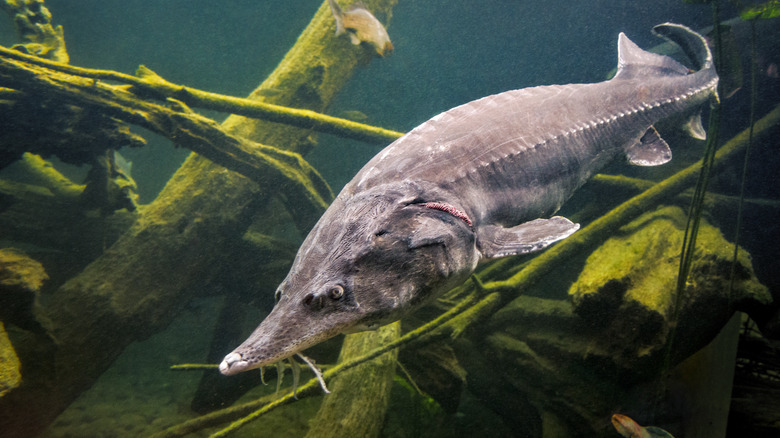
There's a very simple reason why the FWS banned the importing of Beluga caviar. As you might have guessed, Beluga sturgeon are a threatened species and have been for decades. This is specifically true of the Caspian and Black Sea Beluga (Huso huso) which is said to produce some of the finest caviar. In their small living range, they have been heavily fished to the point of near extinction due in part to their caviar. One of the reasons it's so expensive is that sturgeon have a slow breeding cycle of at least 15 years, and a fish historically had to be killed in order to harvest her caviar.
Several organizations have placed legal protections on the fish in order to keep their dwindling numbers from vanishing entirely. The United States' ban on imported Beluga caviar was the first unilateral protection for the fish as previous partial restrictions came from various international treaties. Other countries have only temporary bans on sturgeon fished in the Caspian Sea as well as certain rivers and oceans. The trade is still highly restricted and regulated.
The importation restriction made Beluga caviar all the more sought after and illegal trade rings for the delicacy have persisted. Numerous illegal fishing and smuggling operations have been busted over the decades, sometimes with literal suitcases of caviar on hand. Considering how caviar doesn't last too long after being opened, their presence speaks to just how high the demand for these contraband fish eggs really is.
You can still try Beluga caviar
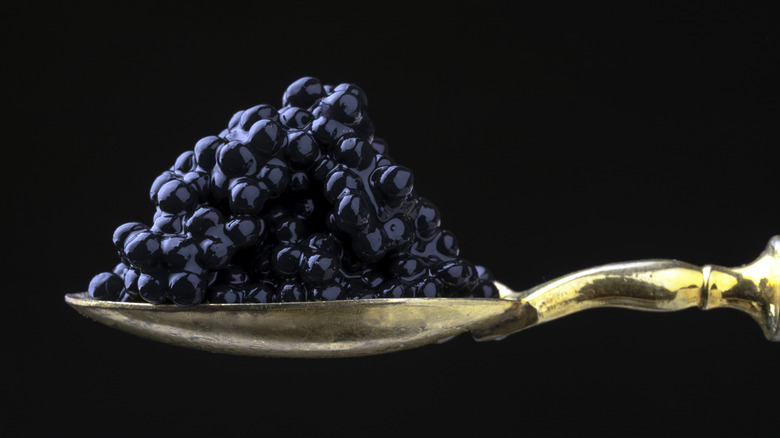
Perhaps your curiosity is piqued and you want to try these fabled buttery, salty, and rich pearls yourself. Shockingly, there are still a few legal ways you can do it. One of the most straightforward is to fly to Europe and find a place where Beluga caviar is sold legally. You can even bring home small amounts for friends and family (up to 125 grams) as long as you don't sell it. You must also declare it at customs for personal use or risk heavy fines and jail time.
For those who aren't up for food tourism, there's a fish farm in Florida that now offers farmed Beluga caviar that is approved by the FWS. Marky's was founded in 1983 and was the first farm in the U.S. to successfully breed true Beluga sturgeons in captivity after trying for 17 years. This eventual success meant the import ban didn't entirely prevent Americans from buying Beluga caviar anymore. Marky's uses techniques that don't kill the fish during harvest, making the practice sustainable. It also assists with conservation efforts. Certain regions in China, the country that exports the most caviar in the world, have river sturgeon farms, but these are harder to buy from.
The last option is hybrid caviar from farmed fish crossbred with Beluga. It may be milder than true Beluga caviar, but it also costs less and doesn't harm a dwindling population. We're still talking over $100 per ounce, though. If you're looking for just any caviar, there are some options that cost just $20 per ounce. For a fancy dinner party, try legal caviar instead.