

Whatever Happened To OatMeals From Shark Tank?
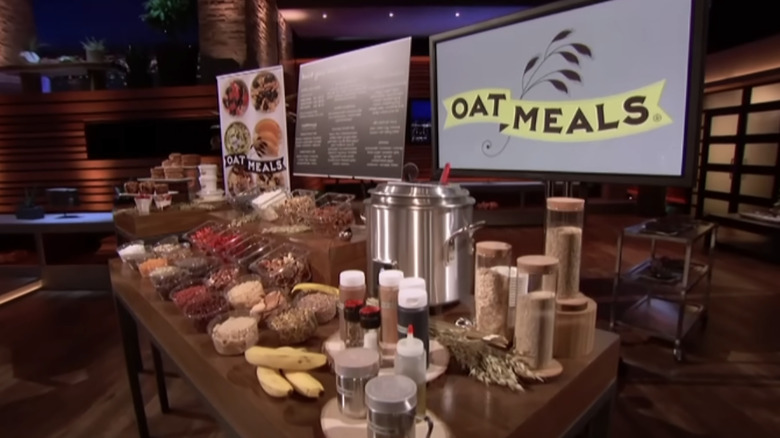
Oatmeal is brimming with nutrients, especially protein and fiber, but it's still underrated compared to other superfoods like chia, avocados, and quinoa. One possible reason for this is that oatmeal is often perceived as a breakfast food only. Not saying this is a bad thing since oatmeal can really fire up your day when prepared with simple but flavorful upgrades. OatMeals, a New York-based café, tried to change this narrative around oatmeal by making it good enough to eat every day any time of the day. With different preparations and toppings, the store promised there would be menu items for breakfast, lunch, and dinner.
Sam Stephens, the founder of the oatmeal bar, came up with the concept after growing tired of eating too much junk food to get through college. She didn't initially pursue it as a business after graduating as she started with a career in finance. After finishing a culinary course on the side she decided to quit her job and open a 380-square-foot store in the Big Apple focused only on serving oatmeal. While the business generated millions, Stephens thought of maximizing the potential of OatMeals by setting up more stores. Without enough money to fund the expansion herself, she turned to ABC's "Shark Tank" for help, entering the show in Season 10 in the hopes of landing a deal with the Sharks.
What happened to OatMeals on Shark Tank?
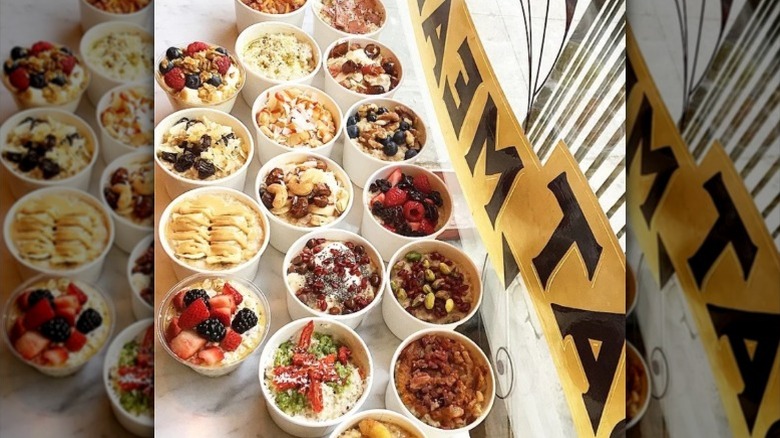
Stephens entered the tank seeking $500,000 for 20% equity. Right off the bat, she impressed the Sharks by showing off her oatmeal creations and handing out samples. Lori Greiner, Barbara Corcoran, and Daymond John (who wasn't fond of eating oatmeal) heaped praise on the meals. Stephens was selling her creations in different sizes, with the smallest bowl retailing for $4.25 and the largest valued at $6.25. Each serving included two toppings but customers could add extras for $0.25 to $0.50. The plain servings offered between 110 and 180 calories. Performance-wise, the specialty café was already profitable when Stephens appeared on the show; since opening in 2012 it had recorded $2.5 million in sales. In 2018, it was projected to earn $500,000. The year prior, it had made $470,000.
However, while the figures were impressive for a small shop, the Sharks grew worried after learning that it had only made $45,000 in profit in 2017, and Stephens was only paid $40,000. Stephens brushed it off by revealing she was making $60,000 yearly from her work with Quaker Oats. Still, without a solid plan to guarantee a revenue boost, Kevin O'Leary, Daymond John, and Mark Cuban bowed out. Greiner, who was interested in packaging the oatmeal products for brands like Starbucks, offered $500,000 for 33% equity. Corcoran offered the same amount but she wanted to turn it into a food cart business and she wanted 50% equity. After some discussions, Stephens picked Greiner's offer.
OatMeals after Shark Tank
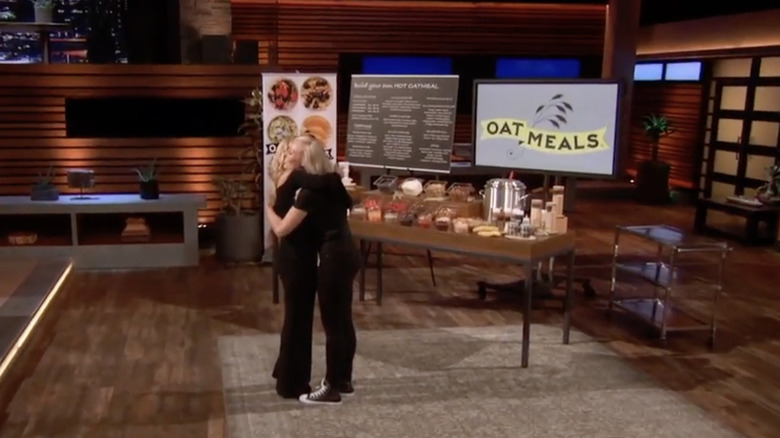
Stephens exited the tank with an offer from Lori Greiner who has a good track record of investing in food products among the mainstay Sharks. She previously said yes to Heidi Ho, the vegan cheese maker, in an earlier season. Sadly, unlike what happened to Heidi Ho after "Shark Tank," Stephens' deal with Greiner never materialized. It wasn't clear why it never closed, but this is nothing new for the show. A Forbes analysis found that 73% of businesses that appeared on the show and received offers didn't get the exact deals they agreed to in front of the cameras. A staggering 43% have had their deals canceled after the Sharks made changes to the terms.
After not receiving her much-needed investment to put up more stores, Stephens opted to focus on her NYC location while continuing her role as the "Creative Oatmeal Officer" at Quaker Oats. Meanwhile, the buzz over the brand after the episode aired led to more TV appearances with Stephens and her OatMeals store getting featured on CBS's "Live from the Couch," ABC's "Eyewitness News," and NBC's "News 4 New York," among others. She also got to spread the word about her business through various publications including The Huffington Post, The Wall Street Journal, and Self Magazine. It's safe to say OatMeals experienced the "Shark Tank" effect during this period, drawing in more customers amid all the publicity.
Is OatMeals still in business?
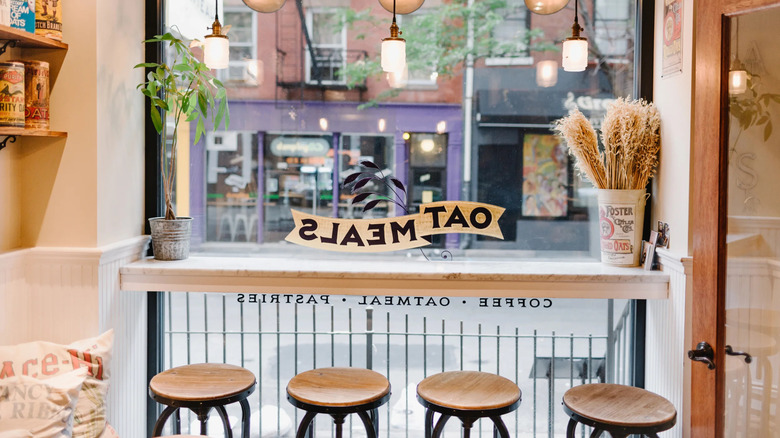
OatMeals is no longer operational, but it won't go down as one of the biggest food flops in "Shark Tank" history. That's because the products it offered had potential from the get-go. After appearing on the show, Stephens was booked and busy, sharing how she created the brand and demonstrating how to prepare some of her signature recipes on various channels and shows. Landing pages and spreads in big magazines and publications further proved the positive reception toward what her company was offering. Unfortunately, as with many establishments and businesses that were hit hard during the COVID-19 pandemic, OatMeals ultimately decided to close its doors in January 2021. It's unknown how much it had made before the closure.
After folding her brainchild, Stephens moved on to other opportunities. According to her LinkedIn, she became the director of mobile marketing for Alliance Marketing Partners a few months after OatMeals shut down. Despite what happened, she has continued to post her oatmeal recipes on social media, particularly on Facebook. Somewhat surprisingly, OatMeals' website is still up but it appears to be no longer updated and the brand's online shop no longer has products to sell. Based on the final update from OatMeals' website, Stephens is said to be working on a cookbook and a recipe blog to keep the community of OatMeals fans active.