

11 Common Cooking 'Tricks' That Don't Actually Work
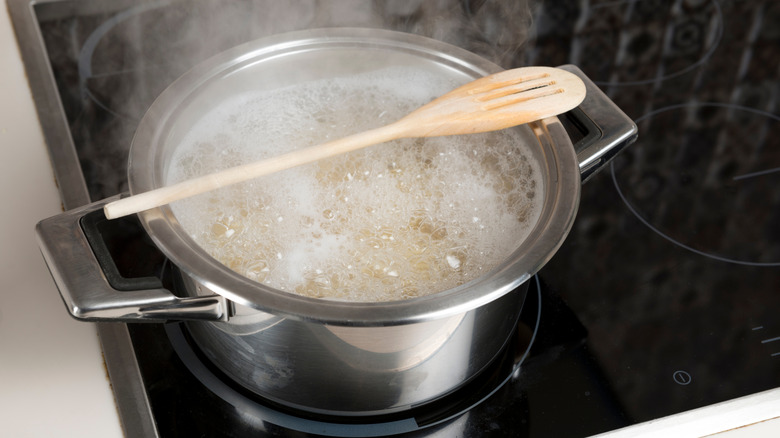
We've all seen it. Scroll online for five minutes and you're basically bombarded with a proverbial alphabet soup of viral cooking "tricks" that promise glorious results. Add this. Flip that. Never ever do this. Supposedly, if you just follow one of these "expert" tips, dinner will be magically transformed. But, the only thing these tricks promising X,Y, Z actually deliver is BS!
Frankly, this alphabet soup is not to our liking and we've had enough. It's too thin on facts, way too thick on hype, and makes us absolutely lose our noodles. And yes, we are salty about it! Cooking should feel empowering, not confusing, and it definitely shouldn't require you to suspend basic logic or ignore culinary science just because someone vowed excellent results, while screaming "trust me!" over an about-to-go-viral video.
So we decided to conduct some research and start to lovingly, but firmly, debunk some of these hacks. While we have featured the best cooking hacks before, our mission here was to bring you the truth about what actually works in the kitchen, and what's just gourmet gobbledygook. Once you understand the "why" behind cooking, you can stop chasing myths and start cooking with gas. Here are 11 common cooking "tricks" that don't actually work, so you can stop being fooled by culinary fiction and start whipping up some mean cuisine.
Adding milk makes scrambled eggs fluffier
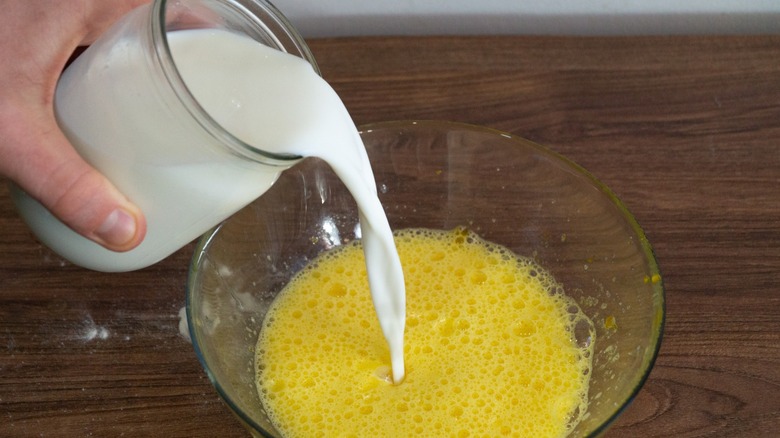
You could say we have fully cracked the case on our first baseless cooking hack. A common myth across social media is that adding milk makes scrambled eggs fluffier. We hate to break it to you, but modern chefs and food experts agree that milk is not your friend when it comes to creating the elusive egg fluff. In fact, that idea is the only fluff in the room with us right now.
Granted, the idea does sound logical enough, like a simple and straightforward math equation for the kitchen. Milk plus eggs equals creaminess. Except in reality, adding milk actually works against the eggs themselves. When milk is mixed in, it interferes with how egg proteins cook and set. So, instead of staying tender, the eggs separate more easily, causing them to burn and dry out. That's how you get those sad, rubbery curds that scream warming tray at a motel buffet, not Sunday brunch.
Eggs already have a natural richness, and milk dilutes it, watering them down and making them bland. What actually works is some whisking technique. If you absolutely insist on including dairy in your morning meal, put that extra milk you saved to good use by topping off that cup of Joe.
The 'Float Test' (good eggs sink, bad eggs float)
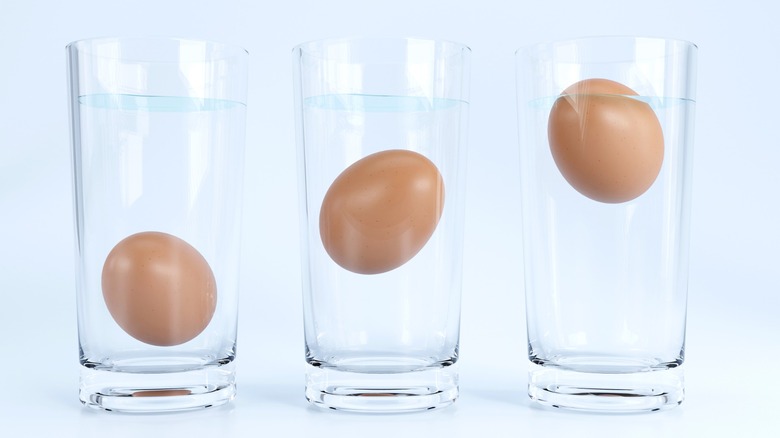
The next cooking "trick" we will tackle is the float test. It's TikTok's preferred parlor trick, and practically the ovo-equivalent of reading tea leaves. The "rule" supposedly dictates that if you drop an egg in water and it sinks, then it's good. On the other hand, if it floats, then that is one bad egg. Sounds simple, except it's actually wildly unreliable.
Whether an egg sinks or floats tells you exactly one thing, and that's how much air is inside the shell. Apparently, as eggs age, air pockets can grow if the egg isn't pristinely stored. This does not tell you whether the egg contains harmful bacteria. Hate to break it to you, but Salmonella cares not one bit about buoyancy. An egg can sink like a rock and still be contaminated. By contrast, it can float and be perfectly safe to consume.
While there is zero scientific basis for using the float test to judge egg safety, there are other ways to determine this. Crack the egg open and use your senses. If your nose is assaulted by a strong sulfur smell, say goodbye. The same goes for finding a cracked shell, which are essentially the equivalent of rolling out a welcome mat to invite bacteria in.
Salt makes water boil faster
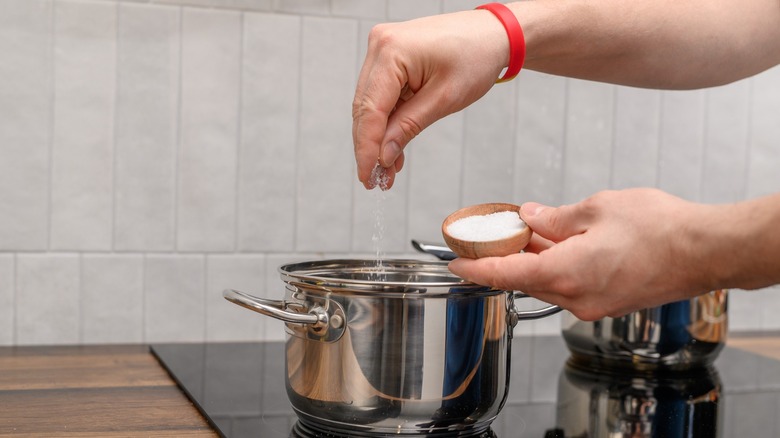
Does salting water actually make it boil faster? This myth is one doozy that just refuses to die. Ask almost anyone why they salt pasta water before it boils, and you'll hear the same tired "trick," bragging about how this cooking hack makes the water boil faster. It sounds efficient, even smart, like you have found some secure shortcut and totally outsmarted the whole system. The only problem is that this shortcut is a dead end when it comes to truly legit cooking tricks.
Salt does technically change water's boiling point, but it raises rather than lowers it. And that teeny, tiny pinch of salt you add for cooking? That dramatic flourish changes the boiling point by such an absurdly small amount that it's basically a non-starter.
It's not just us calling out your favorite kitchen "trick," salting your water does not speed up boiling. Even in cases where salt slightly alters water's specific heat, the amount used in normal cooking is nowhere near enough to affect timing. That said, it may impact taste, so don't throw the baby out with the proverbial pasta bath water. So, the next time you find yourself standing over a pot while sprinkling salt like fairy dust, take a cue from Tay Tay and shake that silly myth off.
Alcohol completely cooks off
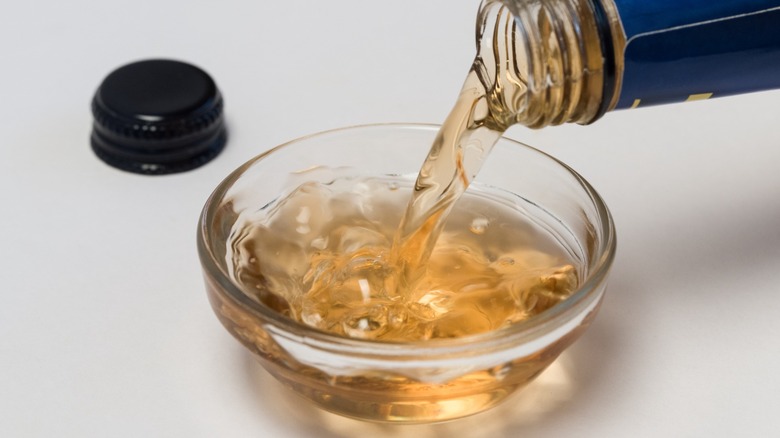
The idea that a splash of wine or spirits magically loses all its alcohol the moment heat hits the pan, sounds tidy and convenient. When cooking for kids, pregnant guests, or anyone avoiding alcohol, this is downright necessary. Sadly, science does not share our desire for neatly tied up things, or happy endings that allow us to have our cooking brandy and eat it too.
In reality, while the alcohol does evaporate when heated, not all of it disappears, and certainly not instantly. In cooked dishes, alcohol binds with water, forming an azeotrope. While water and alcohol boil at different temperatures independently, when combined into an azeotrope during cooking, they mix together, lowering the boiling point of the concoction and making the alcohol surprisingly stubborn and difficult to eliminate completely.
Additionally, depending on cooking method, temperature, and time, the alcohol remaining after cooking can range anywhere from 4% to a staggering 95%. That means that quick flambé or short simmer you've been saying cooks the booze right out of your brandy barely makes a dent. Even a wine sauce simmered for 15 minutes can retain about 40% of its alcohol, and after an hour, roughly a quarter may still remain. Only very long cooking times of two-and-a-half hours or more will significantly reduce alcohol levels, and even then, that fermented liquid fruit may not fully disappear.
Oil in pasta water prevents sticking
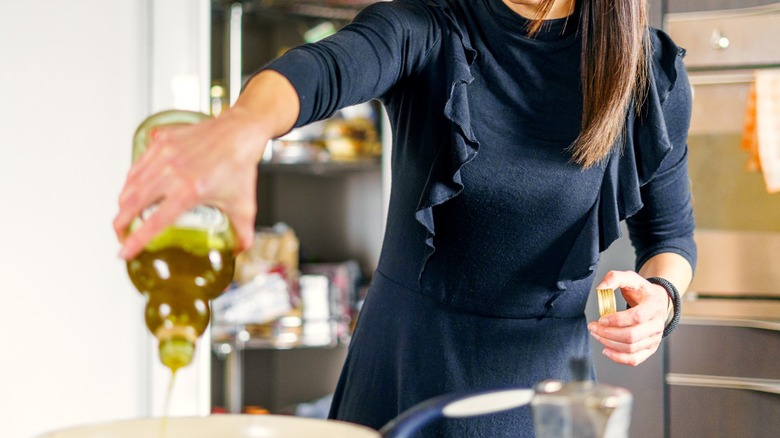
Add this next one to the cooking oil myths you can stop believing. Few kitchen habits feel as ingrained or infuriatingly incorrect as making the pasta mistake of adding oil to water. To add insult to injury, it's often done with uber-expensive olive oil, which somehow makes the act feel even more sinful and like a culinary crime for those in the know.
The logic sounds convincing, with many kitchen gurus goading you to grab that expensive oil and pour with the promise of coating noodles and preventing sticking. The problem is that oil and water do not mix, meaning any oil you add just floats to the surface, while the pasta cooks well below it. In fact, that oil never meaningfully touches the noodles during cooking at all, so it has zero impact on whether these pasta pieces clump together.
The real culprit behind pasta sticking has nothing to do with oil at all. In the first few minutes of cooking, starches on the pasta's surface swell and become sticky. If the noodles sit still during this phase, they adhere to one another. Translation for all the readers without a PhD in chemistry? This just means the fix is agitation, not added fat. Stirring the pot during the first couple of minutes keeps the pasta moving, separated, and cooking evenly. So set that precious olive oil aside for the pasta on the plate.
Adding a potato to de-salt soup
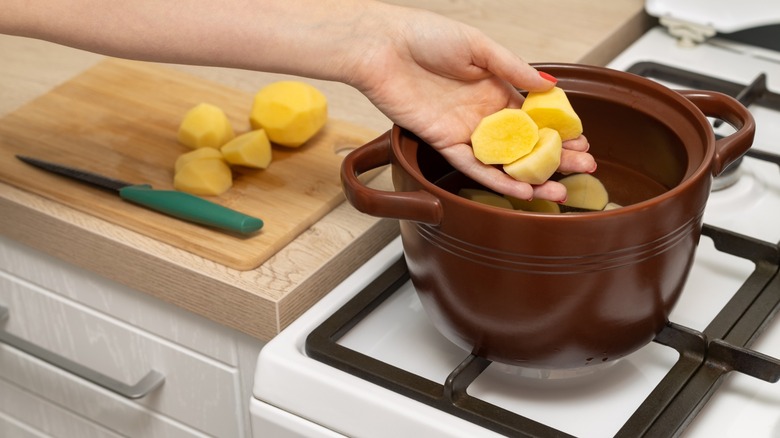
This next one sounds like a beginners magic trick of sorts, which may explain its perplexing staying power. Simply drop a peeled potato into an overly salty soup, let it simmer, and voilà! The salt is gone! Except it isn't, and therein lies the problem.
In reality, potatoes are not super-powered salt sponges. While a potato placed in salty broth will indeed absorb liquid, that liquid will contain the same salt concentration as the rest of the soup. In translation, the potato isn't actually pulling salt out of the pot as much as it is simply soaking up some of the volume of the soup itself, which barely changes the overall salinity of the soup itself.
The potato doesn't fix the problem. It just gives the illusion that something helpful is happening. Any reduction in saltiness comes from dilution, not extraction. And, if dilution is the goal, there's a far more simple solution: just add more liquid. Hot water, unsalted stock, or additional ingredients without salt will actually lower the salt concentration in a meaningful way. So, while the potato trick may feel comforting, and be a fun little side story to tell over supper, this "trick" is really just a tease.
Washing raw chicken for safety
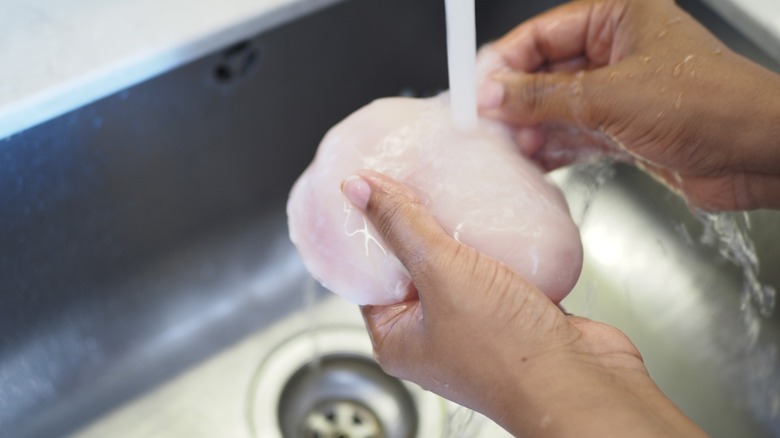
This is one of those wild kitchen habits that feels deeply ingrained, maybe even passed down through generations with the best intentions, but is woefully misguided, bordering on dangerous. We unwrap raw chicken, place it in the sink, give it a quick rinse, and then walk away with a satisfied smile, convinced we've done our due diligence and basking in the glow of our grown-up selves taking responsibility for nailing kitchen safety. After all, clean food equals safe food, right? Unfortunately, this ritual, albeit well-meaning, manages to do the exact opposite of what people think it does.
According to the USDA, rinsing raw chicken not only does not remove harmful bacteria like Salmonella, but actually is known to spread it. It makes sense when you think about it, because when water hits raw poultry, it splashes, sending tiny water molecules that can land on your sink, countertops, you name it. As a result, bacteria can grow from these droplets, turning your kitchen into a contamination zone without you're even realizing it.
Plus, washing it doesn't disinfect anything, but rather just relocates the lurking bacteria to places where it can cause real harm later. If those surfaces aren't thoroughly cleaned and sanitized afterward, the risk of foodborne illness increases significantly. The fix is actually heat, which kills bacteria. Cooking chicken to the proper safe minimum internal temperature is really what makes it safe to eat, not rinsing it under the tap.
Throwing spaghetti at the wall to test doneness
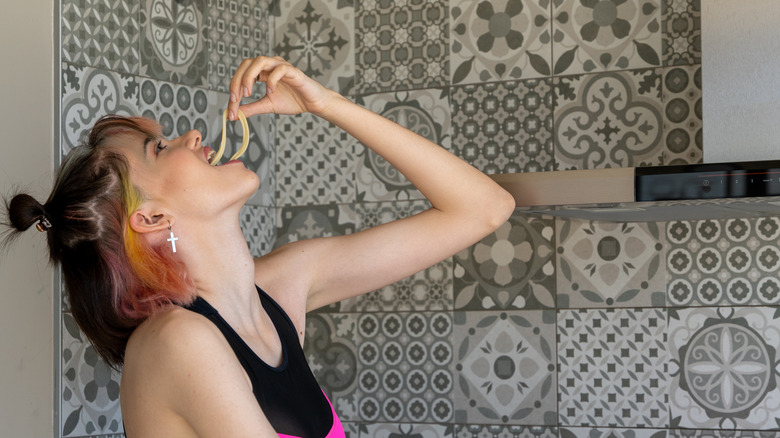
If there were an Olympic event for dramatic cooking gestures, throwing spaghetti on the wall to test for doneness might qualify. It's been immortalized by television chefs for decades, and just feels pretty fun to do if we're being honest. Call us drama queens in the kitchen, but there is something satisfying about pelting the wall with a big wad of noodles, then waiting with bated breath to see if it slides or sticks.
The "trick" is really just an old wives' tale that promises if the pasta sticks, it's primed and ready for the plate. If it slides down in a sad little trail of shame, however, the commandment is to keep cooking. Unfortunately, this test tells you almost nothing useful about the actual state of your pasta andis extremely untrustworthy. In fact, if pasta is sticky enough to cling to the wall, it is probably overcooked.
The wall is not some starch psychic that knows what's happening inside any noodle. The only reliable way to test pasta is taste. Properly cooked pasta should be al dente, which translates to "on the teeth," meaning slightly chewy, yet tender. It's that texture, not a good toss, that tells you the truth.
Leaving an avocado pit in guacamole
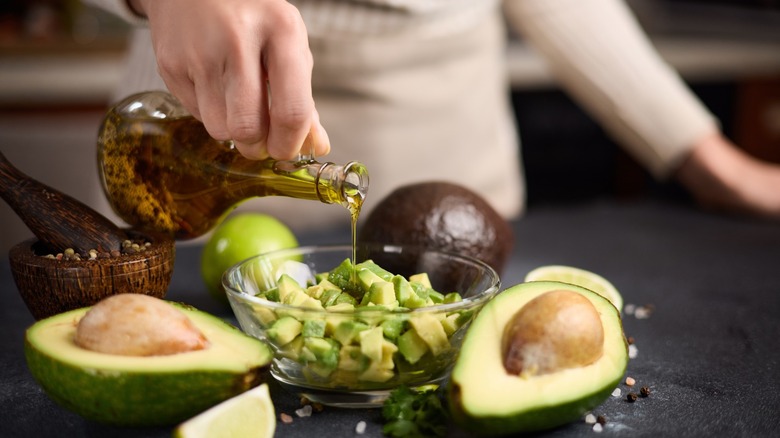
You may have heard it before, that belief that the pit of an avocado when placed in the prepared green dip keeps guacamole from turning brown. Science tells us that browning occurs when avocado is exposed to oxygen. While this myth has been debunked, there is some evidence that the area where the pit itself is placed blocks air, but only in the exact spot it physically touches. That means a very small circle of guacamole stays green, while the rest of the surface continues to oxidize, darkening to that less-than-appetizing brownish hue. There's no chemical magic involved with this kitchen "trick." The only reason any green is saved from the onslaught of brown is air contact, or lack of it.
Even if you stir the pit into the guacamole, it still doesn't manage to do anything to meaningfully protect the rest of the dish from oxidizing. Professionals explain that to truly prevent browning, you need to limit air exposure across the entire surface, which is why they recommend storing guacamole in an airtight container to fully block any oxygen from creeping in and contaminating the minty shade. Leaving the pit in isn't harmful, and it can look quite nice, just know it's more decorative than functional. There really is no magic wand trick to keep guac green besides eating it immediately and adding plenty of lime juice to the recipe.
Rinsing cooked pasta to stop the cooking process
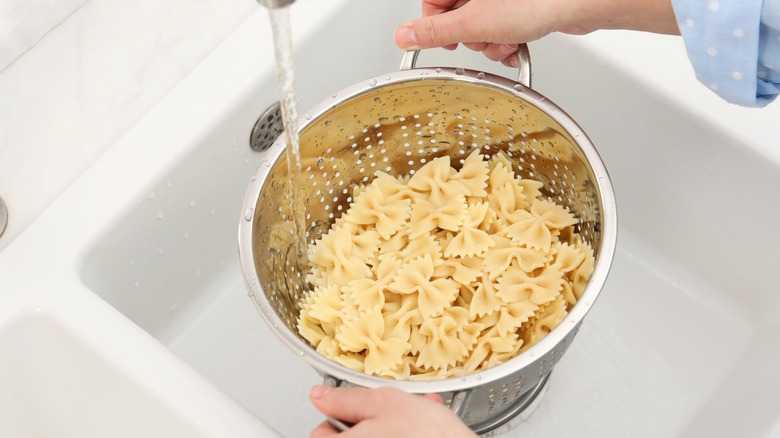
Upon first hearing this next pasta cooking hack it seems pretty darn legit. Pasta is hot, so why not rinse it with cold water to stop the cooking process? Problem solved? Not exactly, because in most cases, this move actually sabotages the entire dish before the sauce even has a chance to make it shine.
Most chefs agree on this point, some even close to ranting about how rinsing cooked pasta is a huge mistake for hot dishes. They back this assertion by pointing to that when pasta boils, it releases starch into the water and leaves a thin coating on the noodles. Apparently, that starch is important, essential even. This is the "sauce" that helps the actual sauce cling to the pasta instead of sliding off and pooling in a puddle. So, when you rinse pasta, you wash that away entirely.
You also rob the dish of remaining heat, which plays a key role in helping the sauce and pasta come together. The warmth allows flavors to meld together masterfully. Rinsed pasta becomes slippery and cold, making it much harder for even the best sauce to stick, much less make anything shine. There are exceptions, but these are very limited, and specific. Mainly, if you're making a cold pasta salad, rinsing makes sense. Otherwise, adding cold water is not cool.
Precooking sheets of lasagna
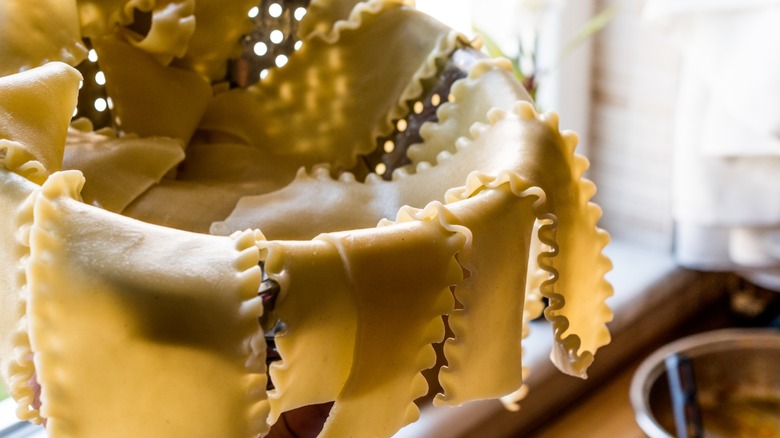
Lasagna has a reputation for being complicated and a bit labor-intensive as it is. Precooking the noodles often feels like one more step you're expected to take that really takes a toll. The good news is that this oft-despised step is largely unnecessary. Many chefs agree that dried lasagna sheets don't need to be parboiled before baking. In fact, layering them straight into the dish often produces just as good, if not better, results. This is said to be especially the case when the sauce has ample moisture. As the lasagna bakes, the noodles absorb liquid from the sauce and cook gradually in the oven, becoming tender without turning mushy.
Precooking can actually introduce problems, with over-hydrated noodles being harder to handle and more likely to tear. These soggy pasta fatalities can also release excess water into the dish, leading to a looser, less structured lasagna. If you just step back and let the noodles cook in place, it allows them to absorb flavor while maintaining their integrity. This approach also simplifies the process for you. You are freed up to assemble the layers, cover if needed, then let the oven do its thing.