

Whatever Happened To Soupergirl From Shark Tank?
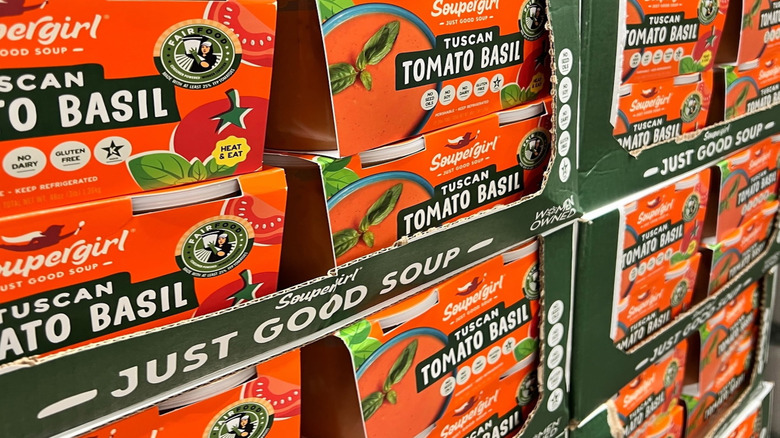
Though debatable, soups are often considered healthier than solid food. They are easier to digest and there's a scientific basis as to how they improve gut health and promote satiety (the feeling of being full). Most recipes are easy to prepare, too. There's a tomato soup dish that uses only three ingredients, for one. If you're someone who's always on the go, there's no shortage of canned soups available on the market. However, the taste and nutritional value of processed soups are never guaranteed. Sara Polon learned this the hard way when she embraced veganism and looked for good soup options while living in Washington, D.C. Realizing that there wasn't even one product that wasn't overly salty or fatty (or even just tasted fresh), she decided to make her own plant-based soup.
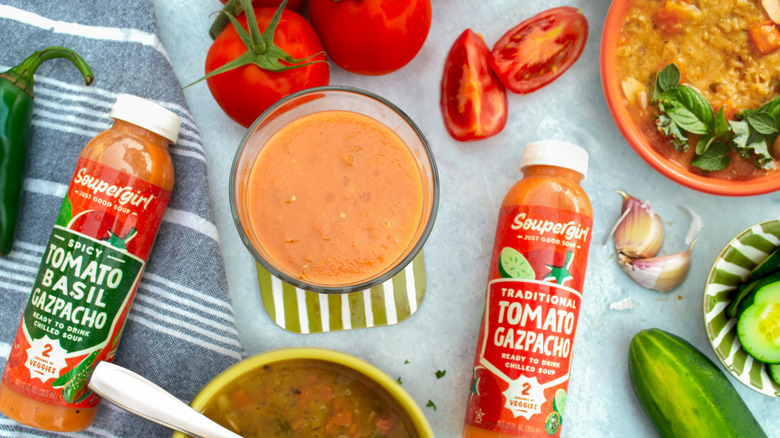
With the help of her mom, Marilyn, the two started a business making and selling plant-based soups made with fresh ingredients. Soupergirl launched in 2008, but the brand didn't hit retail until 2012 when the mother-daughter duo tapped a professional chef to help them grow the menu and start selling to consumers. A few years later, Soupergirl soups made their way to Whole Foods and Costco shelves, securing millions in sales for the co-founders. As demand skyrocketed, the Polons had to find a way to expand and improve their operations, but they couldn't do it without funding. This pushed them to try securing a deal with a credible investor and mentor on "Shark Tank."
What happened to Soupergirl on Shark Tank
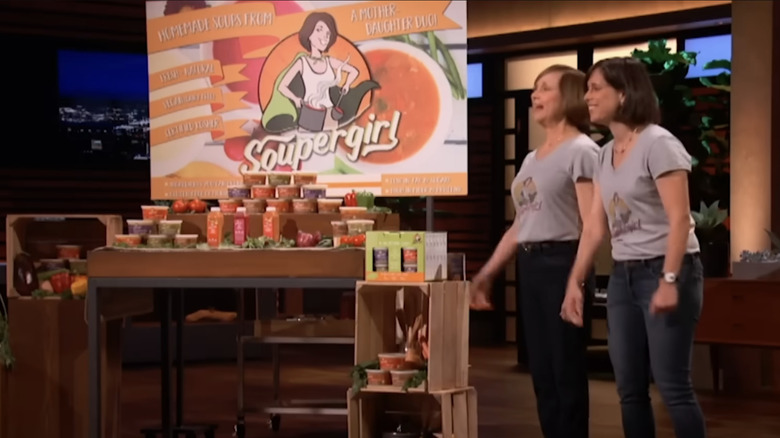
Sara and Marilyn Polon entered "Shark Tank" in Season 10, Episode 3 seeking $500,000 in exchange for a 10% stake in their company. They started the pitch by introducing their Soupergirl products and comparing them with other commercially available soups. After emphasizing that Soupergirl soups were not only satisfying and tasty but also nutritious and low in salt and fat, they handed out samples which the Sharks liked. However, with a self-proclaimed $5 million valuation, the Sharks were expecting high sales and profits to convince them to invest in the promising upstart.
In the episode, which aired in October 2018, Sara claimed that Soupergirl was slated to finish that year with a staggering $3.4 million in sales. The year prior, the company had allegedly grossed $2.4 million. Before that, in 2016, they generated $1.4 million. They managed to achieve this growth by having two retail locations and selling their products in 50 natural food stores and 20 box stores. By the look of things, the sales figures were impressive for a business with a purportedly limited production arm. Unfortunately, Sara's admission that they were only netting 5% profit turned off the Sharks, with Kevin O'Leary (who had also turned down the likes of Wildwonder) asserting their business was actually only worth $100,000 or less, all things considered. In the end, not one Shark took the bait and the pair left the tank without an offer.
Soupergirl after Shark Tank
There are instances on "Shark Tank" where business owners walk away from the show with offers from the Sharks, but the deals fall through in the weeks or months after filming anyway. A Forbes survey found that around 43% of the deals made on the show never materialize. In the case of Soupergirl, although Sara and Marilyn Polon did not receive an offer from any Sharks during their episode, they surprisingly experienced a reversal after exiting empty-handed. Guest Shark Matt Higgins, who turned down Soupergirl on the show because he felt he wasn't going to get a big return from the company, had a change of heart. He called Sara and expressed his regret for what happened.
Higgins became an advisor post-"Shark Tank." Speaking of his decision, he told Biz Journal: "They moved me in their pitch. They're wonderful, they're passionate, they've been at it for a long time, and I felt like with a little bit of mentorship to set them in the right direction, they could really be even more successful than they've already been." Apart from the guidance, the company experienced the so-called "Shark Tank" effect, where a business benefits from the national exposure. Soupergirl raised $2 million in Series A funding from Honest Tea and Beyond Meat co-founder Seth Goldman and Glen's Garden Market founder Danielle Vogel after the episode aired. Further, it secured a contract to sell its products at all 70 Lidl stores in the mid-Atlantic in 2019.
Is Soupergirl still in business?
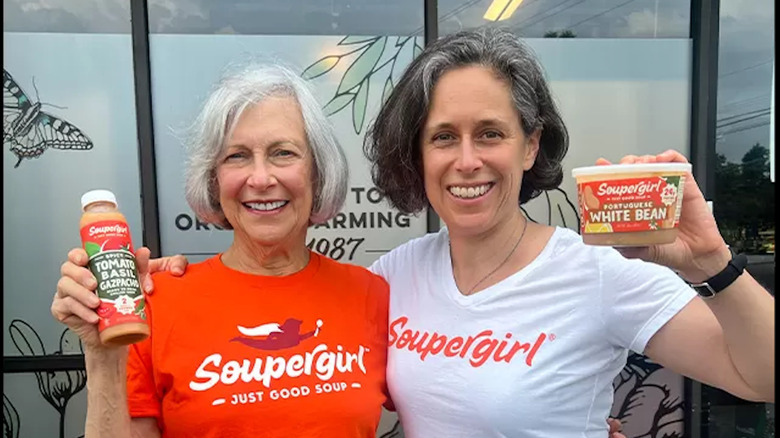
A few food products that get featured on "Shark Tank" turn into some of the biggest food flops in the show's history. Without backing from the Sharks or a good concept to begin with, it's hard to thrive once the hype dies down. Soupergirl might have received one of the harshest reality checks from the Sharks after failing to justify its $5 million valuation, but the company hasn't gone out of business. Although CEO Sara Polon eventually decided to shut down the company's first soup shop in Takoma, major developments unfolded for the brand. Soupergirl products landed shelf space in major retailers including Whole Foods, Amazon Fresh, Costco, Kroger, and Harris Teeter. Soupergirl also continued to accept orders via its website and ship them nationwide. As of late, its annual revenue has reached $9 million.
One of the reasons why the brand flourished outside of "Shark Tank" was how Polon took the Sharks' rejection positively. "They didn't understand my vision, and that's OK because I got to tell America about Soupergirl, and that's priceless," she said (via Yahoo! Finance). In an Instagram post, the company also addressed the issue and maintained its commitment to its business and craft. "It's no secret we DIDN'T get a deal on Shark Tank ... but, we're still here! And we're still committed to our values. We're going to keep on cooking quality, fresh, plant-based soups ... and changing the world!" It's safe to say that dedication can definitely overcome uncertainty.