

13 Comfort Foods From Italy You Should Try At Least Once
We all know the Italian classics. A piping hot piece of lasagna, a heaping bowl of spaghetti and meatballs, a fresh slice of pizza, but do we know the authentic Italian classics? Italian cuisine from Italy and Italian-American cuisine often get conflated. With migration and new ingredients came new recipes and new histories. People adapt and create, often generating new things entirely. One thing remains the same between the cuisines: food brings people together and allows them to share a common history and memory.
In Italy, there is a famous saying "a tavola non s'invecchia," which means "at the table one does not grow old." Time stops and food often becomes a type of memory. A comforting place to visit in your mind and with your taste buds. Italian comfort food is composed of the well-known and lesser known, like grano saraceno flour used to make a pasta (pizzoccheri), a hazelnut custard cake (bunet), and a hot garlic and anchovy dip (it's better than it sounds).
The recipes of Italy have deep histories, regional variation and seasonality. They are recipes beloved by many and shared widely. They carry with them warmth, depth, and knowledge. The dishes below are a people's history enjoyed throughout the centuries and passed down. They are familiar, cooked slowly over time. From North to South, the Central areas to the coastline, there are many tasty Italian bites waiting to be uncovered.
1. Focaccia di Recco
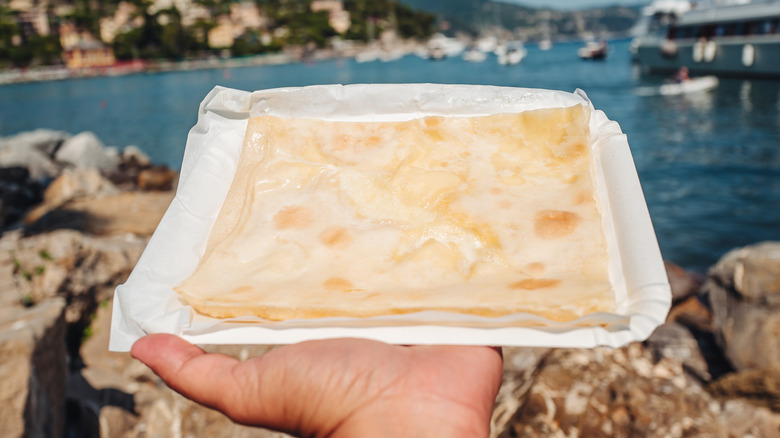
Focaccia di Recco isn't your typical focaccia. Most people are familiar with a fluffy focaccia recipe, which hails from the Ligurian region of Italy. Liguria lies in Northwest Italy and has a plethora of traditional dishes like pesto, fritto misto, trofie al pesto, and so on. This region is often dubbed the riviera of Italy. Focaccia di Recco, though from the same region, is something totally different and often overlooked. It's thin-crusted, with hot melted cheese and a gooey texture that tastes like biting into a cloud made of cheese.
The Consorzio della Focaccia di Recco claims that the focaccia has been around since Roman times. The cheese-filled delight was created out of necessity according to the Consorzio. After the Ligurian region was invaded, people took to the surrounding hills and with flour, cheese, and oil still in abundance, and they produced what we call Focaccia di Recco today. A simple recipe calls for 00 wheat flour, salt, water, Italian extra-virgin olive oil, and a soft, melty cheese. This yummy snack has since become a highlight on any touristic itinerary in the region and is best served for breakfast with a cappuccino in front of the Ligurian Sea.
2. Farinata
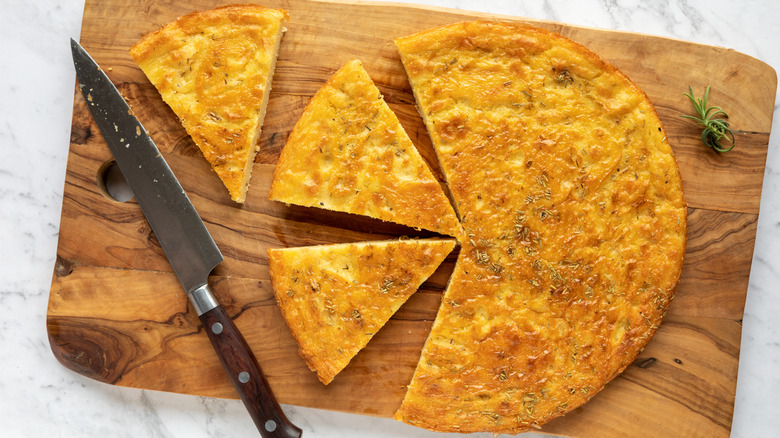
Farinata is the reigning pre-pizza snack (believe it or not, there is such a thing). It's made from chickpea flour, hence its yellow-orange color, water, Italian extra-virgin olive oil, and if you want, an herb (think rosemary or oregano). Simple but mighty, this quick flatbread is packed with protein. It's soft on the inside, crunchy on the outside and hails from the regions of Liguria and Tuscany.
It can be served as a merenda (snack) all on its own, or an accompaniment to a meal. Most often you'll find it at pizzerias, but occasionally it will make an appearance at restaurants. The history of this little flatbread is widely speculated on. Farinata was born in the 1200s when a group of sailors sailed through a storm and their chickpea flour was dispersed throughout the ship. After the storm, and having been mixed with sea water, they discovered the mixture was quite tasty especially after lying in the hot Ligurian sun.
3. Arancini and supplì
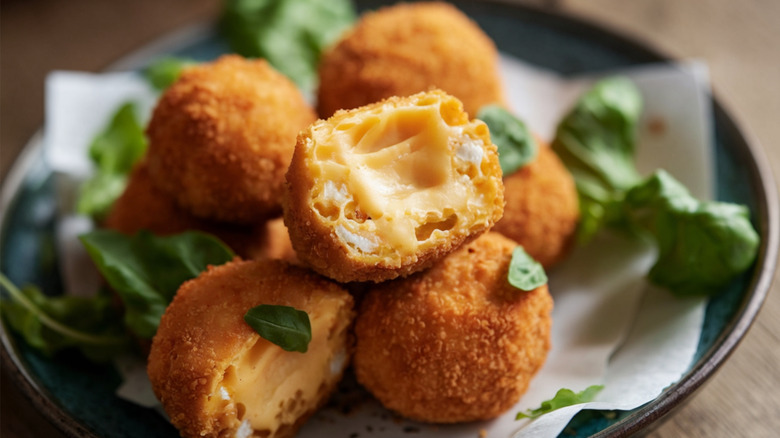
Heading down South, we have the crown jewels of Roman and Sicilian street food. Arancini is a fried rice ball hailing from Sicily. These little delights come in various flavors, anything you can imagine; from ragu, a ground meat with onion, celery, carrot, and sometimes peas, to prosciutto and cheese, cacio e pepe (a buttery Parmesan with black pepper), and lastly the norma (eggplant and red sauce). Many people take leftover rice and use it to make arancini. The making of the rice balls always involves a key ingredient which gives it its color, broth with dissolved saffron, and its origins date back to medieval times. This dish ignites great debate throughout Sicily, with each town and region claiming to be the creator of arancini.
Heading back up North to the mainland, arancini's cousin, supplì, made an appearance during the era of Napoleon and is a crowd favorite in Rome, at least amongst Romans. Supplì comprises of a fried exterior, an oval shape, mozzarella cheese (or any other melty cheese) heated to perfection with rice and meat sauce. Unlike its Sicilian cousin, which comes in many different flavors, supplì often comes in a singular variation, or depending on the creativity of the chef, just a few others. Another variation between the two lies in the way it is fried. Arancini uses a batter and is more flexible, while supplì is dipped in egg before being fried to hold its shape and give it an intense crunch.
4. Erbazzone
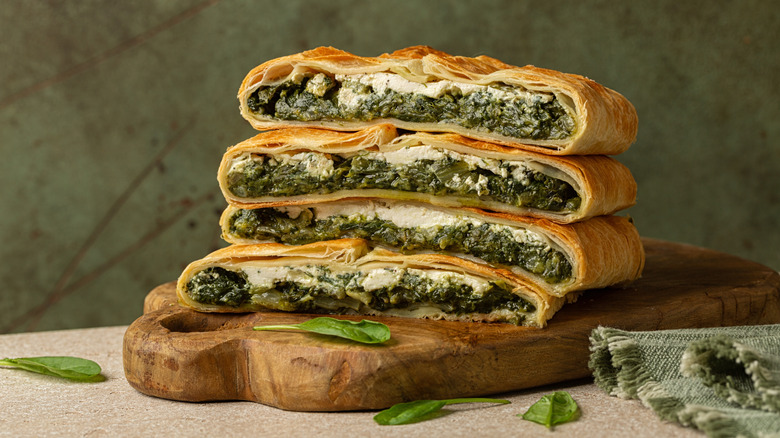
In central Italy, you will find an array of homey-foods rich with cheese and meat flavors. Erbazzone comes from the region of Emilia-Romagna, which is often considered the food valley of Italy and was chosen by the Romans due to its rich soil and growing conditions. Emilia-Romagna is where you will find famed ingredients like Prosciutto di Parma, Parmigiano-Reggiano and balsamic vinegars galore. It is also home to numerous dishes cooked in pork lard, which make no mistake, will have any dish going the extra-mile.
One lesser known dish to those of us not fortunate enough to reside in Emilia-Romagna is erbazzone. It is a savory pie filled with chard or spinach and Parmigiano-Reggiano as well as egg. These days it is often baked with butter or olive oil, but in the past, pork lard was the fat of choice in addition to wild greens.You can still find it baked with lard and it makes the perfect accompaniment to a morning espresso or afternoon snack. For home cooking, any kind of dark leafy green and hard, fragrant cheese will do. Baking it with olive oil, butter, or pork lard is recommended and will yield a delightful dish.
5. Tortellini with broth (Tortellini al brodo)
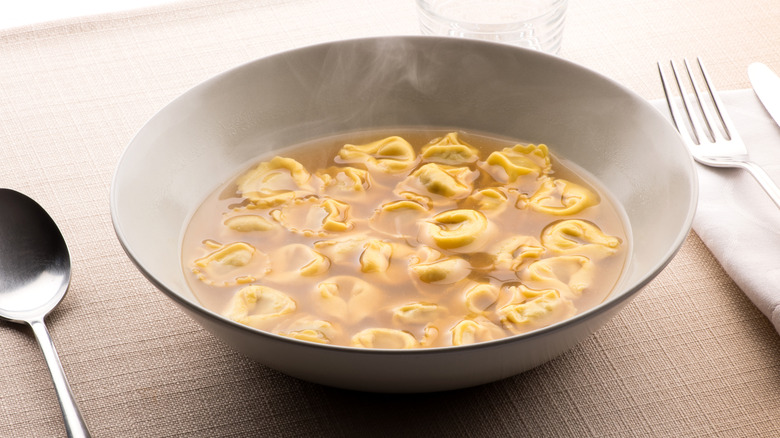
Another cozy food from the Emilia-Romagna region is tortellini with broth, or as Italians say, Tortellini al brodo. This dish is beloved by many, not just the locals that created it and you will often find it on the tables of Italian homes around the holidays or on a chilly winter's night. The tortellini are small and made of fresh pasta. Due to the shape and size of the tortellini, they are more laborious than their counterpart, ravioli.
The tortellini can be filled with many different things, but often you will find it stuffed with prosciutto, mortadella, and Parmigiano-Reggiano. However, with most Italian recipes, variations based on regions are plentiful.The next piece of this delicate, yet hearty dish, is the broth.The broth is best made from scratch, using a combination of chicken and beef bones and should be darker in color than your average chicken stock. You can add toppings to the final product, like cheese, sauces and so forth and enjoy around the table with friends or family.
6. Tagliatelle with ragú
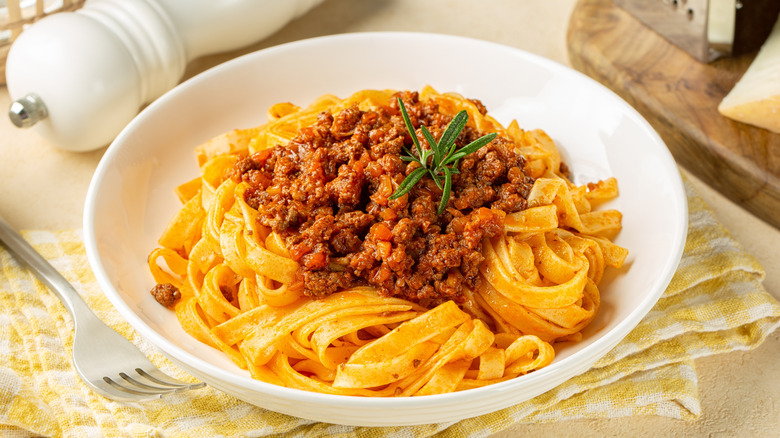
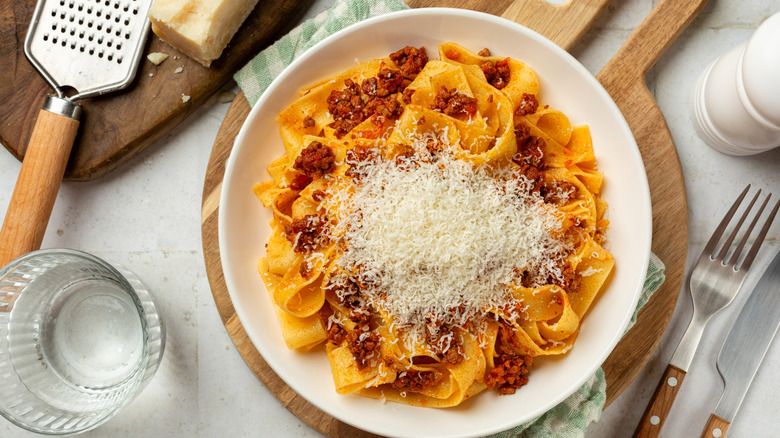
We all love a fresh pasta. Meet your new favorite from the food valley of Italy, Emilia-Romanga. Enter tagliatelle with ragú, or a bolognese depending on what you'd like to call it. This dish was created sometime around the 16th century in Bologna, Italy. The recipe calls for soft, long, and thick noodles made with egg, also know as fresh pasta. These noodles make the dish because the way they soak up the sauce just can't be beat.
Then we have the ragú, which is a soffritto of onion, celery, and carrot, a red sauce of tomato passata with red or white wine, and finally milk. Ragú is a polarizing meat sauce. In Italy, everyone's nonna (grandma) does it different. Some add more meat, some simmer even longer, some add more onion, but nonetheless it's always a great debate. Finally, mix in the pancetta and minced beef and there you have it! A warm, soft, and endlessly delicious meal enjoyed throughout Italy any time of the year. Buon appetito!
7. Pizzoccheri
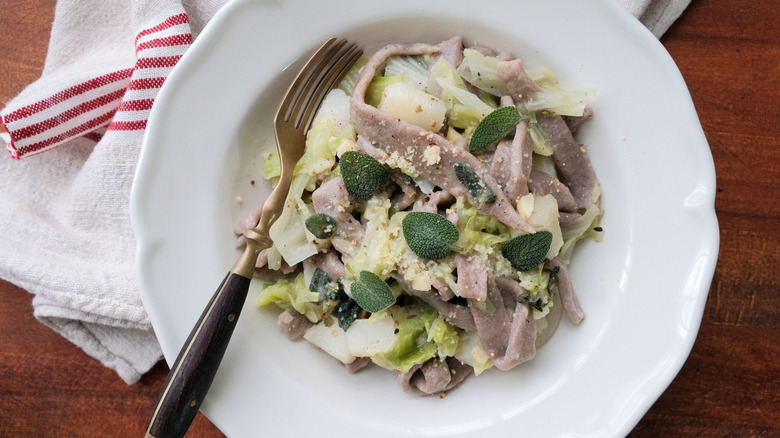
This hearty, winter-proof dish reigns from the Northern reaches of Italy and is said to have originated in the 18th century. It was originally considered a peasant food due to its high calorie count and simple, economic ingredients. The pizzoccheri of today is enjoyed by all economic classes. The dish comes together with a thick and strong buckwheat flour, also known as saraceno flour, as well as white flour, both of which are kneaded into a dough and used to make short strips of pasta.
Next up is a protected Valtellina Casera DOP cheese (but you can use Asiago or a soft to medium-hard cheese of your choosing) grated on top, boiled cabbage and potatoes, a bit of garlic, and just a pinch of salt. The dish can be found on restaurant menus in the North, but most often is eaten at home with friends and family during the winter, and even better, in the mountains.
8. Polenta
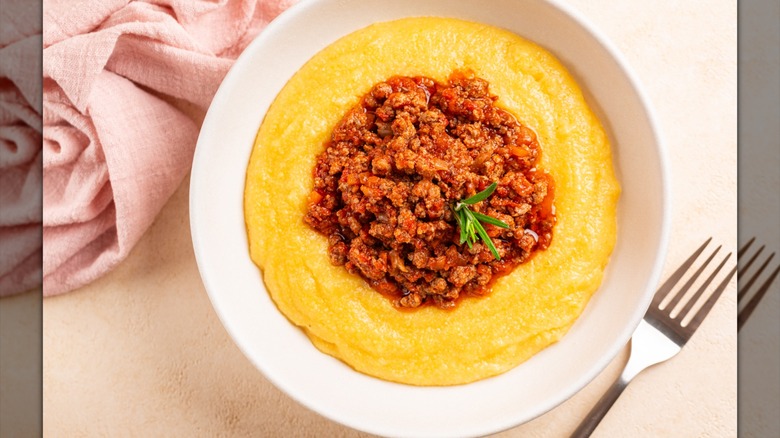
Another excellent mountain food from Italy is polenta. This curveball is often enjoyed year-round and is synonymous with alpine landscapes. Polenta is a contested dish. Some people love it and some not so much, but undoubtably it can be considered a comfort food with its hearty disposition. The dish makes its home in Northern Italy and was put on the map during the Middle Ages.
Polenta is comprised of corn flour, water, and salt slowly mixed together over the course of 45 minutes to an hour. If it suits you, it can also be baked, fried, or grilled. Polenta can be served as a main course or as an accompaniment to meat and fish. Its most simple version can be cheese, cheese, and more cheese, or with red sauce or mushrooms. Just like pizzoccheri, it was originally considered a peasant dish due to its simple ingredients and its calorie density. Polenta is eaten widely throughout Italy, but each region has a very unique take on the dish depending on their local specialties.
9. Bagna cauda
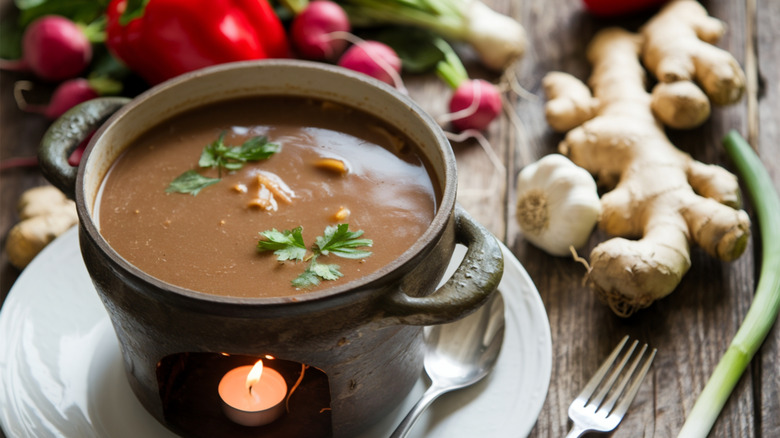
Bagna cauda is as rich as it gets. To the horror of some, and the delight of others, the main star of this dish is garlic, anchovies, and Italian extra-virgin olive oil. It is consistently lit with a small flame (think fondue) to keep the scent aromatic and the hot-cold combo of the dish going for hours of dipping. Bagna cauda, translates to "hot bath," as the ingredients simmer together. Participants are meant to dip raw vegetables like bell peppers, carrots, celery, cauliflower, broccoli, and boiled potatoes (among others) into the hot sauce.
It is commonly enjoyed in the fall with family and friends and originated during the Middles Ages in the Piemonte region of Northern Italy. To add flame to the fire, the meal is served with local wines. The sauce can be used as leftovers over polenta, eggs or really anything you'd like. To get a sense for just how much garlic is used, the official recipe from the Asti Delegation of the Italian Academy of Cuisine, says to use 12 heads of garlic, and 6 ounces of anchovies for a 12-person serving. Bagna cauda is unique, festive, and delicious. You are sure to be reminiscing about the meal for days to come thanks to the natural perfume many participants end up sporting. Bagna cauda is a main event kind of meal.
10. Ossobuco Milanese
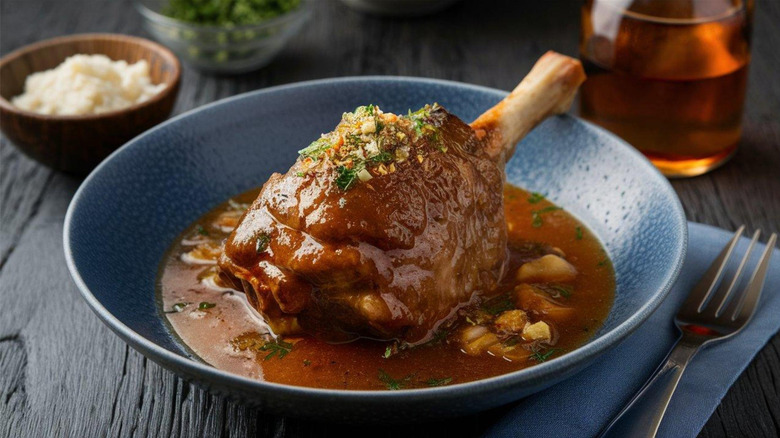
From the fashion capital of Milan, also hails the less fashionable, but very tasty, ossobuco Milanese. This braised veal shank dish, which is almost stew-like, is layered with rich flavor, including but not limited to its side dish (risotto with saffron). There are numerous variations, but in all of them the cut of meat is important — the rear muscle, or shank, being the star of the show.
Each cut of meat should include the marrow, as that is what gives it its depth of flavor. The marrow, along with a soffritto, white wine, broth, salt, and pepper stew together for over an hour creating a melt-in-your mouth flavor. Then comes the gremolata sauce. This green sauce is made with garlic, parsley, and lemon, cutting some of the richness of the dish as it's added to the final stew. The Italians know how to balance flavors and ossobuco is no exception.
11. Orecchiette with cime di rapa
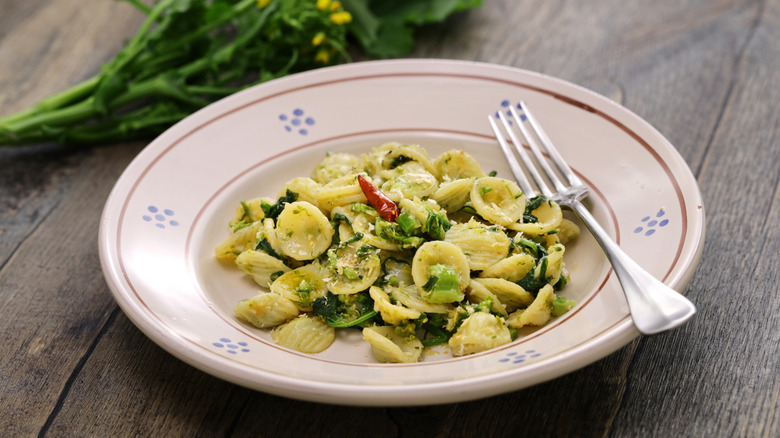
Orecchiette is a pasta dish from Italy's Southern region of Puglia. Puglia hugs the Ionian and Adriatic seas and is notorious for excellent regional dishes, most of which are fish based. Orecchiette is beloved by all and a highlight for the region. The orecchiette itself is a small pasta shell made of semolina flour, and water, using quick hand movements that produce little shells, almost like a thumbprint.
They can come in all different colors and flavors. The most common vegetable topping for this pasta is cime di rapa, which in English is a turnip top or broccoli rabe. The vegetable is commonly found in Southern Italy and is often confused with broccoli, but make no mistake this Southern vegetable is more bitter than both the turnip and broccoli. To balance out some of that bitterness, the dish is cooked in a variety of ways including with oil, garlic, chilis, cream sauces, pesto, and plenty more. You can grate hard cheese on top for added salt, or switch out the cime di rapa with a spinach, chard, or other leafy greens.
12. Bunet
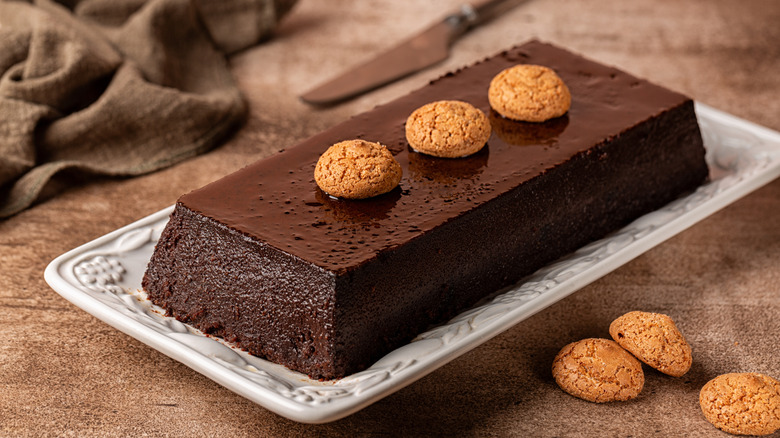
Bunet is like nothing you've ever tasted before. It's a far cry from cake, and certainly not a pudding. This beloved Northern Italian dessert from the Piemonte region will have you begging for more with its custardy inside and aromatic amaro finish. The recipe calls for cream and milk heated in a pan before adding eggs, sugar, crumbled macarons (preferably hazelnut flavored), cocoa powder, dark chocolate, and lastly, an amaretto liqueur. The macarons give it a bit of crunch, while the liqueur adds the unique Italian amaro flavor with a hint of hazelnut.
The Piemonte region is famous for its hazelnuts and chocolates. It's the birthplace of Nutella, making any hazelnut or chocolate flavored dessert a must-try. After the ingredients are combined, the dessert cooks in a bain-marie in the oven in order to hold its soft texture. The bunet has many variations, but these ingredients are the classic recipe according to a famed Turin restaurant, Tre Galline, which has been serving the dish for many years — the establishment is said to date back almost 500 years.
13. Maritozzo
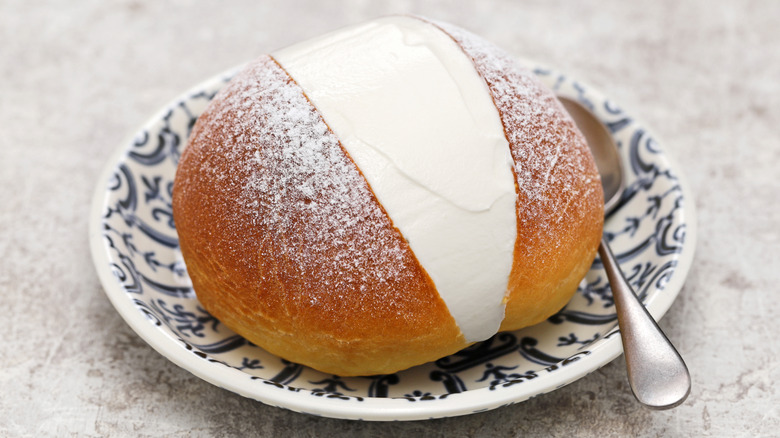
Saving the best for last, this creamy, simple, and soft maritozzo is a must-try while in Rome. The maritozzo is a brioche-filled bun with whipped cream and sometimes a dusting of powdered sugar coating. It derives its name from the word for husband and was said to be a gift to new brides from their husbands-to-be. Maritozzo originates from ancient times and was a peasant food due to it being calorie-dense. The Roman version may have used lard however, making it a much heavier treat than most versions today.
To take your maritozzo to the next level it can be brushed with vanilla syrup, have orange essence, the cream can be fruit flavored or a number of other things given its inherent simplicity. One thing is for sure, It's just sweet enough, creamy enough, and doughy enough to not be too much and keep you dreaming about it for years to come.