

12 Unique Things About The Michelin Rating System
Critics aside, the Michelin Guide continues to be one of the most influential forces in the restaurant world. When you consider that this is a guide that began its life as a handbook designed to sell tires and make driving easier, it now has the power to change the trajectory of a restaurant and the transform the work of a chef. Yet for all its authority, there's a whole load of outdated and incomplete information regarding what people think they know about the Michelin Guide and its intricate rating systems.
Ask the average restaurant-goer, and chances are they will tell you that Michelin stars mean luxury and celebrity chefs. In reality, the Guide operates on a completely different framework and a far narrower set of intriguing rules. Let's look past the myths and the marketing to unpack how the Michelin Guide actually works today. From more updated and relevant rating categories, to how food inspectors function, and which restaurants get shortlisted – these are the details that shape Michelin's influence and explain why its stars still matter, even as their meaning continues to evolve.
The logo was inspired by a stack of tires
You may associate Michelin stars with linen-topped tables, gleaming crystalware, and intricate tasting menus but a long time ago, the Michelin Guide was doing something far more practical. The aim of the first guide published in 1900 was to get people to drive more. At the time, there were only a few hundred cars on French roads.
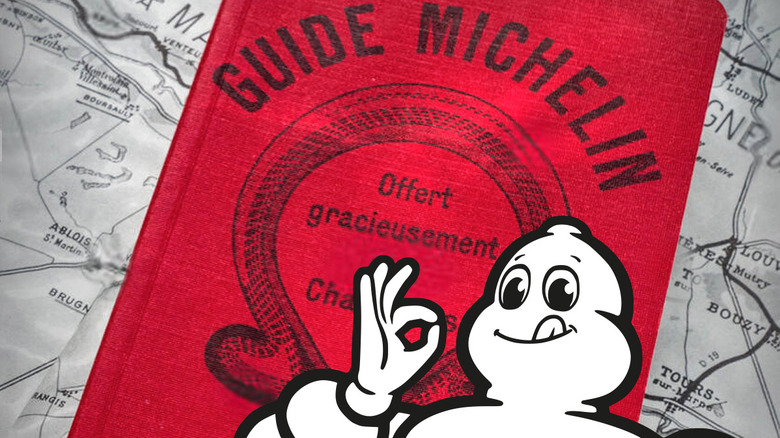
The solution was clever and frankly a simple one — to make driving easier and more appealing by giving away a free useful guide. This guide was packed with maps and hotel listings along with practical tips and instructions about breakdowns. Restaurants were listed, too, but more as stops en route rather than the main attraction.
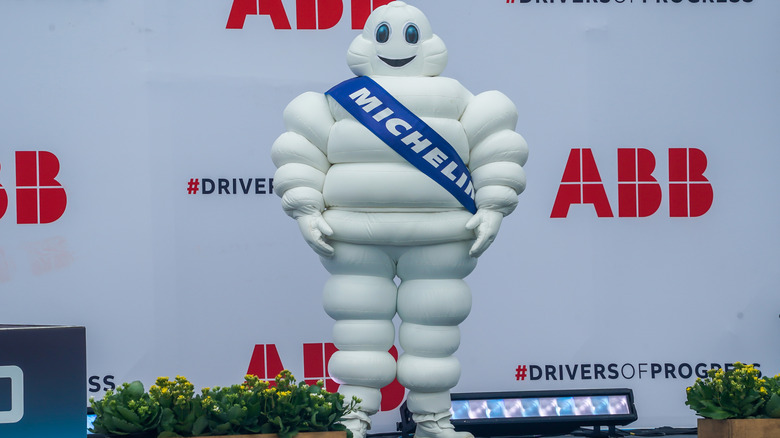
In keeping with the brand's mission statement, the brothers Édouard and André Michelin were attending the Lyon Universal Exhibition when they noticed a stack of tires arranged in a way that vaguely resembled a human form. Édouard famously remarked that with arms, it would look like a man. A few years later, a talented illustrator, Marius Rossillon turned this observation into life with Bibendum, the Michelin Man. And while the early versions of Bibendum look nothing like the sweet, friendly mascot we know today (he wore glasses, smoked cigars, and drank beer), over time, the image evolved to be the fluffy, inviting logo we know and love today.
Michelin inspectors assess restaurants around the world using the same standards
Michelin food inspectors are trained to judge restaurants around the world by identical standards. When one sees a Michelin star, it's supposed to mean the same thing everywhere, otherwise the very system it is built upon would collapse. According to the official Michelin website, every restaurant visit is judged using publicly stated criteria which include the quality of the ingredients, flavor and technique, the way the menu reflects the mastery of the chef, value for money, and consistency. You may be surprised about what factors are NOT taken into consideration such as decor, service, and luxury add-ons. While these elements may add to the overall experience, they are not officially part of the assessment. The Michelin Guide promises to reward only what's on the plate.
The esteemed Michelin inspectors are full-time employees, never freelancers or guest critics. Almost all have formal hospitality training, and many have spent years working in restaurants and kitchens before becoming inspectors. International experience is a must as inspectors regularly work across borders. A wide range of experience ensures that they develop a global understanding of what excellence looks like, regardless of cuisine or cultural context.
Needless to say, inspectors dine anonymously and pay for their own meals. Restaurants are never informed in advance, and inspectors will visit the same place over various time periods and stretching over different seasons. Consistency matters more than a single brilliant meal when it comes to awarding stars.
There is a big difference between one, two, and three stars

When you think about Michelin stars, do you think of them as points on a scale? If you do, then you have misunderstood the entire system. According to the Michelin Guide, this is not a matter of an increasing scale of excellence. A one-star restaurant isn't "average" and a three-star one a better version of the same. Each level, in fact, represents a fundamentally different promise to the diner.
Per its website, Michelin awards stars for what it calls "outstanding cooking." This is judged using five criteria: ingredient quality, harmony of flavors, mastery of technique, the personality of the chef expressed through the food, value for money, and most important of all — consistency. It's consistency that separates a delicious one-off meal (that can happen anywhere) from a memorable meal at a Michelin-level restaurant. The Michelin Guide is always looking for places that deliver the same standard across the menu and at every visit.
By this classification, a one-star restaurant signals high-quality cooking that's worth stopping for. A restaurant is awarded two stars when it offers "crafted dishes with food that is both refined and inspired." The highest accolade of three Michelin stars is awarded when the cooking is flawless, day after day, no matter the pressure, season, or service. It's also worth noting that stars are not cumulative rewards. One star is already a major achievement and worthy of respect and repeat visits as much as a three-star establishment.
There is a separate category for restaurants that serve exceptional food at great value
In 1997, the Michelin Guide introduced the Bib Gourmand as a clear signal of change. No longer was the Guide a space reserved for luxury dining and impossibly expensive tasting menus. With the Bib Gourmand Award, the spotlight shifted to restaurants that offer outstanding food at a price that feels genuinely fair. The idea behind the Bib Gourmand is simple but important: great cooking shouldn't only be recognized when it comes with a high bill. Now what qualifies as "affordable" in Paris won't look the same in Singapore or Sydney, but the basic expectations of culinary excellence remains high.
Inspectors apply the same principle worldwide, with an emphasis on meals being excellent value for money. Apart from this, there is no fixed formula for a Bib Gourmand restaurant, and that's part of its charm.
Globally, Bibs include everything from neighbourhood bistros and noodle shops to family-run kitchens and street food stalls. The common thread that unites them all is that a visit will leave you feeling well fed and slightly amazed by how reasonable the bill was. Today, the Bib Gourmand lists are some of the most useful sections of the guide, especially for travelers who want to eat fabulously without blowing their entire trip budget around a single restaurant.
A restaurant is awarded other symbols for categories like setting, wine list, experience
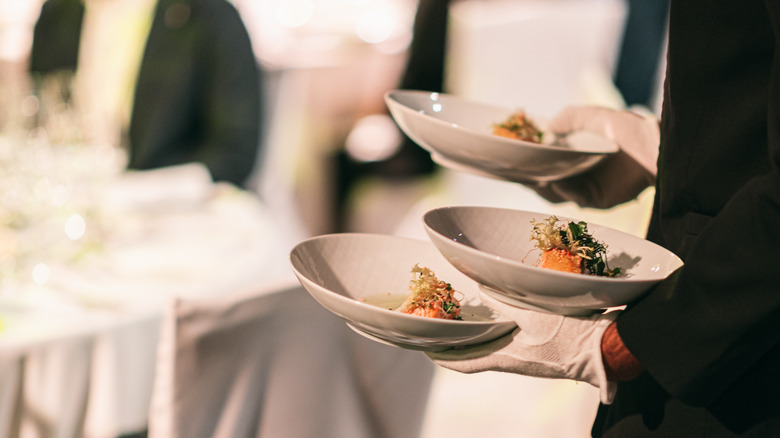
With the Michelin Guide, the stars do get the most attention, but there's actually an entire system of symbols used to help diners understand what kind of establishment they can expect. For example, did you know that every restaurant listed is also given a fork-and-spoon rating? And this has nothing to do with food quality and everything to do with comfort and setting. If you visit a simple, no frills restaurant with great food, you can expect a one fork-and-spoon rating. Five forks and spoons translates to a more luxurious dining experience.
The Guide uses this system to separate culinary excellence from atmosphere – an important distinction because the two don't always go hand in hand. A tiny bistro with bare tables can serve exceptional food, while a grand dining room may prioritize elegance over what's on the plate. Other symbols such as icons for sake, wine, and cocktails highlight thoughtful drink programs that are worth your attention. Depending on the country in question, you may also find symbols indicating scenic views, street food stalls, or quality pubs with food.
A quick glance at these will help a reader to quickly determine whether a space is fitting for a quick casual lunch or special dinner with a view. So, keep in mind — stars simply tell you how well a restaurant cooks, whereas the other symbols tell you how it feels to eat there.
Stars are awarded to the restaurant not the chef

If you Google, "Which chef has the most Michelin stars?" there will be a list, but with a caveat. Technically, there's no such thing as a "Michelin-starred chef." Stars are awarded to restaurants, and never individuals. This is important because it explains how the system actually works.
When a restaurant is awarded a Michelin star (or two or three), the Guide is recognizing the quality of the food served during a specific period. And while the mastery of the chef is taken into consideration, the star stays with the restaurant, not the person in charge of the kitchen. So when we say, Gordon Ramsay has three Michelin stars, what we need to clarify is that Ramsay the chef has zero Michelin stars but his flagship London restaurant has three (his restaurants worldwide hold eight stars at the time of writing).
If a head chef leaves a starred restaurant, the stars don't automatically disappear. Neither does the chef carry the stars with him or her to his new venture. The restaurant gets to keep its stars — at least until the nearly yearly assessment. If the food does not meet the required standard, the required actions will be taken. Likewise, a chef opening a new restaurant must earn recognition from scratch, regardless of past success elsewhere. Michelin's focus has always been destinations, not personalities. That approach dates back to the Guide's origins as a travel companion, long before chefs were public figures.
Anyone can nominate a restaurant for a Michelin star
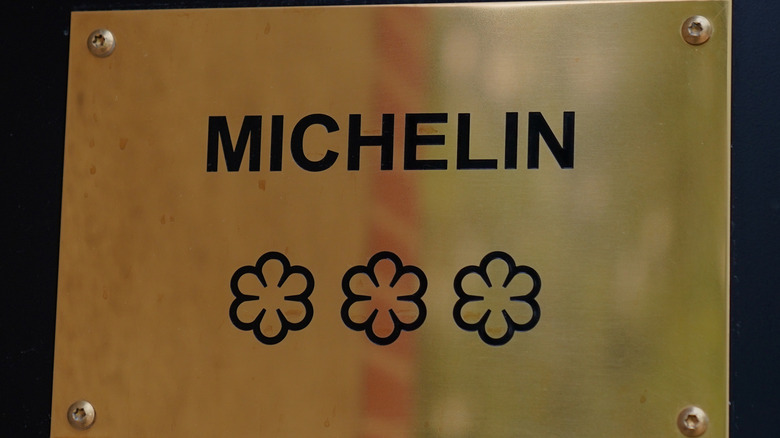
One amazing fact about the Michelin rating system that few people are aware of is that anyone can recommend a restaurant for inspection. If you deem the food great and worthy of the Guide's attention, you don't need to be a chef or critic to submit suggestions through Michelin's official country-specific websites. Now, your recommendation is no guarantee of an inspection, but they help inspectors decide where to look next.
Since Michelin inspectors do not accept invitations or requests from restaurants themselves, public nominations simply add a restaurant to the inspectors' radar. From there on, the Guide will independently decide whether it's worth a visit depending on factors such as frequency of recommendations and local coverage. When someone submits a recommendation, Michelin asks for practical, factual details: the restaurant's name, location, cuisine style, and a brief explanation of why it stands out. Useful nominations focus on food rather than hype or ambiance.
Importantly, Michelin keeps the process of inspection deliberately opaque. Inspectors visit anonymously, pay for their meals, and often return multiple times before any decision is made. This anonymity is one of the main reasons many chefs continue to respect Michelin above other guides — you can't buy attention with advertising or influence your way into a star.
The ratings have been coming under criticism over the past few years

As with any other system, the Michelin Guide has faced growing criticism and questions about its relevance in recent times. What was once considered the benchmark of culinary excellence now has the power of social media to contend with. Suddenly, everyone's a critic. Add to that the fact that people have instant access to recipes, trends, and reviews via Instagram, YouTube, and countless online platforms.
Then comes the not so insignificant matter of the Guide's global expansion. As Michelin attempts to cover more countries and establishments of every category, the sheer volume of restaurants under consideration could make maintaining consistency increasingly difficult. Restaurants can gain and then lose stars, fueling concerns about the objectivity of inspections. Through all these arguments, everyone astutely avoids the elephant in the room: In these days of cultural context, can a traditionally French institution fairly judge cuisines rooted in very different traditions?
Finally, some chefs have complained about the pressure created by Michelin standards. There is concern that striving for stars can stifle creativity, with restaurants narrowing their menus to fit into "inspection criteria" rather than innovation. In the end, the gravitas of Michelin stars feels irrelevant to some, while others still cling to their reputation of being a global signal of culinary excellence.
There's a separate award for outstanding hotels
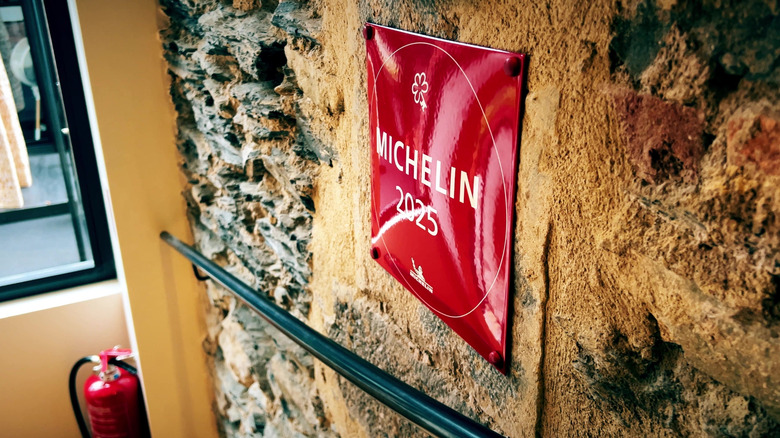
Introduced in 2024, the Michelin Key is the hotel equivalent of Michelin star to reward exceptional accommodations worldwide. Now, the Michelin Guide may have been recommending hotels since the 1920s, but the new category of the Key sets a higher benchmark for excellence. Hotels included in this list provide an experience beyond just a room.
Similarly evaluated anonymously by a team of international experts in hospitality and service along with specialization in design and architecture, the Keys are awarded on the basis of five criteria – a strong sense of place, outstanding design and architecture, unique character, consistency of service and comfort, and value for money. Using the Michelin Key Guide helps travelers complement Michelin-starred dining with world-class accommodations.
Once again, these accolades are awarded to hotels that span all budgets, from uber-luxurious to budget-friendly and boutique. Like restaurants, hotels can earn one, two, or three Keys based on their performance. All properties in the Michelin Guide selection are eligible once Keys are announced in their region.
A restaurant can lose a star as well
Contrary to popular opinion, Michelin stars are not permanent awards. A restaurant can lose a Michelin star if it fails to maintain the standards that earned it. The Michelin Guide regularly sends its food inspectors to check if establishments on the list continue to met the rigorous criteria in order to retain their stars. If any of the deciding factors – ingredient quality, mastery of technique, flavor balance, value, and consistency — have changed in the year since the stars were awarded, there's a very real chance that the restaurant could lose its rating.
Losing a star could happen due to a number of reasons, some of them being a change of chef, staff turnover, supply chain issues, cost cutting that translates into inconsistent quality of food, or a change in the menu and focus. At the end of the day, if the food on the plate does not live up to the high standards, they can all contribute to the loss of a star.
However, all is not lost. If a restaurant improves the quality of its food and restores consistency, there's a high chance that the award could be reclaimed. As an ongoing commitment to culinary excellence, Michelin-starred establishments surely acknowledge that it takes a whole lot of diligence and teamwork to maintain a star let alone reclaim a lost one.
There is a separate new category known as the Green Star
Launched in 2020, the Michelin Green Star is awarded to restaurants that embody the concept of responsible gastronomy. A restaurant listed in the Michelin Guide, whether it holds a star, Bib Gourmand, or one that holds neither, can earn a Green Star in addition to its other accolades. Apart from culinary excellence, as long as a restaurant's environmental and social initiatives impress Michelin inspectors and guests, it is eligible for this mark of sustainability.
Inspectors evaluate multiple aspects of a restaurant's operations. For example, the menu could highlight ingredient provenance or have its ingredient sourced on-site or locally with a minimal carbon footprint. Effort toward waste reduction, resource management, energy efficiency, conservation, and social responsibility all draw favor from the inspectors, as well. In fact, many Green Star restaurants have taken to actively educate their guests about these efforts in an attempt to educate through tours and interactive experiences.
The Green Star has grown rapidly since its inception. What started out as 23 restaurants with this award (primarily in Europe) has at the time of writing reached 642 restaurants worldwide holding the distinction. In case you are interested – 36 in the U.S. boast the Green Star, with cities like San Francisco, New York, and Miami having the most.
Some of the countries with the most stars might surprise you
Instinctively, when people think of Michelin-starred dining, Paris and France may be the first places that come to mind. No surprises honestly, since France still dominates the Michelin landscape with over 650 restaurants at the time of writing — that's more starred restaurants than any other country in the world.
What is more surprising are the next countries on the list. Japan consistently ranks near the top. In fact, Tokyo holds the title of most Michelin-starred city in the world, with 194 restaurants (251 stars) versus the 123 restaurants (160 stars) that Paris boasts. Some believe that this is an attempt by the guide to move away from the French-focused complaints. But we say, that's just sore losers talking and that the kaiseki counters and ramen shops of Tokyo along with the long list of elevated sushi restaurants deserve every accolade. Any guesses how many Michelin-starred restaurants in the U.S.? Surprisingly, with 235 restaurants on the list, the U.S. still pulls in at seventh place globally. Then there's Britain. Long burdened with lazy stereotypes about its food, the U.K. now quietly holds a strong Michelin presence with 220 starred restaurants.
Taken together, these rankings say a whole lot more than just which countries have "the best food." It's more an acknowledgement of the fact that as the Michelin Guide continues to expand into new markets and cuisines, the concept of culinary excellence will keep shifting.