

In 1930s New York, The Mafia Had A Monopoly On This Common Vegetable

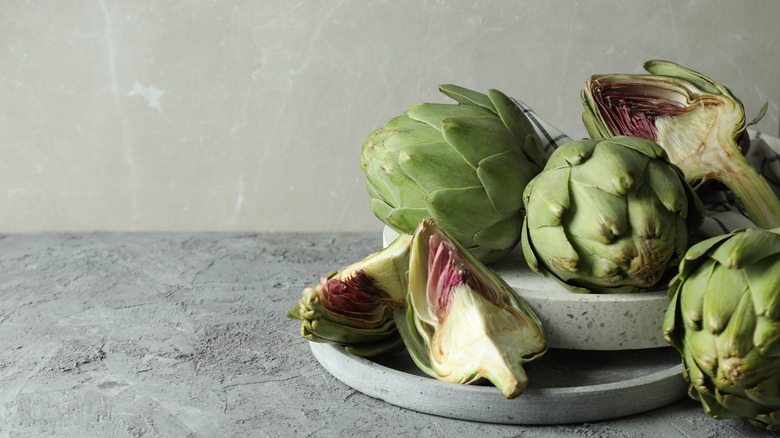
Most people know artichokes as the fiber-rich vegetable that elevates any dinner and the canned veggie that packs in the protein. However, these delicious green relatives of the thistle have a past worthy of a modern crime movie. In 1904, California artichoke farmers were sending their harvests to the East Coast, where it was especially popular among Italian-Americans. This garnered the attention of the Mafia, and specifically, that of Ciro Terranova of the Morello-Terranova crime family. Terranova arranged to purchase all the artichokes inbound for New York at just $6.00 a crate to sell for around a 30% to 40% profit.
Terranova's foot soldiers would intimidate (violently, if necessary) local sellers to eliminate competition and create a monopoly on artichokes, which earned him the title of "Artichoke King." Over time, the New York Mafia was earning an estimated $333,000 a year through artichoke sales. That's the equivalent of over six million dollars today. However, maximum profits couldn't be made by staying in New York.
In the 1920s, the Mafia made the trek from the East Coast to Northern California in an attempt to take over the whole operation at the source. Terranova's mobsters showed up at the farms of California artichoke growers to make them offers they literally could not refuse, lest their crops be destroyed. The intent was to restrict crop sizes and guarantee sales were only made to the Mafia, and at a low rate.
Artichoke Wars and Artichoke Vigilantes
However, not every artichoke farmer could be intimidated by the Mafia. In 1930, crops of artichokes belonging to farmers who had refused the Mafia's intimidation tactics were destroyed with machetes, launching what was dubbed the "Artichoke War." The Mafia stole truckloads of artichokes and even intercepted trains carrying it to the East Coast. Farmers and local police banded together to protect the crops with firearms, calling themselves "Artichoke Vigilantes." Meanwhile, on the other side of the U.S., New York mayor Fiorello La Guardia announced on December 26, 1935 that all sales and possession of artichokes would be illegal.
The ban on artichokes lasted less than a week, but for several reasons, it appeared to work as the mayor intended. One reason was that the Artichoke King himself, Terranova, had lost his standing in the New York organized crime scene through a combination of bloody gang warfare and Fiorello's ban, which undercut his profits (Terranova would die, wracked by health problems and reportedly penniless, in 1938). Another reason was that there was a more profitable ban for the Mafia — alcohol.
Prohibition created a whole new money-making industry for the Mafia, which bumped produce monopolies from the top of its priority list. Regardless of how and why Fiorello's ban worked, the end of an artichoke crime ring meant that it could be bought and sold without fear. Next time you're scouring recipes for the right way to eat a whole artichoke, remember to appreciate the little green superfood and all the crime-ridden history behind it.