

Why Andrew Zimmern Never Cuts Brisket Before Cooking It
Making a brisket at home can prove to be quite difficult; it's a large, tough piece of meat that requires very delicate preparation to become as delicious as possible. While some believe that the cut of brisket you use for barbecuing is the most important thing (Aaron Franklin says that packer brisket is superior), Andrew Zimmern has spent quite a lot of time warning his many viewers to be cognizant of when and how you remove the excess fat from the brisket. Why? According to Zimmern, cutting off most of the fat after the dish is cooked will result in the most flavorful results for the dish.
Now, Andrew Zimmern's suggestion may be a bit confusing, especially if you aren't familiar with brisket. A large piece can often have more fat than you can cook in an efficient manner. So if your cut has uneven lumps of excess fat, trimming the brisket is crucial for making the meat as flawless as possible. The extra fat prevents heat and smoke from penetrating the meat itself, and potentially creates an unevenly cooked and less flavorful brisket. However, as Zimmern said in his Braised Brisket YouTube video, "Fat is flavor." So you should always leave a ¼ inch layer of fat on the meat as it cooks so that it can still benefit from it.
Andrew Zimmern's method of removing the fat from brisket
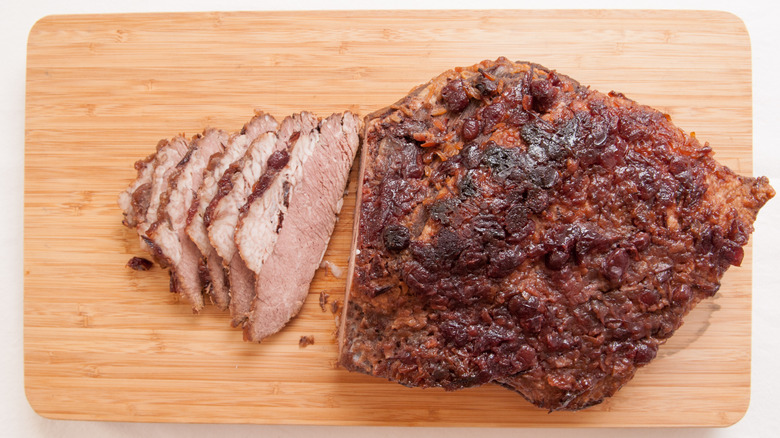
Even if you don't like eating the fatty pieces of beef, leaving a fair amount of fat atop the brisket as it cooks is vital to making it as tasty as possible. You can always remove the fat or tallow (liquefied fat) once it's done braising, which usually takes 6 to 7 hours — a relatively short amount of time compared to smoking a brisket. For Zimmern, this step should only be done when you're slicing the meat to serve it, as that will give it as much exposure to the fat as possible throughout the process.
Ultimately, when it comes to Zimmern's braising method of making a brisket, the fat has greater purpose beyond tenderizing and flavoring the meat. It also contributes to the liquid in which the brisket bakes — which for Zimmern, is a combination of the brisket fat, grapeseed oil, onions, peppercorns, bay leaves, garlic, tomato puree, vinegar, and beef stock. After the long process is done, He also uses this mixture as a sauce for the brisket, imparting the finished dish with even more flavor from the fat.