

The Versatile Pepper Jamie Oliver Can't Stop Using

Jamie Oliver has had a tremendous impact on the culinary world. The British-born chef, author, restaurateur, and food activist has inspired millions with his casual approach to creating delicious, flavorful food right at home. He's incredibly knowledgeable in Italian and other Mediterranean cuisines, as well as American and British traditional cooking. But his favorite seasoning comes from the Basque country, a region along the Spain-France border next to the Bay of Biscay. Oliver admitted in 2024 that his spice of choice for the decade has been Espelette pepper.
Oliver sprinkles the bright red seasoning on soups, chicken, fish, salad dressings, grilled cheese, stuffing, pasta sauces, and countless roasted vegetables. In fact, a dash of Espelette pepper over his crispy roasted potatoes would create excellent flavor. When describing the pepper to The Times, Oliver said, "It's my new craze. It's phenomenal. I have at least three jars at home because I use it so passionately." As to the heat level of Espelette pepper, "The Naked Chef" host added, "There is an element of heat but it's distant. It's slightly sweet, but also umami-ed."
A closer look at Espelette pepper
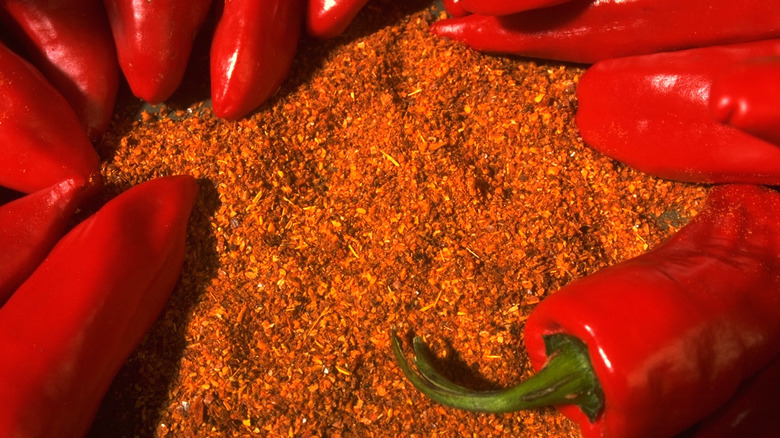
Espelette peppers are also called Piment d'Espelette. They are so closely associated with Basque cooking that they were classified as an AOC (Appellation d'origine contrôlée, or controlled designation of origin) product in 2000. This status gave the peppers the same recognition as other French specialty products like wines and cheeses. Originally grown in Central and South America, the Espelette pepper arrived in the Basque country in the 16th century and became a staple ingredient. Basque country is also where pintxos are embraced as an alternative to tapas.
On the Scoville scale (which measures the heat units in different peppers), the Espelette pepper registers at around 4,000 heat units, making it comparable to jalapeño peppers. Once dried and ground, Espelette pepper has been described as milder than cayenne pepper and hot paprika, suggesting it gives a pleasant warmth to the dishes it seasons. It can also be slightly smoky with a unique sweetness, and even bright and fruity.
Espelette pepper is often used to season the Basque dish piperade — a savory relish made with onions, peppers, and tomatoes. Piperade is also known as basquaise sauce, which is commonly served with chicken.