

Yes, There Really Is A Difference Between Dicing And Chopping
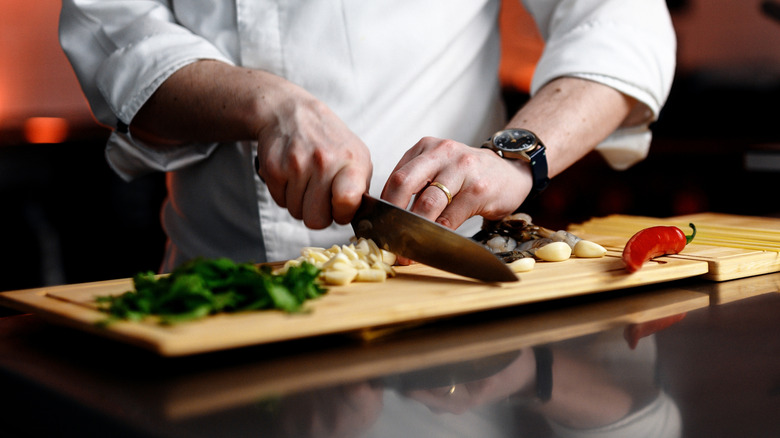
Cutting up ingredients with a knife often seems like the simplest part of a recipe. However, just like every other aspect of cooking, there is a science to slicing and dicing, and knowing the difference between the two can instantly improve your knife skills in the kitchen. We spoke to Morgan Peaceman, recipe blogger and content creator at Nomaste Hungry, about when to chop versus dice, and the most obvious factor is presentation.
"Dicing is more about keeping the vegetable uniform, and chopping is essentially roughly breaking down the food into smaller, rough pieces," Peaceman explained. So, while chopping means cutting an ingredient into multiple pieces that are similar in size but not necessarily in shape, dicing involves precisely cutting the food into nearly identically shaped cubes.
Chopped produce might look less fancy than evenly diced produce. A recipe that specifies dicing might even recommend small, medium, or large dicing — these can range from ¼-inch to ¾-inch cubes that might resemble board game dice in shape (if that helps you remember the name). On the other hand, chopping can produce wedges or other shapes and can include lengthwise and crosswise cutting methods, but there's typically less precision involved.
When to chop and when to dice
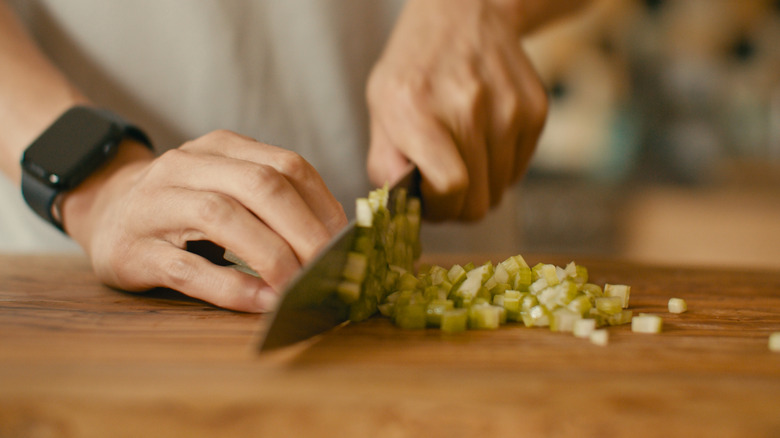
However, chopping or dicing is not just about presentation — your choice can absolutely affect how the ingredients taste. Part of it comes down to texture, as our brains will interpret rounder, smoother foods as more tender, while diced cubes might seem tougher. However, the more you cut up an ingredient, the more flavor and aroma it will release, and fine dicing or mincing (which means breaking the food into much smaller, even pieces than just dicing) will impart stronger flavors.
Some dishes will appreciate the more intense flavors of the ingredients, so that's when dicing would come in handy. " ... Dicing an ingredient gives a more moderate flavor — not as strong as mincing but enough that you can smell the aromas well enough, and is best for salsas, sauces, or sautees," Morgan Peaceman said.
However, there are other instances where chopping would be more beneficial. "You'd want to chop for dishes like soups, stews, braises, etc., as a chopped food like an onion or carrot doesn't have as intense of a flavor as other knife cuts," Peaceman shared. Now you know the perfect stew starts with how you cut your potatoes — on a structural level, chopped wedges of potatoes will also hold together in liquid better than smaller pieces. Naturally, it may take some trial and error before you decide on your cuts, but perfecting your chops and dices is much cheaper than buying a food processor.