

San Francisco Is Home To The Country's Oldest Tea Garden
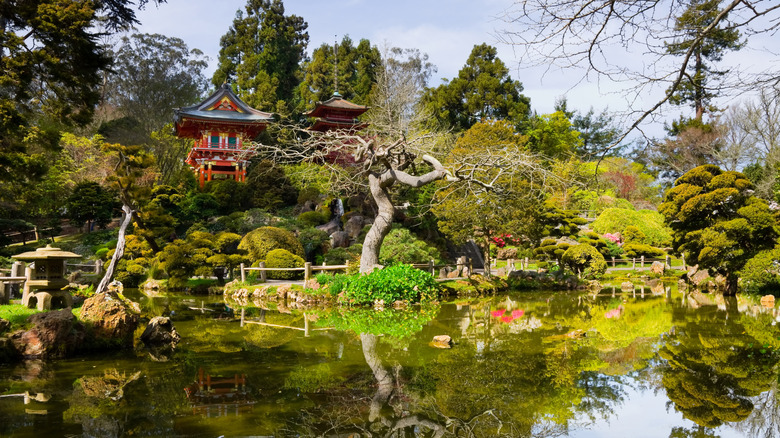
Nestled in the heart of Golden Gate Park stands a large Japanese wall in brown and beige with a massive wooden double-door gate. Within this wall is something that feels almost like it doesn't belong in the heart of a bustling city, given the natural beauty, tranquility, and Asian history it contains. This seeming Eden is the San Francisco Japanese Tea Garden, the oldest of its kind in the entire United States, and one anyone can visit for a much-needed dose of peace and quiet.
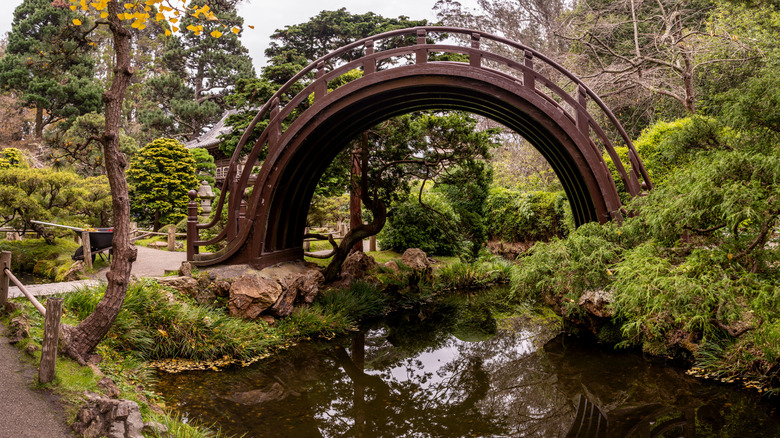
Upon entering, you'll be greeted with fascinating architecture including a narrow drum bridge that forms a perfect half-circle. There are tall pagodas in red and white and ponds teeming with colorful koi fish that eagerly nibble any fingers dipped into the water. Trees and bushes are neatly manicured into pleasing shapes while flowering trees thrive and bloom during the spring.
To the right side of the grounds, there waits a traditional tea house where you can purchase sweets, snacks, and simple meals that are based on traditional Japanese fare. Whether you opt for their mochi of the day or a steaming bowl of udon on a foggy afternoon, you're sure to taste something memorable. Fortune cookies were first introduced to the United States here in this garden, so give one a try. Of course, you can order several drinks with ceremonial-grade matcha tea as well as a variety of other teas from local businesses. This garden has been an integral part of San Francisco for over 100 years, where it has stood the test of earthquakes, fires, and attempted destruction by the city government.
The tea garden's history goes back to the late 1800s
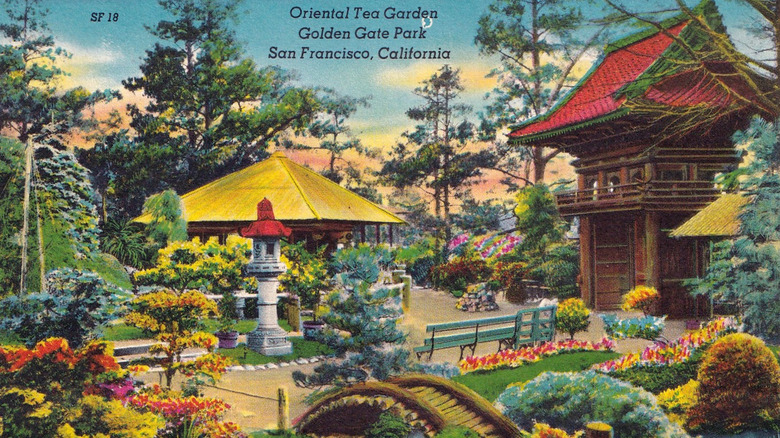
During the California Midwinter Fair of 1894, a man named George Turner Marsh designed and built the gardens as an exhibit. The Tea House served authentic tea upon opening, such as matcha (undoubtedly brewed at the ideal temperature). Locals adored the garden and it began to flourish under new management by Makoto Hagiwara and his wife, who took the reins when the city decided to make the installation permanent. It was Hagiwara who would curate the plants, ponds, and buildings that still delight visitors today; yet Hagiwara and his family faced hardship in caring for the garden.
In 1900, the mayor of San Francisco decided that non-citizens shouldn't be allowed to hold city jobs — a decision which disproportionately affected Asians. Hagiwara was removed from his leadership over the garden but was later reinstated after the 1906 earthquake did serious damage to the park. His family began serving food, tea, and fortune cookies. It's said that these legendary California desserts may have originated with Makoto (Japan's traditional version is quite different). New generations of Hagiwaras were eventually born into the gardens after Makoto passed away in 1925. Unfortunately, this too was temporary.
As World War II gained steam, Hagiwara's entire family was removed from the grounds and sent to internment camps. The garden had all religious and cultural symbols relating to Japan destroyed and it was instead curated by Chinese workers. The Japanese aspects of the garden were later restored and a plaque near the front now recognizes the Hagiwaras' contributions. Today, the San Francisco Recreation and Park Department manages and curates the park.
The Japanese Tea Garden is a thriving cultural attraction
If you wish to visit the Japanese Tea Garden, you are very much in luck. The garden remains open during daylight hours year-round, only closing for renovation or if the plants and ponds need special care. Admission is less than $20 per adult, with lower prices for little ones and seniors. There are even free hours to take advantage of. Walking tours are also available for those who wish to learn more about various aspects of the garden and its history.
Be aware that it can get busy. The 5-acre estate sees over 400,000 out-of-town visitors per year, with the peak being in March and April when the cherry blossoms bloom. Anyone who enters the garden is asked to silence their phones, partake in quiet contemplation, and remain on the paths. Because of all this, reservations are recommended, especially if you wish to dine at the tea house as it's one of the more iconic San Francisco restaurants.
For those who visit and want to support the garden, the gift shop offers unique tea sets and Japanese accessories made by artisans and locals. The garden is the oldest public garden in the United States, so many aspects of the grounds, shop, and tea house reflect that this is an inimitable experience. Those who visit often report a sense of peace after drinking tea there or just wandering, one that persists even after you're outside its walls.