

Pennsylvania's Most Iconic Foods
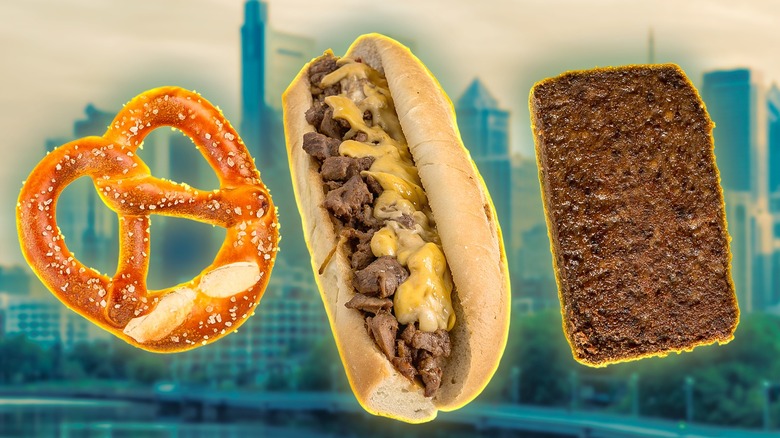
Pennsylvania is many things, from big cities to small towns to miles of rustic woodland; the name means Penn's Woods, after all. There's Philadelphia to the east – with its cradle-of-liberty historical significance and gritty attitude – and Pittsburgh to the west, where Rust Belt fog lifted to uncover a beautiful gem. In less populated parts, post-industrial towns like Scranton, Altoona, and Erie mix with scenic mountain ranges and forests. It is, in a way, a microcosm of the country.
Then, of course, there's the reason we're here: all that gloriously diverse food. In PA, one can find the self-styled mushroom capital of the world, the snack food capital of the world, and, amazingly, even the pizza capital of the world. From Philly's Italian sandwiches and red sauce joints to the German legacy of the PA Dutch, west to Pittsburgh for hearty Polish and Ukrainian fare, and everything in between, there's a traditional delicacy in Pennsylvania for just about everyone. Without further ado, here are some of the commonwealth's most iconic foods.
Cheesesteaks
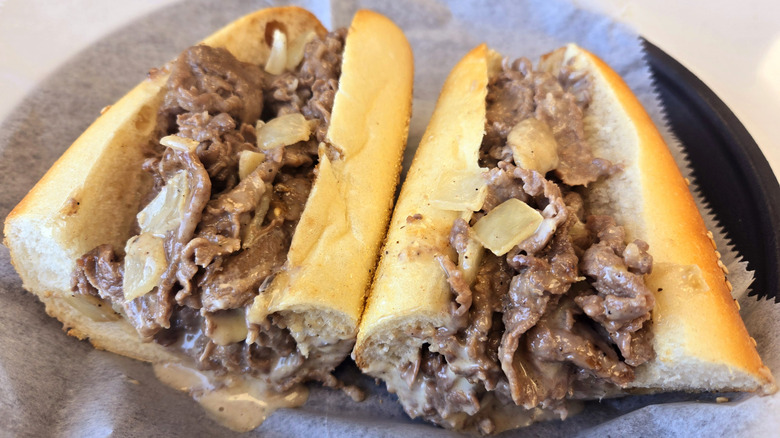
This longtime regional specialty sandwich has, in more recent years, become a global symbol for the City of Brotherly Love. The cheesesteak is certainly well suited to this; like the city itself, it has a simple, heart-on-the-sleeve charm, but also packs a wallop (of flavor). By the way, we didn't call it a "Philly cheesesteak," as no self-respecting Philadelphian would ever add that modifier. It is just a cheesesteak, period.
The cheesesteak is an uncomplicated sandwich, made of three ingredients: thinly-sliced beef, sauteed onions, and warm cheese (American, Provolone, or Cheez Whiz). That's it. Another note: while it's fine to request peppers or mushrooms if desired, a cheesesteak should never contain them by default. Beyond calling it a "Philly cheese steak," adding either or both to the base model is a surefire way to out it as inauthentic.
Though Cheez Whiz has become the iconic dairy choice associated with cheesesteaks, cheese was first added to the Philadelphia-style steak in 1951, before Whiz was invented. Even then, this innovation was more about keeping the grill Kosher than about quality. So, while today Whiz is the most popular option at tourist favorites like Pat's, Geno's, and Jim's, locals are more excited about regional brand Cooper Sharp, an American-style cheese known for its snappy flavor and superior melting properties.
Ham barbecue (chipped chopped ham)
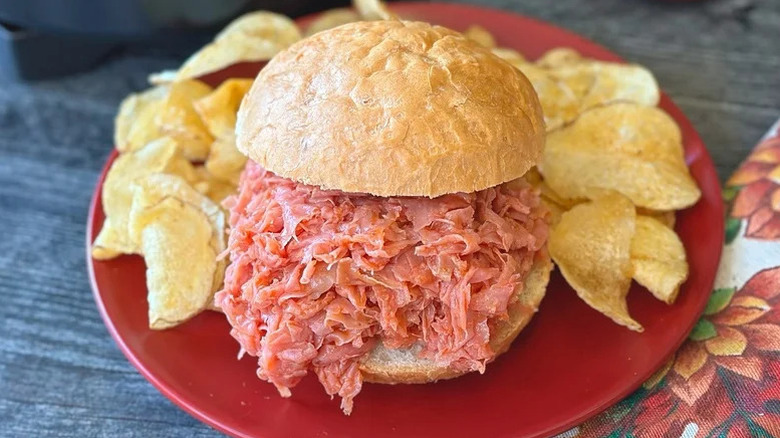
This dish, which is technically neither barbecue nor ham, is a Pittsburgh staple. It's made from the so-called chipped chopped ham, a compressed deli loaf that's been conglomerated from (chopped) whole ham trimmings and seasonings, then chipped, or sliced into thin pieces. To become ham barbecue, the meat is mixed with a sweet, mild barbecue sauce, gently heated, and served on a bun. (For every family that serves the dish, however, there's likely a corresponding recipe variation.)
Ham barbecue – and chipped, chopped ham in general – was popularized by ice cream shop Isaly's, which originated as a dairy farm in eastern Ohio in the 1800s, but became a western PA icon the following century. (The shop also created the Klondike bar, which it eventually sold to a larger company.) Today, Isaly's stores are fewer and further between than they once were, but their products are still available in stores all around Pittsburgh and western PA, allowing Steeler fans to faithfully recreate ham barbecue family recipes every game day.
Hoagies
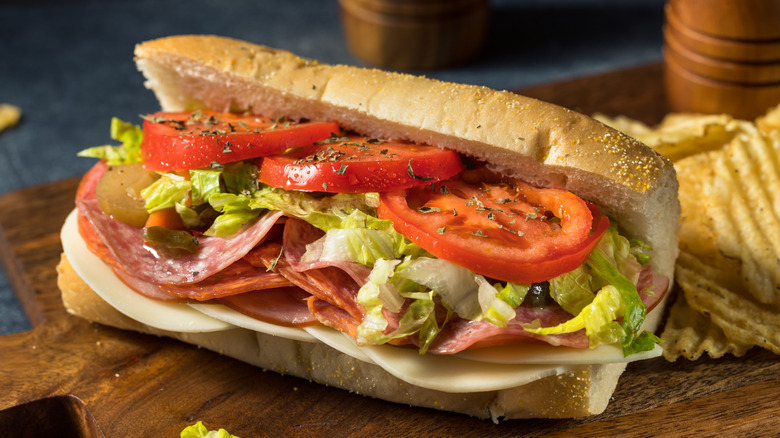
Though cheesesteaks are more well-known globally, hoagies — sandwiches made up of cold cuts, cheese, and vegetables on a long roll — are actually Philadelphia's "official sandwich," and arguably more deeply embedded in the city's culture. Hoagies are an everyday food in Philly; from inexpensive grabs at local chain Wawa to stops at the mom and pop deli, to making simple (or elaborate) ones at home, hoagies are an indispensable part of the formative Philadelphia experience.
Despite locals' insistence otherwise, these sandwiches are essentially the same thing as submarines, heroes, etc., allowing for minor regional differences. The fact that they are so important to Philadelphians does, however, ensure that quality remains high throughout the region. That said, the "hoagie" moniker — and its many origin hypotheses — helps this sandwich remain unique to Pennsylvania. (Though most prevalent in southeastern PA, Pittsburghers also use it.)
As to where or when it originates, Philadelphians will swear this unique name derives from the World War I-era shipyard built on Hog Island, but no verifiable evidence supporting this connection exists. It's true that these sandwiches were originally called hoggies, then morphed — via that unique Philly accent — to hoagie, but this happened long after the shipyard closed down.
Lebanon Bologna
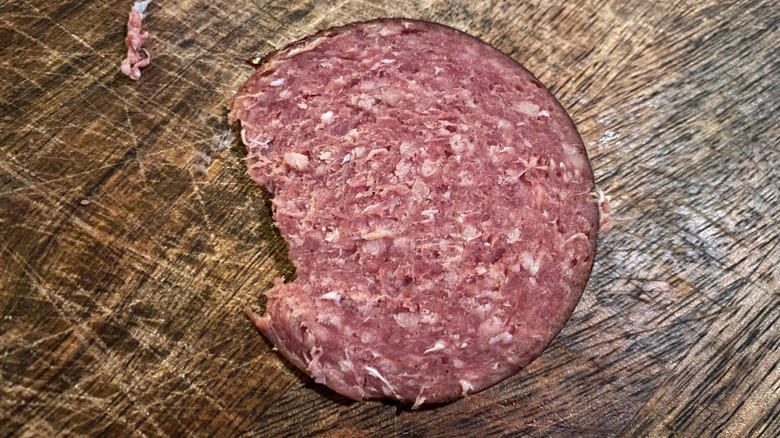
Named for Lebanon County, this semi-dry beef sausage isn't actually bologna (which is pork-based), but rather a hard sausage reminiscent of summer sausage. To make this regional delicacy, coarsely ground beef is aged in barrels, then mixed with a variable blend of herbs and spices. Traditionally, it's smoked over a mix of wood chips and sawdust, though industrial operations today may use more standard smoking techniques. Because the sausage ferments as part of the preservation process, it's known by devotees for its particular pungency.
Documentation of various types of bologna in the Pennsylvania Dutch tradition dates back to the mid-1700s, and it has long been used like sausages and cold cuts of a similar style. Though this type of cured meat is available across much of PA, the name "Lebanon Bologna" came about in the early 1900s, when several commercial producers were concentrated in Lebanon County. Today, the tangy sausage has become such a regional symbol that the town of Lebanon celebrates New Year's Eve by dropping a 120-pound bologna from a crane.
Old Forge pizza
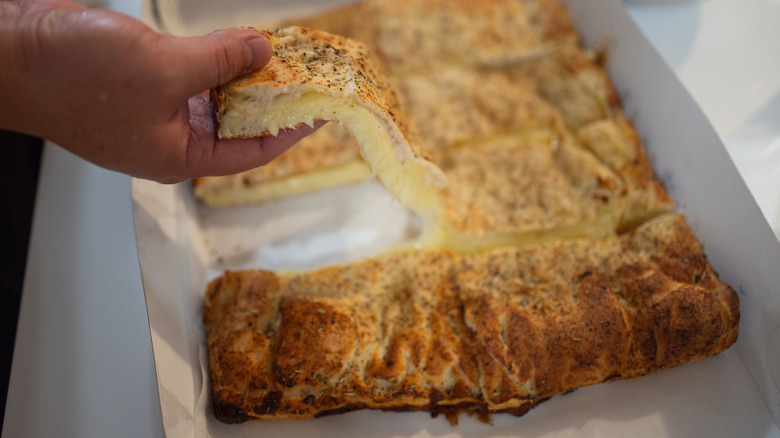
Old Forge pizza gets its name from an 8,000-person mining town in the Scranton-Wilkes-Barre area, sometimes claimed to be the "pizza capital of the world." The style is served at about a dozen spots on and around the town's Main Street. This unique style apparently originated in the 1920s at the now-shuttered Ghigiarelli's Pizza, then run by Filomena Ghigiarelli. "Grandma," as she was known, came up with the idea to bake pizza in a large metal pan to satisfy the hunger of local coal miners who frequented her restaurant. Though similar in shape to the grandma-style pizza of the NYC area, Old Forge's version is slightly doughier and chewier in the center, while maintaining a crispy underside.
Old Forge pizza is partially defined by the lingo that surrounds it: a whole pizza is a tray, never a pie, and pieces are cuts, not slices. "Sometimes people call and order a pie, and we go, 'Do you want apple or blueberry?'" Angelo Genell, whose family has run Old Forge mainstay Arcaro & Genell since 1962, told USA Today.
"Red" is the most traditional Old Forge style, topped with a slightly-sweet tomato sauce and a blend of cheeses that varies by restaurant, likely including meltable, processed options like American and Cooper Sharp. A newer alternative is the "white" pizza, made with a top and bottom crust that's filled with cheese, herbs and spices. That said, all of the Old Forge pizza spots have their own secrets and variations.
Pepperoni balls
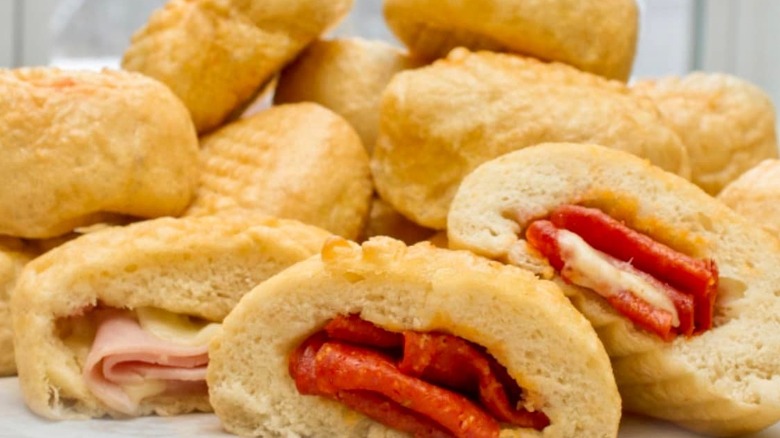
Throughout the country, one can find many instances of pepperoni paired with carbs. Pepperoni pizza, pepperoni calzone, pepperoni bread, etc. But only in Erie can one find the miraculous treat known as pepperoni balls. While perhaps similar to but not the same as West Virginia's pepperoni rolls, Erie's "pep balls" are baseball-sized rounds of deep-fried (occasionally baked) pizza dough, stuffed with pepperoni and sometimes cheese, and have become an integral and unique part of growing up in northwestern PA.
Oddly, this dish appears to have emerged from a recipe for fish balls, a Depression-era combo made by combining leftover scraps of fish and bread dough. These became popular enough among the area's Italian immigrants that, as the economy began to improve, other ingredients — including, crucially, pepperoni — were added. The latter adjustment stuck, and now the dish is a staple of not only Erie pizza joints but also school lunchrooms, sporting events, fundraisers, picnics, and more.
Pep balls have, naturally, become a symbol of Erie. As one example, two local minor league teams — NBA G League's Bayhawks and Double-A baseball's Seawolves — have temporarily rebranded as the Erie Pepperoni Balls for promotional stunts. And, the enterprising souvenir hunter can find Erie pepperoni ball clothing, bobbleheads, stickers, greeting cards, and more.
Pierogies
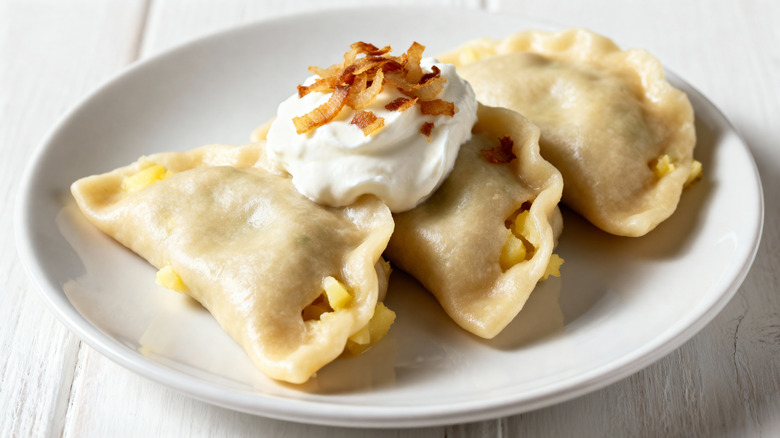
Though this central European delicacy is available across the country, where many cities have Polish enclaves (or a history of), the connection between pierogies and Pittsburgh surpasses mere availability. Pierogies are not only a Pittsburgh bar staple; there are many pierogi-specific restaurants in the region. Furthermore, pierogi-themed events such as pierogi crawls and pierogi festivals – as well as pierogi-themed arts, crafts, and souvenirs – are deeply embedded in the city's culture. There's also the famous giant pierogi race, which regularly occurs between innings at Pirates games.
These boiled dumplings containing a variety of fillings date back to the 13th century in Poland, and seemingly came to Pittsburgh with the influx of immigrants in the mid-1800s. What started as an immigrant foodstuff — especially in the aptly-named Polish Hill neighborhood — eventually made its way into the city's mainstream food culture. As modern chefs have increasingly added innovative ideas across cuisines, creative takes on pierogies have made their mark. For example, upscale versions might include combinations like Yukon gold potatoes, charred leek, and Gruyère, or grilled peach with goat cheese and herbs. Lastly, pierogies are not just a Pittsburgh thing; eastern PA is home to the iconic brand Mrs. T's Pierogies, and the dish is eaten across the commonwealth.
Pretzels
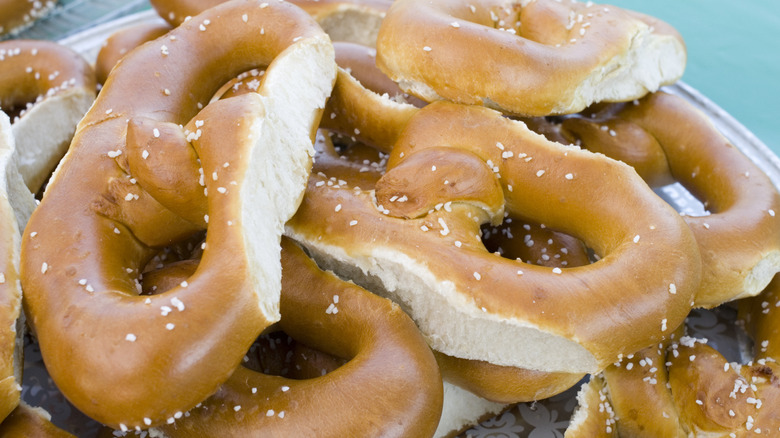
The numbers thrown around related to pretzels in Pennsylvania are staggering. For example, the commonwealth manufactures about 80% of pretzels consumed in the U.S. There's also the fact that the average Philadelphian consumes 12 pounds of pretzels per year, compared to 1.5 for the average American. Even if these numbers aren't entirely accurate, the point is clear: Pennsylvanians love pretzels.
In 1861, Julius Sturgis opened the country's first commercial pretzel bakery in Lititz, just north of Lancaster, and the snack has remained an integral part of the local diet ever since. In the early 1900s, pretzel factories began to proliferate in the area, especially in otherwise little-known Hanover, where the founding of bakeries that would become Snyder's of Hanover and Utz — two giants of hard pretzels today — planted seeds for the town to become the so-called "snack food capital of the world."
This pretzel story would, of course, be incomplete without the soft pretzel, with which PA has an even deeper connection, since quality hard pretzels can be shipped everywhere, but soft ones need to be consumed quickly. These aren't grocery freezer pretzels! Founded in the Philly suburb of Downingtown in 1988, Auntie Anne's has helped spread the soft pretzel gospel to malls and airports far and wide. Nevertheless, there's something inimitable about buying a paper bag of dubiously-sourced but ultimately delicious soft pretzels from a guy with a shopping cart on a street corner in Philly.
Primanti Brothers sandwich with fries
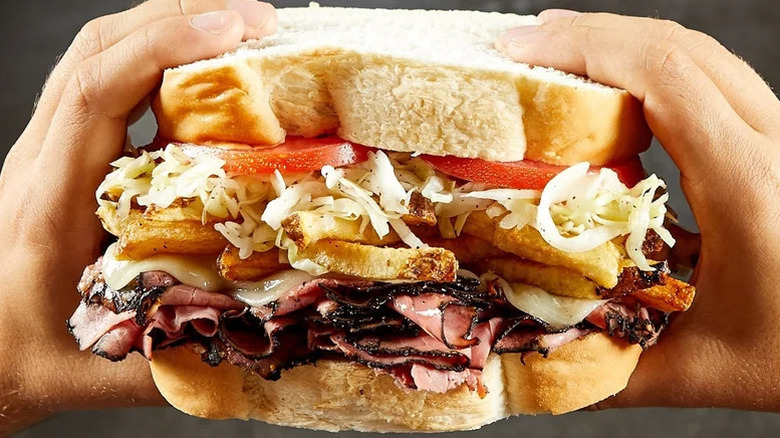
Though Philadelphia, with its cheesesteaks, hoagies, etc., is clearly Pennsylvania's sandwich capital, Pittsburghers also have their own celebrated sandwich style. It comes from Primanti Brothers, which is known for stuffing slices of thick white bread with not only meat and cheese, but also coleslaw and ... wait for it ... a gigantic mound of french fries.
Local lore suggests this creation was first made for the city's plethora of steel workers, but in actuality, it was truck drivers and warehouse workers of the Strip District, a busy hub of manual labor, who originally consumed it. As for the signature starchy addition, according to founder Joe Primanti's nephew John DiPriter, "One winter someone drove up with a load of potatoes ... I fried the potatoes on our grill and they looked pretty good. A few customers asked for them — so I tossed them on the sandwich."
Today, the idea of fries on sandwiches is not necessarily confined to Primanti Brothers, with other local places adopting the practice while using names that contain various incarnations of Pittsburgh, Pittsburgher, or Pittsburgh-style, among others. Also popular is the Pittsburgh salad, topped with ... what else but french fries? Though not directly related to the Primanti sandwich, this more recent creation certainly shares the same yinzer spirit.
Scrapple
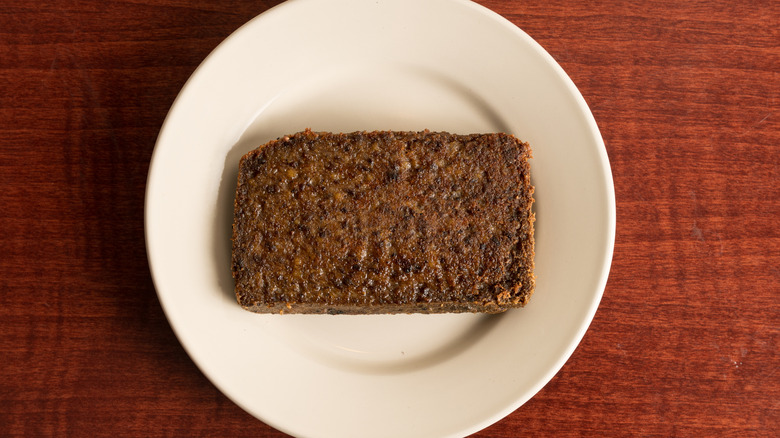
Similar to sausage, scrapple is constructed from leftover pieces, trimmings, and offal from a pork slaughter. What makes it different is that it's mixed with either cornmeal or buckwheat and formed into a loaf, giving it a unique texture. In PA, it has long been used as a breakfast meat, and makes a great addition to an egg and cheese sandwich.
Like so many unique and wonderful foods, scrapple was likely created to maximize the family food budget, ensuring every last morsel of usable meat was leveraged. (Cutting it with cornmeal stretched it even further.) Traditionally, the leftover parts go into a large vat that's boiled for several hours, which removes the smallest scraps from bone and extracts flavorful gelatin. The meat is then finely minced, mixed with herbs, spices, and one or more types of flour. For cooking, the finished loaf is sliced evenly and pan-fried to a golden brown.
Scrapple often gets a bad rap due to its mystery meat status, but this logic fails when comparing it to more accepted items like hot dogs and other sausages, or even most overly processed foods that litter the U.S. landscape. This is real meat, just used in a clever way to avoid waste. One food historian even joked that if scrapple were to rebrand as polenta nera, it would become the new darling of high-end restaurants everywhere.
Shoofly Pie
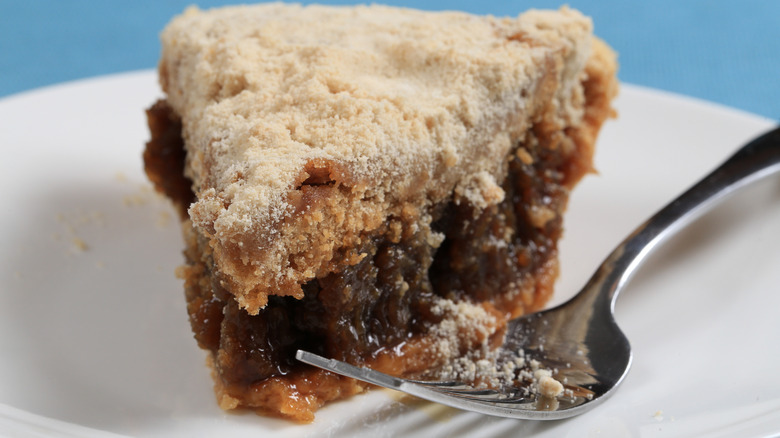
Today, perhaps the most iconic food of the Pennsylvania Dutch, shoofly pie is a molasses-flavored pastry with a crumbly topping that, before acquiring its unique title, was known as "molasses crumb pie." The dish consists of three layers, starting with a crust, followed by a molasses-dominant custard that is either pudding-like in consistency (in the more common wet-bottom style) or cake-like (known as dry-bottom). Finally, it's finished with a crumb topping made from flour, brown sugar, and butter or shortening.
Despite its importance in modern PA Dutch culture, the pie is a somewhat late addition, having been first introduced as a "centennial cake" after the Civil War. Historians suggest a direct relationship with Jenny Lind pie, named after a popular Swedish opera singer of the time. Unlike the more pie-like shoofly, this precursor was intended to be handheld, but like its later incarnation was conceived to be paired with (or dipped in) morning coffee.
As for the catchy name, that's harder to pin down. Common legend suggests flies were attracted to the pie's sweet aroma, but other hypotheses abound. Was it named for the song "Shoo Fly, Don't Bother Me"? Or Shoo Fly the Boxing Mule, a popular circus donkey? Or the molasses brand named after said donkey? It's difficult to separate myth from fact. Either way, well-made shoofly pie is delicious.
Stromboli
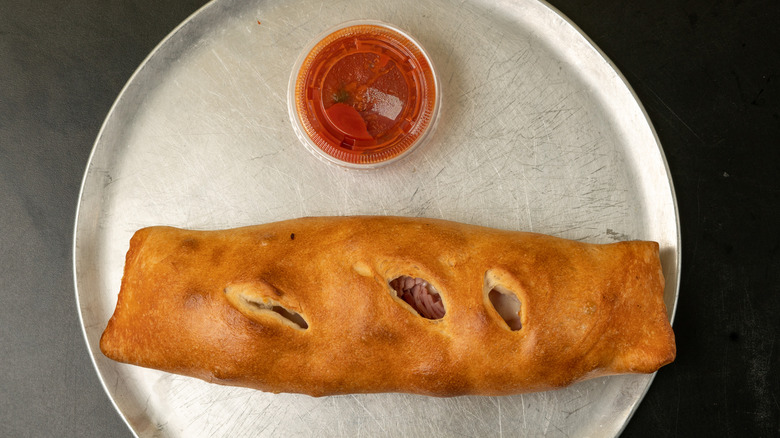
Though stromboli is available in pizza joints across the country, this concept originates in the Philadelphia region, where it is made in a specific way — with bread, not pizza dough — that produces a unique texture unavailable elsewhere. After trying PA's version with its delightfully crispy exterior, more common stromboli will always pale in comparison.
In 1950, Italian immigrant and pizzaiolo Nat Romano, living in the Philly suburb of Essington, took inspiration from both a beloved dish from his homeland, Italy's pane imbottito (stuffed bread), and one from his newfound home, the hoagie, to create a new dish. Starting with bread dough, he stuffed it with Italian meats, cheeses, and vegetables, then baked it to perfection. The idea took off, eventually leading to (often inexact) copycats around the region and beyond.
The dish's unique moniker comes from the 1950 movie about the Italian island of the same name — starring Ingrid Bergman and directed by Roberto Rossellini — that made headlines more due to the pair's illicit affair than the movie itself. While neither the dish nor its inventor had any connection to the movie, one of Romano's customers thought stromboli was a cool name, and successfully lobbied for it to be used for Nat's "prefabricated sandwich."
Water Ice
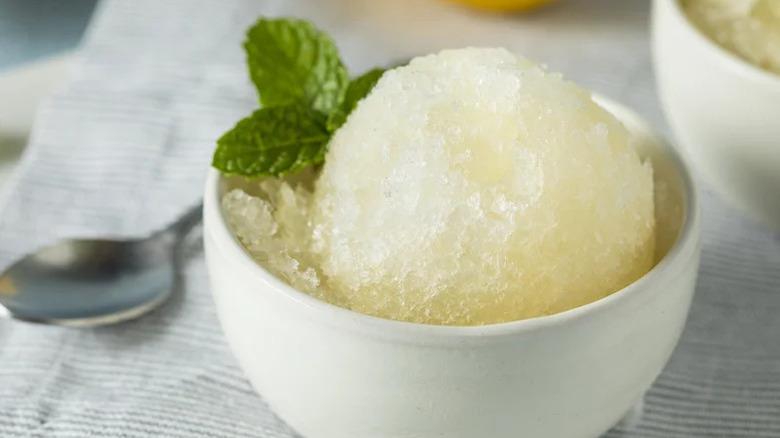
Philadelphia's contradictorily-named warm weather treat is often compared to Italian ice, and while technically they may be the same, the delicate texture and bright flavors of fresh water ice provide a thoroughly different experience from those rock-hard cups found in supermarket freezers elsewhere. In Philly, "wooder ice" is an art form made with fresh fruit and churned in small batches to become something entirely unique.
Unlike other shaved ice treats, such as snow cones, where syrup is poured over ice, water ice entails adding the fruit before freezing, then whipping it to create a smoother final product. In Philadelphia, the production process has been honed over decades to create an especially soft texture.
As with other regional specialties, many water ice origin legends exist. Ask, for example, the proprietors at Pop's, who have served the dish since 1932, and you'll likely hear stories about eating snow in ancient Rome or from the Titanic's iceberg. More likely (and boring), however, is that water ice evolved from the Sicilian granita – a similar dish of soft ice with fruit or other flavorings — which arrived alongside many Sicilian immigrants in the late 1800s and early 1900s.