

The Simple Trick That Can Save Gummy Mashed Potatoes Is Already In Your Fridge
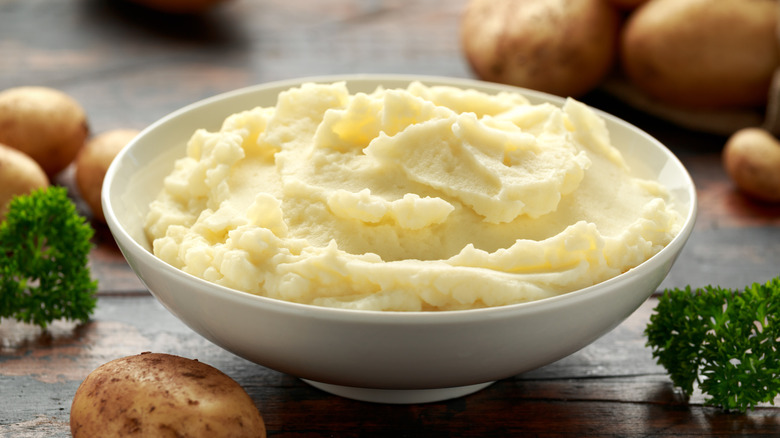
What's better than fluffy, creamy mashed potatoes? Everyone has their own tips for the perfect mash, and most of us get them right a lot of the time. Except when we don't, of course. It's easy to overwork potatoes, after all, especially if you're making them as a side for a big meal. Overworked potatoes release too much starch, which will make your mash sticky. You might also be using starchy potatoes, which will lead to the same wallpaper-paste situation. Luckily, there are solutions! Sticky mash can often be saved — at least, according to Kieron Hales, head chef at and managing partner of Zingerman's Cornman Farms in Michigan.
Hales admits that overworking potatoes is a universal kitchen whoopsie. "The very best method is to learn and be more gentle next time," he says. But if it happens to you and you don't have the time, energy, or spuds to restart the process from scratch, Hales advises, "The next fix is fat." Warming butter and heavy cream and gently folding them into the warm potatoes works because fat loosens networks of starch, so you end up with a smoother mash (it's probably why whipped cream helps make fluffier mashed potatoes) "You can also gently pass them back through a drum sieve," adds Hale, although if you do this, don't go overboard! The starch can become reworked if you keep going after they reach the desired texture.
How to save your sticky mashed potatoes, based on what's in your fridge right now
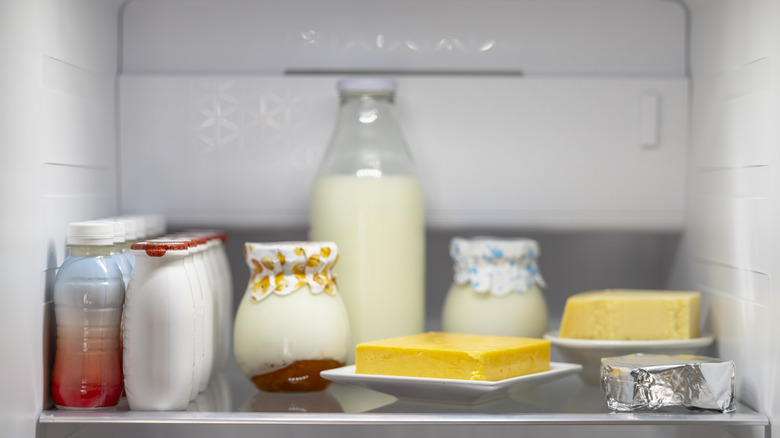
Fat is a key to correcting gummy mashed potatoes, coating the starch so that it's no longer as sticky. You can use anything with a high fat content, just as long as it also goes with potatoes. Butter, cheese, cream cheese, sour cream, and olive oil are just a few of the many ingredients you can add to mashed potatoes that might fix overworked spuds. For a rich Italian flavor, you could even stir in some jarred pesto, or use your favorite herb-infused EVOO. You'll need at least a tablespoon of olive oil, melted butter, cream, sour cream, or cream for every pound of potatoes; starting slow allows precision, so you won't go too far in the other direction and end up with greasy mash.
If your potatoes are so gluey they seem like a lost cause, they needn't go to waste. "Sometimes a mistake makes for a great opportunity," he says, adding that one of his favorite cocktail appetizers for weddings is croquettes, which need a very starchy mash. "I would have cheese, egg yolks, some ham, rosemary and roasted pureed garlic [in croquettes]," says Hales. "I might even add some more potato starch to get the right consistency." But you can also add whatever chopped vegetables, cooked seafood or meat, herbs, and cheese you have at hand.
How to avoid gummy mash in the first place
Remember Hale's first piece of advice? He wants us all to learn from gummy mash, and avoid making the same mistake next time. To do this, you need to perfect both cooking and mashing, as boiling potatoes for too long or mashing them too enthusiastically can both produce excessive starch.
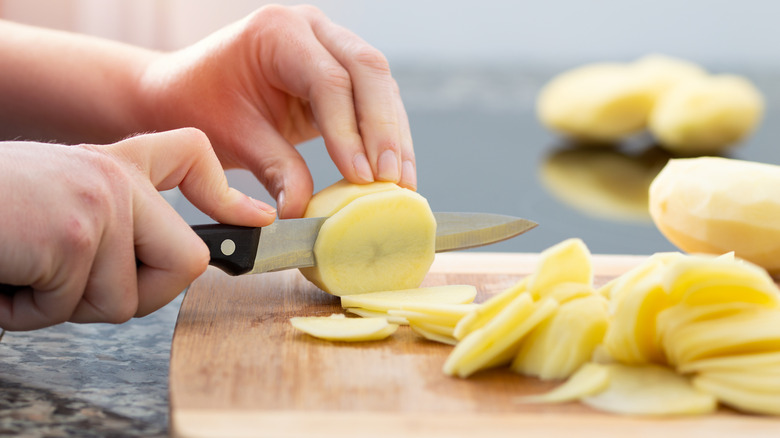
Cutting potatoes into slices rather than large chunks reduces cooking time and allows the spuds to cook more evenly. Bigger pieces take a long time to soften in the center, while the outside overcooks. For mashing, a ricer or food mill helps avoid overworking your mash. If you don't have one, a masher is fine; just make sure you aren't bashing at one area repeatedly. Once they're mashed, add fat before you add additional liquid such as milk, as it prevents the potatoes' starch from interacting with the wet ingredients.
It seems counterintuitive, but choosing less starchy potatoes isn't a great idea, as mash gets a lot of its texture from starch. Some people like to take the simple step of washing potatoes to get rid of unwanted starch, which can work in a pinch, especially if you realize too late that you cooked them for too long. In that case, be extra cautious when mashing.