

12 Fried Japanese Dishes You Have To Try At Least Once
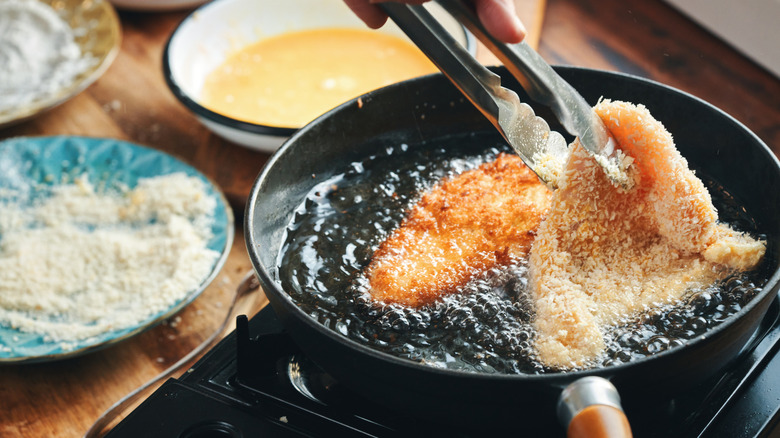
Fried foods hold a special place in Japanese cuisine. While Japan is often celebrated for its delicate sushi, its comforting ramen, and its artfully prepared bento, we felt it was time its fried specialties got their due attention and praise. From end results that melt in your mouth thanks to light, airy batters to perfectly crunchy coatings that create truly unforgettable dishes, Japanese frying methods focus on enhancing natural flavors rather than overpowering them.
And much like with its artfully assembled sushi, what sets Japanese fried food apart is a similarly fine-tuned attention to detail. Think about it. All of the ingredients are carefully prepared, all oil temperatures are painstakingly picked (and controlled throughout the frying process. Speaking of the cooking process, in Japanese frying, the timing is precise, ensuring each bite is crisp on the outside and tender on the inside.
In this list of fried Japanese dishes you have to try at least once, you can expect a delicious mix of well-known classics, like tempura, as well as lesser-known gems, each offering its own texture, flavor, and story. From comfort foods that pair perfectly with rice to street-food-style bites meant to be eaten hot and fresh, these dishes showcase how versatile and exciting Japanese fried cuisine can be.
Toriten
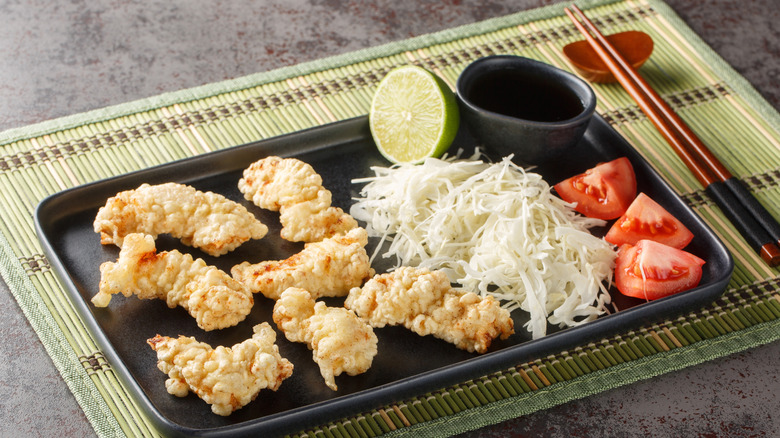
Toriten is the quintessential and beloved staple soul food of Oita, Japan. A simple yet delicious chicken tempura that has captured the hearts of locals and visitors alike since its initial inception, this popular dish is said to have been created in an eatery in Oita City in the early 1960s, and has since become an area mainstay. The name itself is a straightforward combination of "tori" (meaning chicken) and "ten" (which refers to tempura). A perfect moniker for the dish indeed.
The preparation involves using tender chicken that is often marinated in soy sauce, garlic, and ginger for extra, delicious flavor. Unlike traditional tempura, which uses seafood or vegetables and is served with a dashi and soy sauce dip, toriten incorporates chicken and is typically paired with a more tangy-like, vinegar-soy sauce, ponzu, or hot mustard to complement its unique taste and light texture. The chicken is coated in a tempura batter that becomes crispy and fluffy when deep-fried until golden. This frying process creates a delightful contrast of textures, namely being a crunchy exterior and juicy interior.
While it may resemble another popular Japanese fried chicken known as karaage, toriten stands out due to its specific batter and its unique serving style. Different restaurants offer variations, and in fact, the modern versatility of toriten means you can have a real blast trying all the varying, scrumptious styles.
Tempura
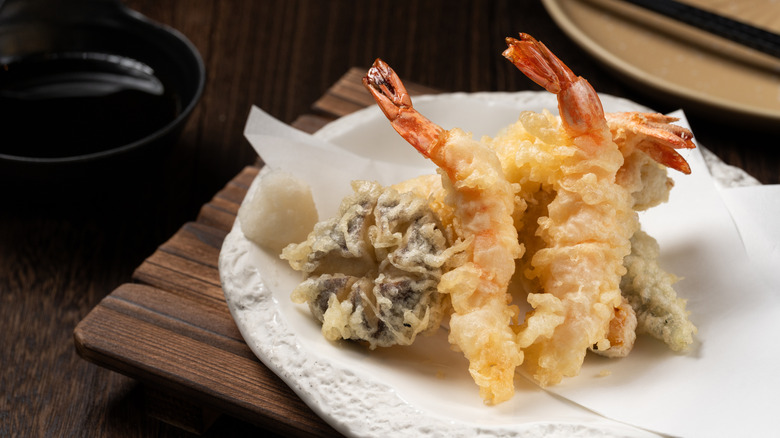
While you may have been advised to think twice before ordering this fried menu item at a sushi restaurant, tempura just tastes so good, we say you do you, boo! Tempura features seafood and vegetables coated in a delicate and crispy batter then fried (be sure to use the right oil when frying tempura.) The original form of tempura is generally believed to have originated from a dish brought to Kyushu by the Portuguese. There is some dispute over exact origins, but the name "tempura" is thought to have stemmed from the Portuguese words "tempora" (festival) or "tempero" (dish), or from the Latin "ad tempora" (Lent).
This cooking style became popular and spread, becoming known as "tsuke-age" before being introduced to Edo (now Tokyo) in the 18th century. After the Great Kanto Earthquake in 1923, tempura cooks dispersed throughout the country, taking this delicious receipt with them. Tempura is typically served with tentsuyu, a soy-based dipping sauce, or just salt. It's process is similar to how many restaurants fry food, with ingredients lightly dipped in a batter and fried to create a light, crisp texture.
The secret to accomplishing this is thanks to the batter itself, which uses the trio of flour, eggs, and ice water. The ice water is vital to this equation because it is the very cold temperature that slows the formation of gluten during the cooking process, which is said to ensure a crispier cook and prevent the batter from absorbing too much oil.
Karaage
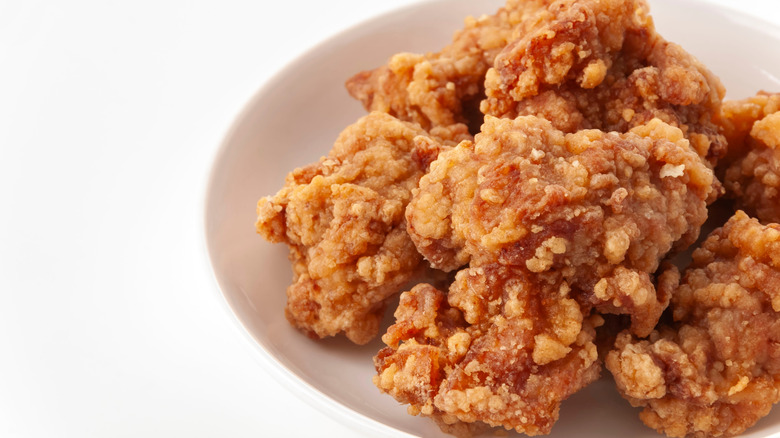
A mainstay food seen in Japanese izakayas and fast-food stalls, karaage is Japan's signature take on classic fried chicken. The preparation method involves using morsels of poultry, often thigh meat thanks to the higher fat content to keep the dish moist. These moist-forward morsels are first marinated in a delicious mix of soy sauce, sake, and ginger, then coated in a light dusting of flour or potato starch before being deep-fried until oh-so-golden and delightfully crisp in texture.
Despite its current popularity now, it may surprise you to learn the ancient Japanese are said to initially have had quite a distaste for fried foods, often preferring non-fatty meals instead. However, things changed when cooking oil became cheaper and more accessible, and fried items (like tempura) started to grow in popularity. The full embrace of fried chicken can be traced back to just after World War II, when the Japanese poultry industry quickly expanded. This abundance of chicken led to the development of new local dishes, including the now wildly popular and beloved karaage.
It is worth noting that "karaage" is actually a cooking method involving dredging small pieces of food in starch and deep-frying them, so it is good to be aware that the term can also apply just as easily to seafood or vegetables. As for telling the difference between just "meh" and magnificent chicken karaage, many recipes of those in the know recommending a double-fry process.
Tonkatsu
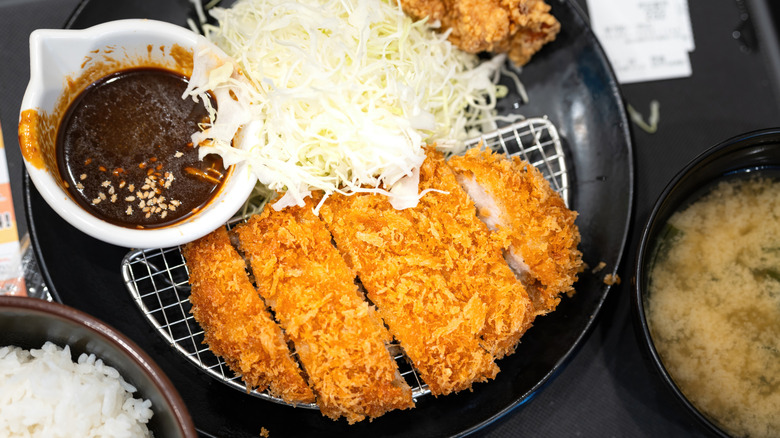
Tonkatsu is a breaded, deep-fried pork cutlet that is beloved for having a crispy, crunchy exterior and a tender, juicy interior. This is considered to be a specifically Japanese technique. Although it may appear similar to some Western methods, like cooking schnitzel for instance, tonkatsu uses a specific method of deep-frying, with a generous amount of oil.
The key to its flaky texture is the use of panko rather than regular breadcrumbs, which absorb oil during frying to create that ideal, perfect crust we all love and crave. As for the process, the thick slices of pork are first coated in flour, then egg, and then panko before being deep-fried. Tonkatsu is most often served as a set meal called a teishoku. The cutlet is sliced into bite-size strips and presented with a generous helping of things like shredded cabbage, rice, miso soup, and pickles. A key component to the magic of this dish is the accompanying condiment, a semi-sweet brown sauce called tonkatsu sauce – think of it like a type of Worcestershire sauce that can be drizzled directly over the crispy panko coating or used as a dipping sauce.
While pork is the most popular choice, the katsu cooking style can indeed be made with other variations. You might find chicken (called chikinkatsu), beef (termed gyukatsu), ham (seen as hamukatsu), and ground meat (known as menchikatsu).
Korokke
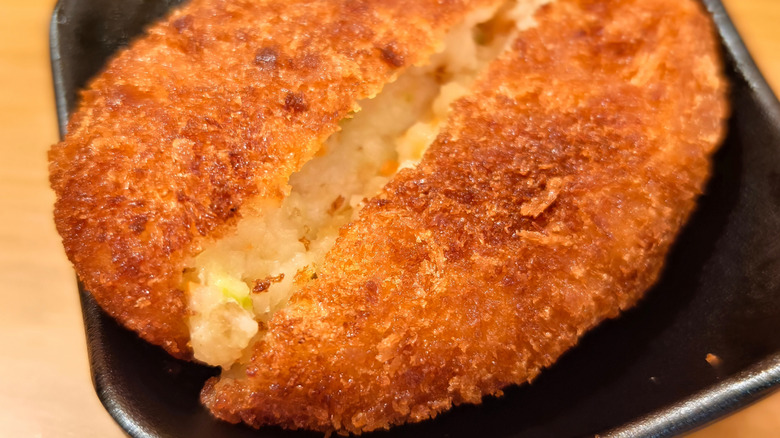
Ever heard of korokke? An easy way to think of them is to consider them basically the Japanese spin on the classic French croquette. Korokke are typically made from mashed potatoes mixed with other ingredients, such as ground meat or cheese, which are shaped into a patty or cylinder, coated in panko breadcrumbs, then deep-fried. This creative cooking method results in a delicious and delightful contrast of that combo we all love and know so well — an incredibly crispy outer shell with a super-soft, comforting filling inside.
These versatile patties can be savored in many different forms. The most common iterations are the flat oval potato korokke, which can be flavored with ground meat or onions. Regional variations also exist, which typically feature famous local ingredients (think high-quality beef or crab, for instance). A few commonly seen flavor types are gyu korokke (beef), kabocha korokke (pumpkin), and kare korokke (curry). A different, yet equally popular variety is the cream korokke, which uses a thickened cream sauce filling mixed with ingredients like seafood or corn, and is usually shaped into a small cylinder.
Korokke are widely available at restaurants, supermarkets, convenience stores, or even street vendors. They are commonly seasoned with a type of Worcestershire sauce. Diners might use chopsticks to cut off small pieces, or when enjoying one from a street vendor wrapped in paper, simply hold it in hand and take a bite.
Kushikatsu (or kushiage)
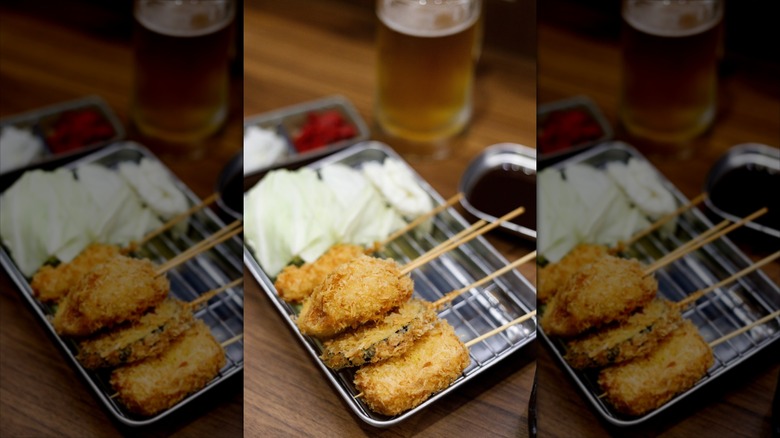
Kushikatsu and kushiage are popular deep-fried Japanese treasures. Specifically, they are quite famous local specialties of the Osaka area. While yakitori might attempt to hog the attention here, kushikatsu and kushiage are Osaka's real stars. These beloved dishes feature various skewered meats, seafood, and vegetables that are coated in panko breadcrumbs and then deep-fried. Casual and affordable foods, it makes sense how they became so popular among laborers in Osaka, with the restaurants that serve them generally still aimed at the working class even now.
While often thought of interchangeable by many, there are subtle distinctions between kushiage and kushikatsu restaurants, including atmosphere, price, and even the coarseness of the breadcrumbs used, with kushikatsu typically using slightly coarser crumbs. Historically, the main ingredient for kushikatsu was meat (often pork cubes alternated with onions on a skewer), but modern restaurants offer a wide array of options now, including seafood and quail eggs. Kushiage restaurants, on the other hand, might put only a single ingredient on each skewer, and often use extra condiments like salt or lemon juice.
A central element of the kushikatsu experience is the communal dipping sauce served in a container on the table. Proper etiquette and table manners are considered essential here, in that the stick is dipped in the tangy sauce, but double-dipping is a major social faux pas. You get one dip per skewer, so make it count.
Agedashi tofu
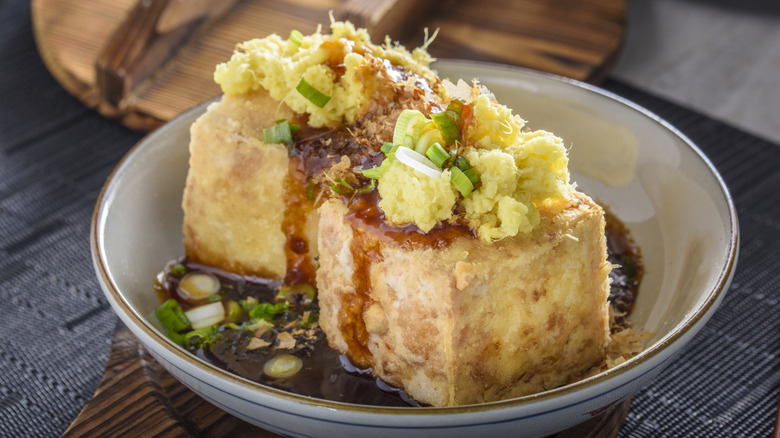
Agedashi tofu is a popular hot appetizer found in restaurants and Japanese izakaya-style dining establishments. This traditional dish, which first traces back to the Edo period, takes its name from a beloved and longstanding restaurant called Agedashi in the Tokyo area. Even diners who are not necessarily fans of tofu in general may surprise themselves by finding this type of soybean curd quite yummy and savory indeed. The preparation is straightforward, but somehow manages to make fried food magic. Cubes of soft tofu are first squeezed dry to remove any excess moisture – this is an important step to ensure maximum crispness and no sad sogginess. The soy is then coated in starch (typically cornstarch or potato starch) before being deep-fried.
As for that aforementioned magic? That happens when the crispy tofu is plated and served hot in a rich, savory dashi and soy-based tsuyu sauce. This warm, rich umami flavor is perfectly complemented by garnishes like fresh spring onions, bonito flakes, and often a generous heap of daikon radish and ginger.
The contrast between the crunchy exterior and the soft interior, combined with the brilliantly flavored broth, creates a delightful and comforting dish. It's the perfect appetizer and a must-try item that just may convert any tofu skeptic out there.
Ebi furai
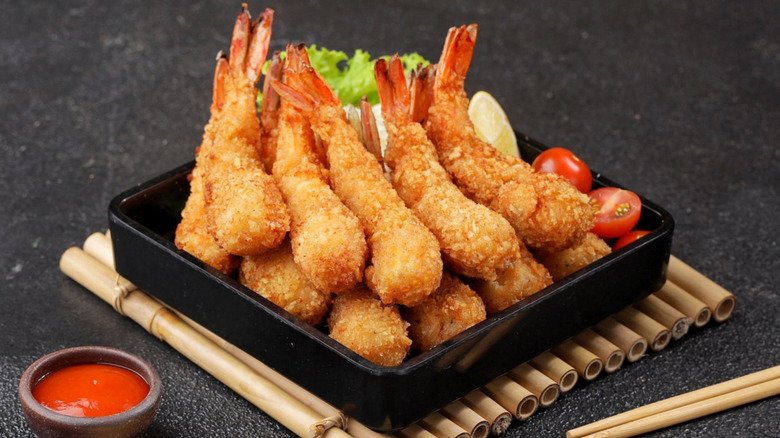
Ebi furai is a popular Japanese fried dish featuring tender shrimp that are first coated in panko breadcrumbs, then deep-fried until they reach a golden, delectable brown. Unlike tempura shrimp, which uses a lighter, more airy batter, ebi furai has a distinctly thicker, crunchier coating thanks to its preparation method. The prep for this is similar to that used for tonkatsu and korokke.
Specifically, the process involves coating the prawns in flour, then egg, and then crispy panko breadcrumbs. The resulting texture and wonderful taste make ebi furai an absolute winner on any menu. This dish is versatile and can be served with various condiments, but most commonly is enjoyed with Japanese mayonnaise, a Worcestershire-like sauce (tonkatsu sauce), or a creamy tartar sauce. It is also sometimes presented with a side of shredded cabbage.
Ebi furai is a mainstay food found in many Japanese restaurants, and is also an excellent choice for home cooking. It also makes a delicious addition to a bento box lunch or a satisfying sandwich. Whether you prefer to savor yours with the classic tartar sauce or the tangy tonkatsu sauce, the satisfying crunch and softer, more succulent interior of ebi furai make it magic no matter what.
Menchi katsu
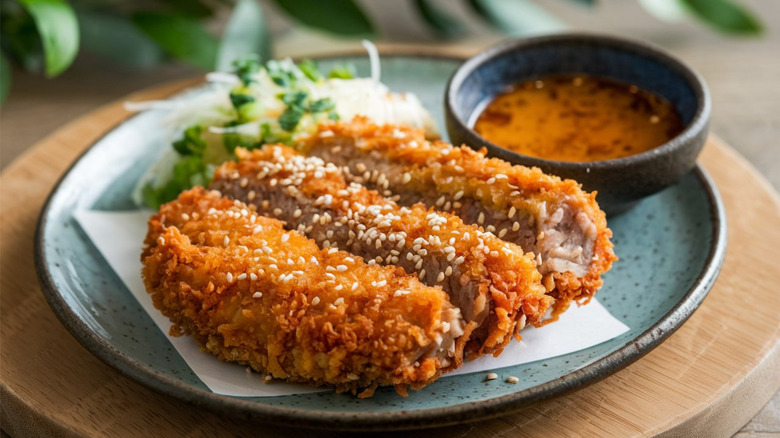
Menchi katsu is a yummy Japanese deep-fried patty made from seasoned ground meat (beef, pork, or mix of both) combined with minced onions and coated in panko breadcrumbs. Basically, it is kind of like a fried hamburger steak, known for having a soft interior and crispy exterior, and an oh-so-juicy quality about it. Its name comes from the English word "mince" and the dish is a prime example of Yo-shoku – Western cuisine adapted to Japanese tastes after Japan opened to the world in the Meiji period during the mid-1800s. Meat consumption was pretty uncommon before this, but once new recipes swept the nation, new Japanese dishes started coming out of the woodwork.
For example, a Tokyo restaurant known as Renga-tei began deep-frying breaded pork slices in the 1890s, which evolved into what we now know and love today as tonkatsu. This just started the proverbial fried food ball rolling in Japan, with cooks starting to deep-fry other items, leading to menchi boru (minced balls), which eventually became menchi katsu.
To achieve ideal results, it is suggested cooks use ground meat with a generous amount of fat and knead the mixture well to remove air and prevent it from splitting during frying. Also, the dish is said to taste best when eaten still sizzling – we mean hot, hot, hot, just after frying. It is typically served with a seasoning of ground mustard seeds combined with water, and topped with a generous amount of Worcestershire or tonkatsu sauce.
Takoyaki
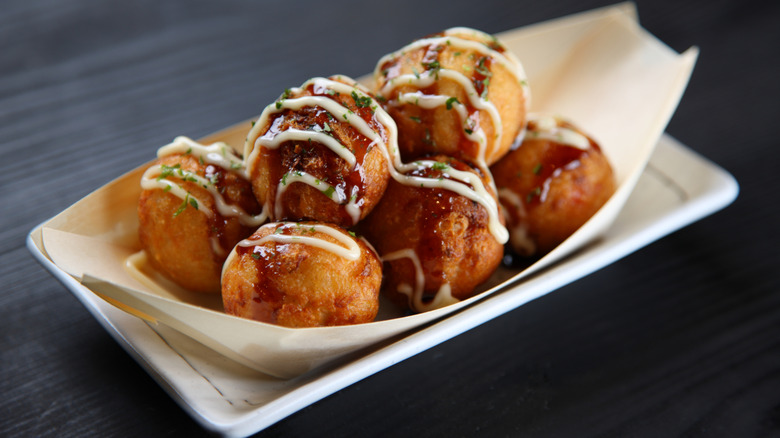
Takoyaki, meaning grilled or pan-fried octopus, is an absolutely iconic Japanese street food that is said to have first found its feet (or tentacles?) in Osaka. These savory, roughly golf ball-sized octopus treats are made from a flour and egg-based batter that is cooked in a special molded, well-oiled pan.The exterior of the balls is cooked until it achieves a gorgeous golden brown, while the interior remains hot, hot, hot, and a lil' fluffy.
Each ball is filled with minced octopus morsels, along with other key ingredients, like tempura bits, pickled ginger, and green onion to name a few. Once cooked, an order of takoyaki typically consists of about eight balls, which are then generously topped with katsuobushi (shaved bonito flakes) and aonori seaweed flakes, before being drizzled with mayo and a special tangy takoyaki sauce.
Takoyaki is particularly popular in its home city of Osaka, where it is sold at specialized stands, restaurants, and of course, local Japanese festivals. The balls are made fresh and are almost always served still piping hot. And rather than tucking into them with traditional chopsticks, diners opting for takoyaki are often provided with toothpicks or skewers to pick up them up and happily devour them.
Kare pan
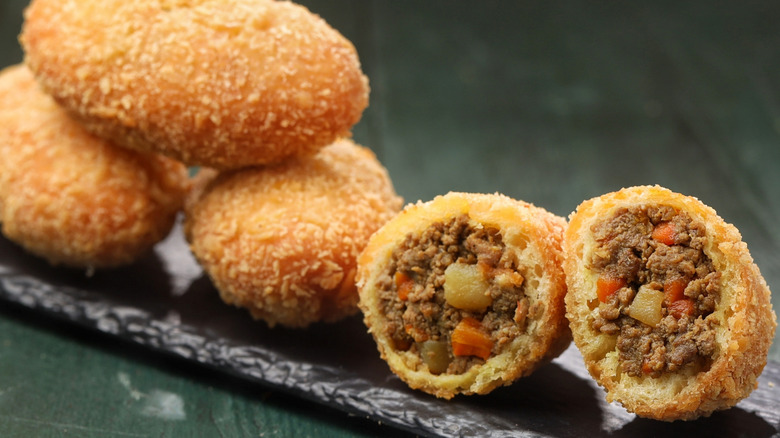
Kare pan, also known as Japanese curry bread, is arguably the preferred pastry at Japanese bakeries and a deeply beloved savory snack across the entire country. So what is it? Basically, it is a deep-fried bun filled with rich, warm Japanese curry. Kind of like a savory donut, it's among the best snacks that can be found in Japan everywhere from specialized bakeries to convenience stores, supermarkets, and even food stalls.
Much of the wide-reaching appeal of kare pan lies in its unique texture consisting of a crispy, thin, and chewy crust (still soft and fluffy inside) that is wrapped around a generous amount of filling that is just absolutely packed with a fireworks show of flavor. The curry filling itself is typically a mild Japanese-style curry, and it is actually sometimes common for cooks to use leftover curry in their recipe. However, there are many people who prefer to make the filling specifically for the bread.
Fillings for kare pan often include some sort of combination of minced ground meat, onions, carrots, and potatoes, seasoned with Japanese curry cubes, ketchup, and spices. The trick with the filling is making sure it is thick enough to work with during prep, although simply heating it over a stove can achieve the right consistency to get to work.
Sata andagi
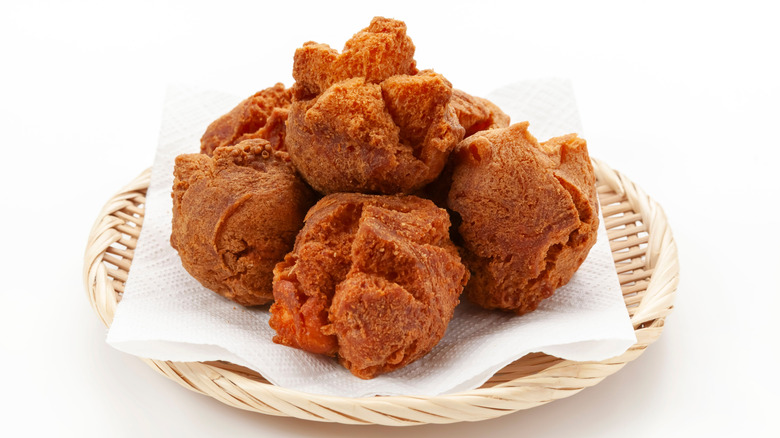
Sata andagi are Okinawan deep-fried doughnuts, a popular sweet treat known for being crunchy on the outside yet a bit gooey and cakey on the inside. These donut holes are made by deep-frying a combination of wheat flour, sugar, and egg. During the act of frying, a portion of the donut splits, which actually gives it a unique look often likened to a blooming tulip.
Said to bring happiness, these treats are incredibly popular, and as well as being eaten as a common homemade snack, they are served during key events and celebrations. They are also enjoyed at eateries, and are given as gifts or souvenirs. Variations exist, such as nmukuji andagi made with sweet potatoes or purple yam, and shiro andagi (sans sugar). Colorful versions are also popular, made by adding steamed and crushed purple yams, pumpkins, or carrots, to name a few.
Sata andagi are surprisingly simple to make with pantry ingredients you already might have at home such as flour, baking powder, salt, sugar, egg, and oil for frying. The contrast in texture is delightful, offering a satisfying crunch followed by a rich, cake-like interior.