

Yes, You Should Rinse Canned Vegetables Before Cooking — Here's Why
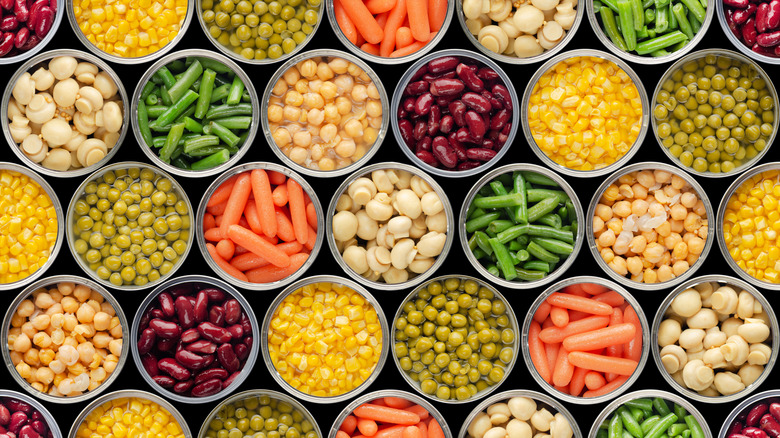
Canned vegetables offer an economical and convenient way to keep nutritious options on hand without breaking the grocery budget. Before cooking, experts say it's generally a good idea to give them a quick rinse, which can be good for your health and the flavor of the dish. While water is the main component found in canned veggies, manufacturers also add a significant amount of salt (sodium chloride) for flavor and preservation. You could be consuming more than 300 milligrams of sodium in just half a cup of veggies. Dietary guidelines recommend limiting sodium to 2,300 milligrams per day for healthy individuals, and even less for those at risk of conditions like heart disease.
While sodium is important for nerve and muscle function and proper fluid balance, too much salt can have the opposite effect — contributing to high blood pressure, heart disease, and stroke. Rinsing canned vegetables can help manage sodium consumption. U.S. Department of Agriculture (USDA) research found that running common vegetables like green beans, corn, and peas under water can reduce sodium content by 7% to 12%. While the brine in canned veggies may be salty, it won't enhance the flavor of your dish. Vegetables that aren't drained or rinsed often taste dull, and if the recipe calls for added salt, you'll likely end up with an overly salty dish.
Give (some) canned veggies a clean slate
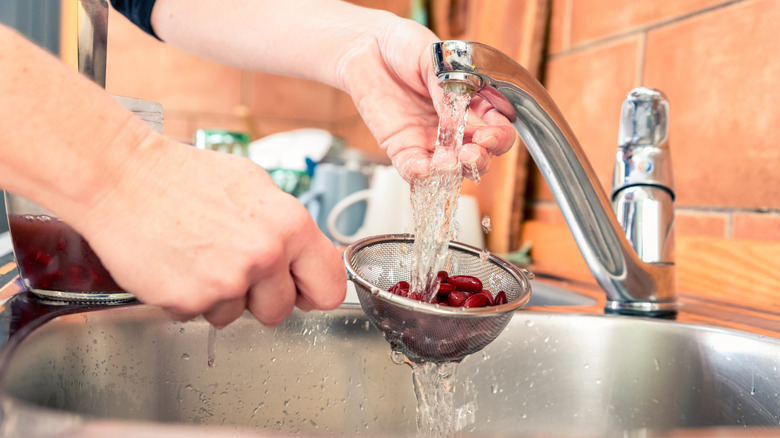
The drawbacks of skipping a rinse don't stop there. During the canning process, beans release some of their starches into the salt water. This creates a slimy coating that can interfere with their ability to absorb flavors. Vegetables that have been sitting in an aluminum can may also develop a metallic taste, which can impact a dish's flavor unless rinsed first. Another key to getting the metallic taste out of canned vegetables is by blanching them. This process takes rinsing canned vegetables up a notch by boiling them in water for a few minutes, followed by placing them in an ice bath to prevent them from overcooking.
However, dumping canned vegetables into a strainer and holding them under running cold water for about 30 seconds often will do the trick. Give the strainer a quick shake to remove excess moisture, and your vegetables are ready for cooking. If sodium content is still a concern, you can opt to avoid canned vegetables and go with frozen or fresh instead.
It's also worth noting that when a recipe calls for using canned vegetables with their liquid (often in soups or chilis), you can skip the rinsing. These recipes account for the extra salt or starch. Don't make the mistake of rinsing canned tomatoes, either. Their liquid is real tomato juice or purée — not salty brine — and it adds flavor, acidity, and moisture to any dish. While canned tomatoes contain salt (unless labeled as low-sodium or no-salt added), it's best to taste as you go and season as needed.