

Whatever Happened To BottleKeeper From Shark Tank?
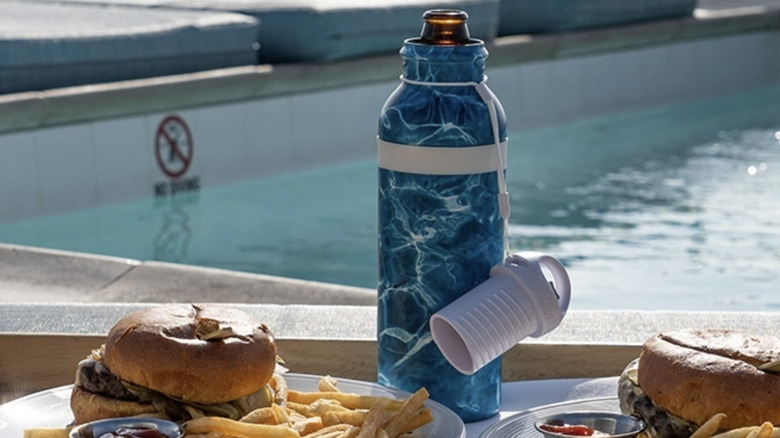
Beer is best served cold, save for some variants with complex flavors that are better served warm. However, when you're out on a sunny day, a beer bottle can warm up quickly, resulting in a less refreshing experience and unpleasant flavors. Cousins-turned-business partners Adam Callinan and Matt Campbell loathed warm beers so much that they came up with a product that could keep the drink cold for hours, even when left in the hot outdoors. Called the BottleKeeper, the neoprene-insulated stainless steel container, which resembled the typical vacuum flasks, was designed to store a single bottle of beer and keep it cold while lounging on the beach or by the pool.
Callinan and Campbell seemingly hit a gold mine with their product, as it instantly resonated with many consumers. This was despite rivals offering similar cooling mechanisms for beverages. What set BottleKeeper apart was its removable base, which locked the bottle inside the container. Its top cover had a built-in opener for easy removal of the cap, too. Plus, the entire vessel basically served as a protective case for the glass bottle, preventing it from accidentally breaking. However, despite already making millions from selling their product, the partners were having a hard time scaling it. And so in 2018, they took a chance at finding a credible investor by pitching the BottleKeeper on "Shark Tank" Season 10.
What happened to the BottleKeeper on Shark Tank?
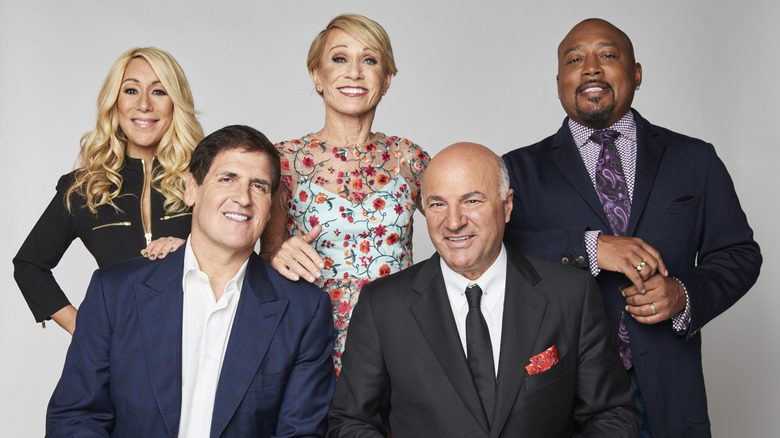
Adam Callinan and Matt Campbell appeared on "Shark Tank" Season 10, Episode 6, seeking a $1 million investment in exchange for a 5% equity stake. The high asking price initially stunned the Sharks, but BottleKeeper's sales figures helped justify the $20 million valuation. According to the pair, they had sold $1 million worth of products ten days before they showed up for the filming of the episode. They reported $2 million in sales over the previous 30 days and more than $20 million over three years. Considering how much they had made from direct-to-consumer sales alone, it seemed the company was quite profitable.
However, as the Sharks started questioning the ins and outs of their operations, it became clear that BottleKeeper wasn't making as much profit as expected. The duo had been spending $4 million on Facebook marketing and half a million on IP enforcement to prevent knockoffs. They also didn't have investors and were dependent on Amazon and online sales. All things considered, the Sharks found it hard to believe that they were worth $20 million. After several back-and-forths, they were left with just two offers: $500,000 for 20% equity and a $500,000 credit line from guest Shark Alex Rodriguez and Kevin O'Leary, and $1 million for 5% equity and a $1.50 royalty per unit until $2 million got recouped from Lori Greiner and Mark Cuban. In the end, the duo chose the latter.
BottleKeeper after Shark Tank
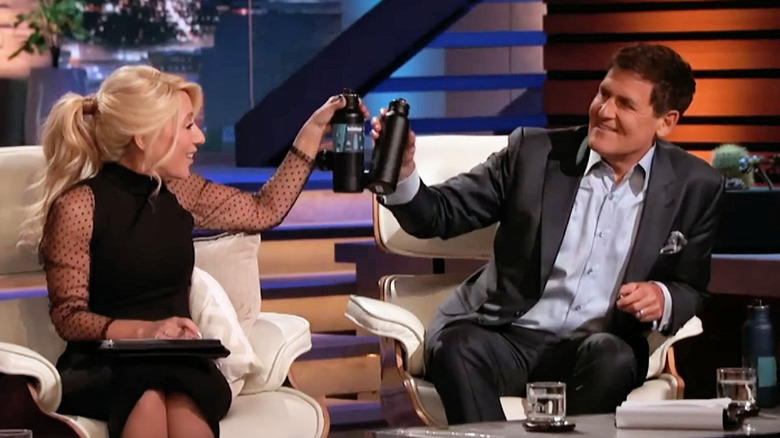
After appearing on "Shark Tank," most companies and products witness a spike in demand, with or without a deal with the Sharks. BottleKeeper experienced a similar surge, if not a larger one. A month after their episode aired, the company recorded a 300% increase in sales, and it was also poised to double its annual revenue from 2017. In an interview with Money, Adam Callinan was hopeful that Lori Greiner could help them scale the business further. "Lori is an expert in the consumer product world. She's been really, really successful at scaling something from nothing, and you can't buy that type of advice."
Unfortunately, similar to what happened to Beer Blizzard after appearing on "Shark Tank," BottleKeeper's deal with Greiner and Mark Cuban quietly fell apart. It's unclear why the deal didn't close, though this outcome is not unusual. Many deals fail to materialize after filming, as the Sharks may request changes to the terms, and business owners have the right to reject such changes. In BottleKeeper's case, Callinan explained via LinkedIn that Greiner only wanted to put their product on QVC, which was not the kind of retail presence they wanted. Despite not closing the deal, the firm managed to secure its retail presence in various stores, including Ace, Sur La Table, The Paper Store, Meijer, and many more. Through its expanded presence, the company managed to record $13 million in annual revenue by May 2022.
Is BottleKeeper still in business?
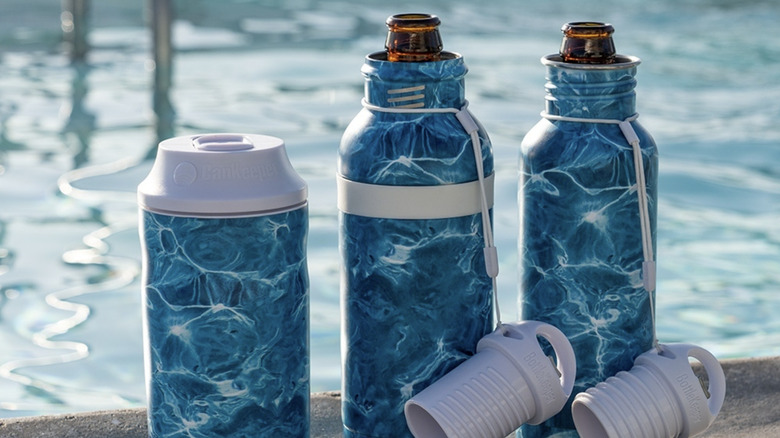
Given its promising sales after "Shark Tank," BottleKeeper seemed like it was en route to a massive success. It even sold over $1 million in products after its episode aired. The company also did not waste time in maximizing the hype over its brand. It expanded the lineup to include CanKeeper, PintKeeper, and ChillKeeper – all of which were designed to serve as temperature-regulating containers for beverages. As a result, the brand's estimated net worth reportedly ballooned to around $100 million in a short time.
However, despite its initial success, BottleKeeper was acquired by Wind Pointer Partners and RTIC Outdoors in 2021. After the acquisition, Adam Callinan exited the company and worked as a columnist for the business-centric publication Inc. Magazine. As for Matt Campbell, he stayed on for a few more months before leaving BottleKeeper. Today, he runs the real estate lending company Lukrom.
In terms of market performance, BottleKeeper was far from becoming one of the biggest food flops in "Shark Tank" history. However, in the aftermath of the acquisition, BottleKeeper's website became dormant. It remains accessible to the public, but it no longer renders content correctly. Even the online shop does not support ordering anymore. The company's Instagram account, with over 61,000 followers, has also become stagnant, with no new posts uploaded since March 2022. Meanwhile, its Facebook page is defunct. BottleKeeper products have also disappeared from Amazon. Together, these signs strongly suggest that BottleKeeper has gone out of business. The brand does not even appear on WindPoint's current portfolio of companies.