

13 Mistakes You Are Probably Making With Your Stand Mixer

We may receive a commission on purchases made from links.
If you're a passionate baker, a stand mixer is one of those non-negotiable kitchen investments. Yes, stand mixers are expensive, but also worth it at the end of the day. From kneading dough in minutes to whisking cream (without the shoulder ache), pretty much any baking task is made a hundred times easier with a stand mixer in your arsenal. It's the kind of tool that quietly levels up your baking repertoire.
That said, it can be daunting to start using one. This is usually one hefty piece of machinery. Heavy, bulky, and with several confusing settings and attachments. It's easy to get bogged down by the details, get overwhelmed, misuse it, or worse, avoid using it completely. And that's a shame because once you wrap your head around the dos and don'ts, the hows and whats will soon follow.
So, before you accidentally damage your mixer, ruin a cake mix, or deal with flour flying across your kitchen, pay attention to these common mistakes. A few small corrections now can save you the frustration or a very expensive repair bill later.
Not checking the bowl clearance
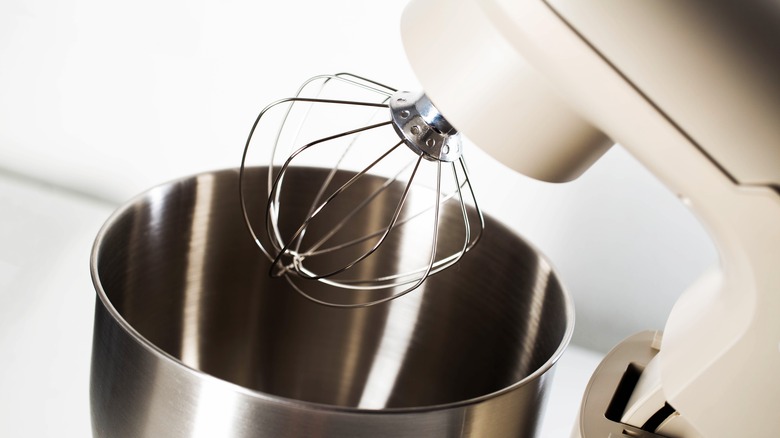
Bowl clearance is simply the distance between the flat beater of your stand mixer and the bottom and sides of the bowl. It's usually adjusted at the factory so that the bottom of the beater just clears the bottom of the bowl. Sometimes, this alignment may shift and can absolutely affect the mix that you are preparing.
If the beater hits the side of the bowl, it means that the bowl has not been properly locked into place and may need fixing. If the gap between the beater and the bottom of the bowl is too large, it will result in the ingredients sitting at the base of the bowl not getting mixed properly. If the gap is too small, the beater will scrape the bottom and risk damage. A simple dime test will confirm whether your mixer needs adjustment.
If your mixer fails the dime test, it's just a matter of making some minor adjustments, which are usually done with the help of a small screwdriver. If you have a tilt-head mixer, gently tilt the head back and locate the adjustment screw on the hinge. Using a flathead screwdriver, make a very slight turn to raise or lower the beater. A little back-and-forth adjustment can ensure that the beater just clears the bowl perfectly. Once done, your cake batter will mix evenly and behave like it was meant to.
Using the wrong attachment
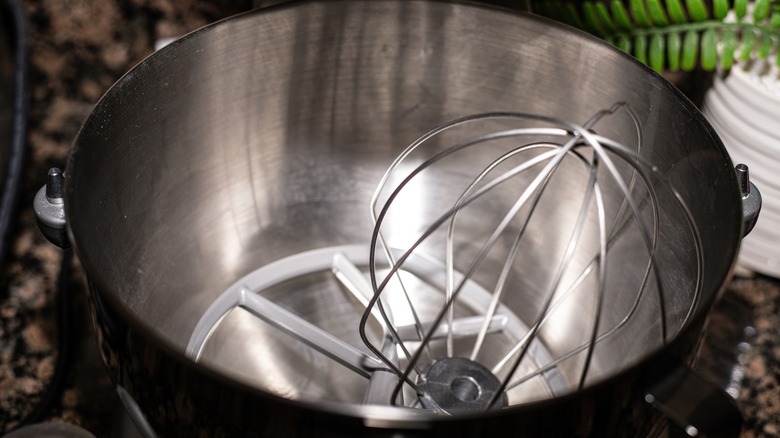
Using the right attachment on your mixer is crucial, whether you're mixing cake batter or attempting a sweet pavlova for Valentine's Day. For example, the wrong attachment could be the difference between eggs whipped into magnificent stiff peaks or a sad puddle at the bottom of the bowl.
A stand mixer usually comes with a variety of glorious mixer attachments, each meant for a specific task. The three most frequently used are the flat beater, the whisk, and the dough hook. The first is best for general-purpose mixing, such as batter for cakes and cookies, while the whisk is best used for incorporating air into your mix — think meringues, whipped cream, or anything that needs volume. The dough hook as the name suggests, is best used for kneading bread mixes and dough.
Apart from these three, there are several specialized attachments for pasta rolling, ice cream making, food processing, and more. Adding a few of these can really expand the limits of what your stand mixer can do. Choosing the right attachment will help you get the best out of your stand mixer, making the time spent in the kitchen more enjoyable.
Choosing the wrong model
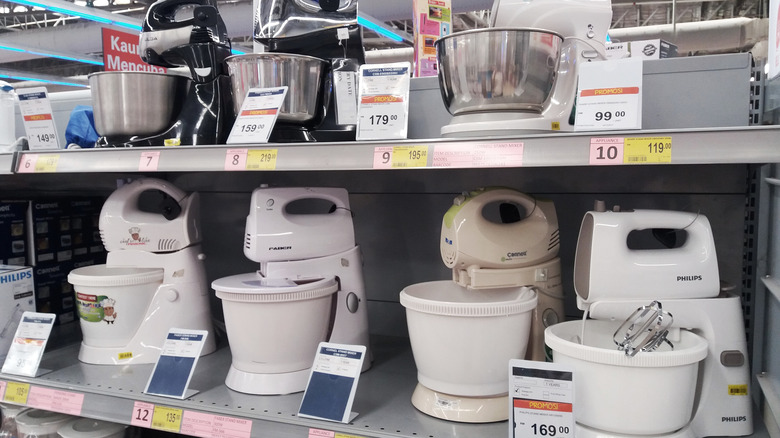
Deciding which stand mixer is the right one for you can prove to be a difficult task, especially with the variety of brands and models available. Zeroing in on a brand is just half the battle. Choosing the right model is where it gets tricky, because it has to suit both your needs and your budget.
Buying a stand mixer is more than just a matter of convenience. The real value lies in the power it offers, far more than any hand-held device. The high-powered mixing is essential when following many recipes, most of which have been developed for modern kitchens. Some recipes now rely on longer mixing times, heavier doughs, and more precise techniques, so it's no surprise that bakers may need to level up in terms of equipment as well.
To narrow down your options, think about how you plan to use your stand mixer. Will it be used for a professional setup or your home kitchen? What kinds of recipes will you regularly make? How many people are you catering for? Your mixer has to match your reality. If you are working in a professional environment, of course a heavier, more powerful model is required and definitely worth the investment. For home chefs, a standard model usually does the job beautifully and at a significantly more reasonable price.
Not scraping down the bowl after every ingredient addition
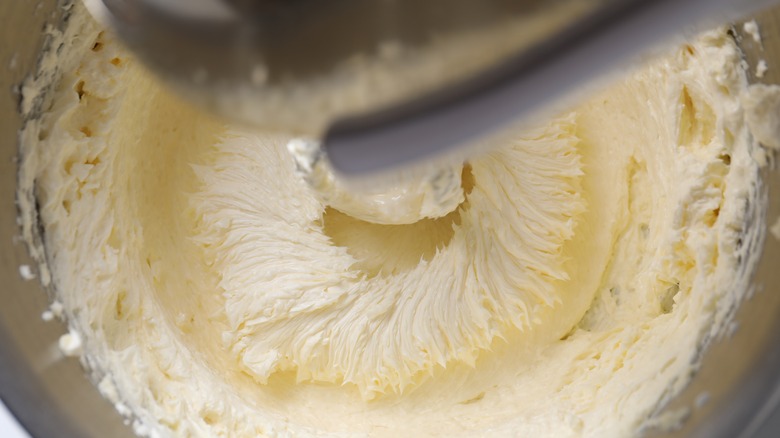
The flat beater or whisk of your stand mixer, when aligned properly, can reach most (but not all) areas of your bowl. This is why it is essential to scrape down your bowl with a bowl scraper or spatula every time you add another ingredient to your mix. Doing so will ensure that your ingredients are well mixed and you won't have to trouble yourself with lumps of unmixed flour or butter that can also mess your final recipe.
While scraping the sides of the bowl may not be necessary in all cases (for example, if your batter is thin and runny), but is especially important when you are mixing thick batters or creaming butter and sugar. At these times, scraping down the bowl is important as during these stages, ingredients tend to cling to the sides, so as not to leave any unmixed bits stuck to the side of the bowl.
It may seem very tempting to just add everything in one go and leave the mixer to do its job, but as many bakers have learned, that's a surefire way to ruin your cake. So, if it's a light and fluffy cake that you are aiming for, it's worth the effort and few seconds extra needed to mix well. It's a small habit that pays off every single time.
Not using a splash guard

Unless you like a messy kitchen, or enjoy cleaning batter off your walls and countertops, you really should use a splash guard whenever using your stand mixer. A simple add-on but one that makes a world of difference, especially when working with light ingredients such as a flour, icing sugar, or cocoa powder. These ingredients have a tendency to whirl around the place even at the lowest setting and often surprise you with the velocity with which they fly out of the mixing bowl.
Splashing can occur with any type of mixer and the mess it creates can be the devil to clean. It can happen when you use a high-speed setting or if your bowl is too full. If your batter is on the thinner side, even a bowl filled to the correct level can cause a mess. A splash guard acts as a simple shield that keeps everything well contained within the bowl allowing you to pay attention to the recipe at hand instead of the cleanup that awaits. If your mixer didn't come with one, it's worth buying separately since it's an inexpensive, long-lasting addition to your kitchen armory.
Overfilling or underfilling the bowl
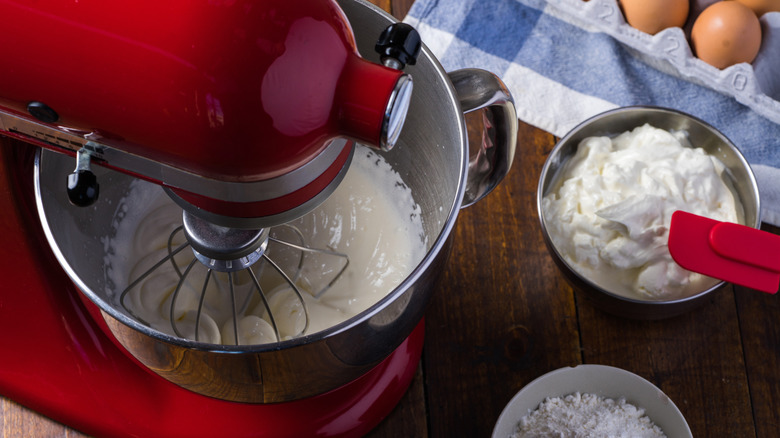
A common enough mistake that even experienced chefs make, overfilling or underfilling the bowl may not seem like a big deal. Overfilling your bowl isn't just about the potential mess you can end up with but also because of the increased load factor, you may get an uneven mix. You also run the risk of overloading your mixer, which is detrimental to its overall life span. Doing this regularly can prevent overstraining the motor — the very heart of your mixer. Experts recommend staying under three-quarter capacity for dry mixes and under two-third capacity for wet mixes. This is important to keep in mind as certain ingredients like whipped cream or egg whites can increase in volume when mixed.
Underfilling the bowl leads to another set of problems. Some recipes call for less ingredients and you find that the beaters struggle to mix these effectively. Some models may have smaller bowls available, while others may allow you to tilt the bowl so as to access the ingredients. But if neither of these options are available to you, then it would make sense to switch to an electric hand mixer for the job.
The bottom line is, be aware of the quantity of ingredients that you are about to put in the bowl. Don't increase the quantity of your recipe without checking to see if the increased quantities will fit in the bowl. And keep an electric hand mixer ready, just in case.
Mixing on high from the beginning
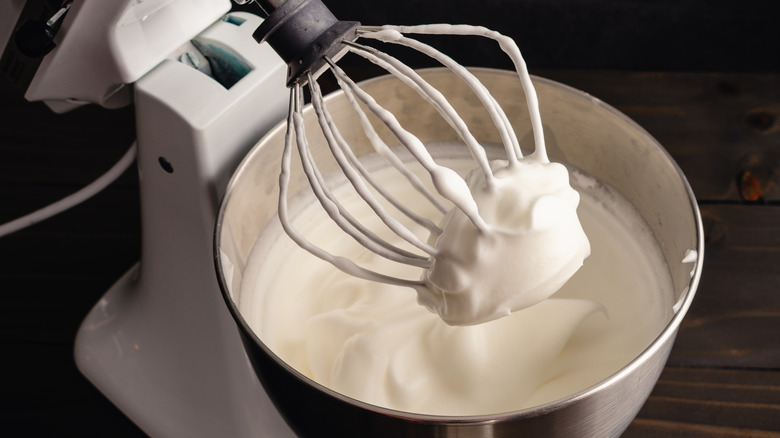
Your stand mixer has different speed settings for a reason — something many of us has learned the hard way. After all, setting your mixer to the highest speed setting means the job will get done quicker, right? Well, actually no, because overmixing your cake batter or cookie dough might mean your ingredients will end up splattered on the walls.
Medium to high speed is the best to whip up egg whites or to cream butter and sugar. When it comes to cake batters and dough, however, it is better to exercise some caution, especially when combining dry and wet ingredients. This is best done on a low speed setting, else you run the risk of overmixing and leaden cakes. In fact, it is best to always start on a low speed setting, let the ingredients incorporate and then increase the speed as needed, while keeping an eye on the mix's texture and level. Dough hooks, in particular, should always be used at a low speed setting. When in doubt, consult your instruction manual to find the ideal setting for each task.
Not cleaning after every use
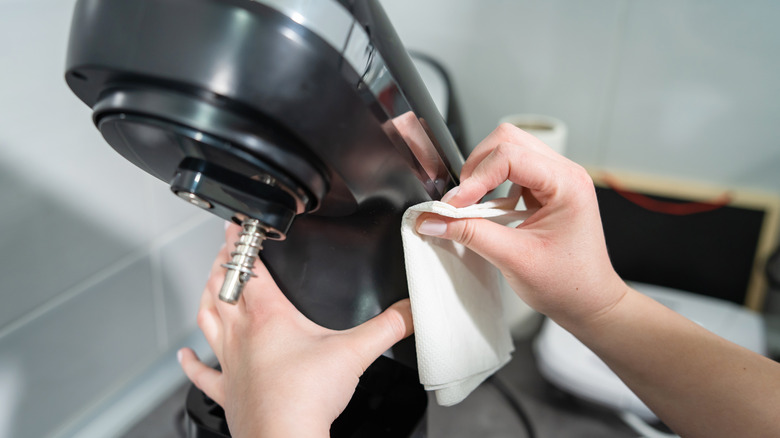
Keeping your kitchen clean is basic hygiene 101 and that includes your stand mixer. Treat it with care, and it will serve you faithfully for years, becoming an indispensable part of your baking routine. Also, cleaning your mixer isn't too fiddly, if done regularly.
Start by wiping it down with a damp cloth after every use. Wash all the removable parts and the bowl as well. The latter can usually be washed in the dishwasher, but always check first and make sure the various attachments are dishwasher-safe as well. If you use your mixer frequently, it is a good idea to get it serviced professionally at least once a year. This will keep your mixer running smoothly for many years to come. A deep clean every few months is also essential to keeping it in good working order. Remember, a dirty mixer over time, allows grime to build up and interfere with the motor or other moving parts. In short, treat your mixer with the respect it deserves and it will reward you with many years of service.
Not keeping up with maintenance
As any mechanically minded person will tell you, maintenance is vitally important for any type of machinery. Your car, for example, wouldn't last for too long if it weren't maintained properly, would it? The same principle applies to your stand mixer. While not as complex as a car, a stand mixer is still an electro-mechanical machine, and it needs periodic care — especially if it's a professional model or gets heavy use.
There are some aspects of maintenance that you can manage yourself, like keeping your mixer clean and adjusting the clearance whenever required. At times, your mixer head may not lock properly or it may develop a wobble. This will require you to adjust the neck pin. Other areas that you need to check are oiling the moving parts, replacing any belts that have worn out, and replacing leaky seals. If you're not mechanically inclined, the simplest approach is to have your mixer serviced by the manufacturer once or twice a year, depending on how often you use it. Once or twice a year, depending on use, should suffice.
Storing it improperly
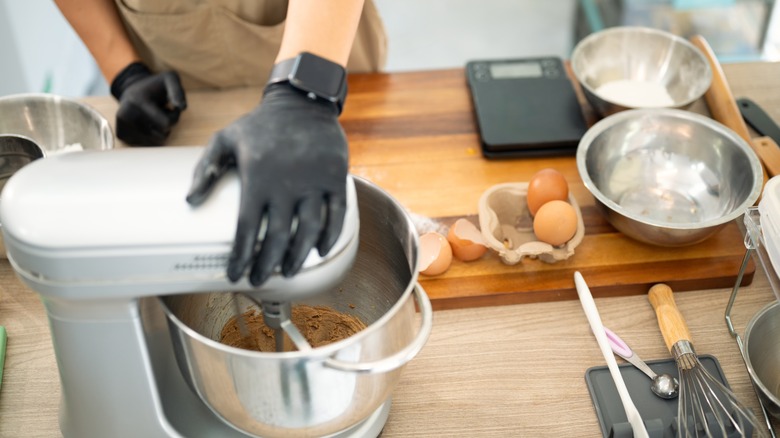
The easiest way to store your stand mixer is to leave it standing on the counter in the same place where it is used. But not everyone is lucky enough to have a large enough kitchen counter where the stand mixer can be left as is. What do you do if you have to put it away after every use?
In such cases, learning how to store it properly is very important. It is absolutely essential that your stand mixer is left standing upright and never lying down. As one Reddit user warned, leaving it lying down can "screw up" the machine and oil can leak out everywhere. Putting it away can also be quite a task as the better quality machines are quite heavy. Having a shelf or a cabinet at chest level is the best solution as you can put the mixer away safely without straining yourself or risking damage to the machine.
Other storage options include rolling carts or utility racks, depending on your kitchen layout. Whichever solution you choose, also ensure that air can circulate freely around it when in use. This simple habit protects both your mixer and your workspace.
Using a power strip

For the uninitiated, a stand mixer typically has a high power rating, which is why it's best to plug it directly into a wall socket. Power strips and extension cords can be dangerous to use with kitchen appliances. In particular, the high power requirements of a stand mixer can quite easily overload the strip and cause either an electric short or trip a breaker. Overloaded power strips have been known to even melt, and are a known fire hazard. Apart from all of this, plugging your expensive stand mixer into a power strip could damage the mixer's motor and lead to expensive repairs.
Before using your stand mixer for the first time, read the instruction manual and check the power rating. Make sure the wall outlet you plan to use is suitable as well. Check the power cord for any signs of damage such as exposed or frayed wires. A damaged cord may result in electric shocks and is a potential fire hazard that should be dealt with immediately.
Another important safety factor is to use a grounded outlet. Since power strips are best avoided, it is better to set up your stand mixer close to such an outlet where it can be safely plugged in. Ensure that your power cord is not close to any heated surface or in a wet area. It may feel like basic advice but following these simple safety rules protect both you and your machine.
Not reading the manual

The very first thing to do when you have unpacked your new mixer is to read the manual.Yes, maybe it's annoying, but it's also an essential step you should never skip when buying a new appliance. Still, it's also the rule that many people ignore. "Where's the need? It's a simple machine" and similar arguments pop up and with so many modern appliances replacing manuals with a QR code, it's easy to assume the instructions aren't important.
But with an appliance like a stand mixer, it's different. With its powerful motor and several moving parts, reading the manual before operating it is essential, if only from the safety perspective. The manual will also give you detailed guidance on setup, operation, and safety features. Need to adjust the bowl clearance? Just read the manual on how to do it. Wondering about the speed settings or the maximum amount of ingredients the bowl can handle? Again, all in the manual. Taking a few minutes to read the instructions will save you a lot of frustration later and help you get the best performance out of your mixer from day one.
Using it only for baking

Stand mixers have become an indispensable tool in the modern kitchen — not just for home bakers, but for chefs of all kind. Yet a common mistake that many people make is to assume they are useful only for baking. Nothing could be further from the truth.
Firstly, many stand mixers come with a whole load of attachments that serve many purposes. You can grind meat, shred chicken, slice, dice, spiralize vegetables, make dough, bread and pasta and much more. An ice cream maker attachment allows you to whip up some soft serve ice cream and you can even use your stand mixer to emulsify meats and fats to make sausages. You could even mix a batch of the fluffiest scrambled eggs or pancake batter for the family by whisking them handsfree in a stand mixer. Using it to whisk up some salad dressing and mayo can be effortless as well.
The number of ways in which your stand mixer can help in the kitchen apart from baking, is truly staggering. Once you start exploring its full potential, the convenience it brings to everyday cooking becomes impossible to ignore.