

The Oldest Steakhouses In The US
Trends in fine dining come and go, and tastes in restaurant food evolve and shift over time, but the steakhouse and its core menu remain steadfast, unchanging across many decades. The market and popularity for giant hunks of meat, cream-laden shareable sides, a decadent dessert, and perhaps a selection from the wine list or the bar, served in a classy environment, never die. We especially love those old, de facto tourist attractions, the places where steakhouse etiquette mistakes aren't tolerated, the service is impeccable, and many dishes are prepared tableside in a show-stopping display of hospitality and skill. America will never give up on its steakhouses; we love and treasure them too much and have done so for a very long time.
The most enduring steakhouses are almost living examples of American restaurant history. A handful are historic sites, more than just a business that cooks and serves strip steaks, ribeyes, and potatoes three different ways; they're legendary, and a meal there is an experience. The oldest steakhouses tend to be the best steakhouses, remaining open for 80, 90, or 100 years or more, the ones that established the tropes of that style of restaurant, influencing the best and worst steakhouse chains. Here are the oldest of the United States' longest-lasting steakhouses, as well as what makes them so special.
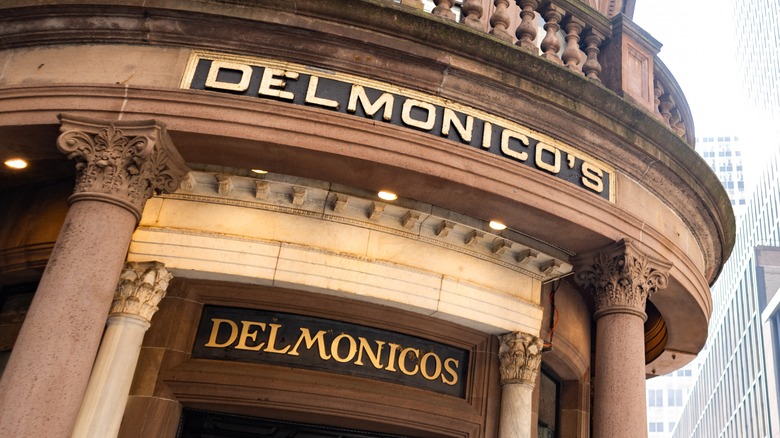
Delmonico's
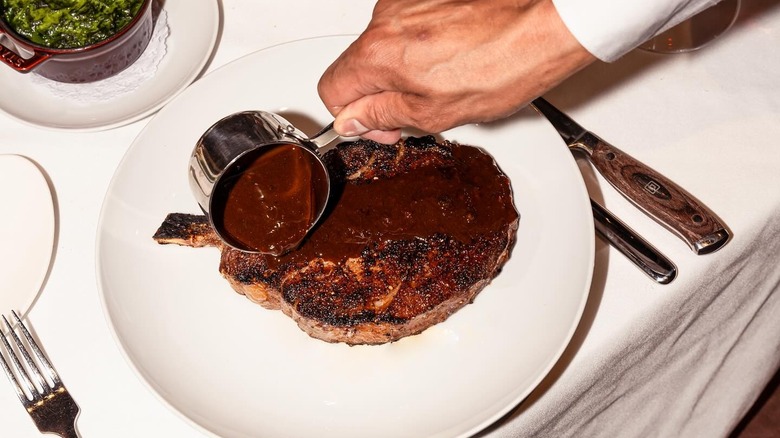
An argument can be made that all steakhouses are mere imitations of Delmonico's. The oldest steakhouse in the United States by far, a 1837 expansion of a pastry, chocolate, wine, and cigar shop operated by the Delmonico brothers, it established the look, feel, and other standard elements associated with the experience of dining in that style of high-end, luxurious, beef-forward restaurant. In fact, it's arguably the first real restaurant in the U.S., adopting French culinary traditions and offering an alternative to the taverns and food stands where New Yorkers ate when they were outside of the home. So many iconic dishes were popularized by Delmonico's, including Lobster Newberg, Eggs Benedict, Baked Alaska, and the eponymous Delmonico Steak, which in its final form is a thick-cut, nicely marbled ribeye. That item was so popular in the restaurant's early days that it would frequently run out; as it was No. 86 on the menu, it possibly inspired the waitstaff expression "86," which means "out of stock."
(212) 381-1237
56 Beaver St., New York, NY 10004
The Old Homestead
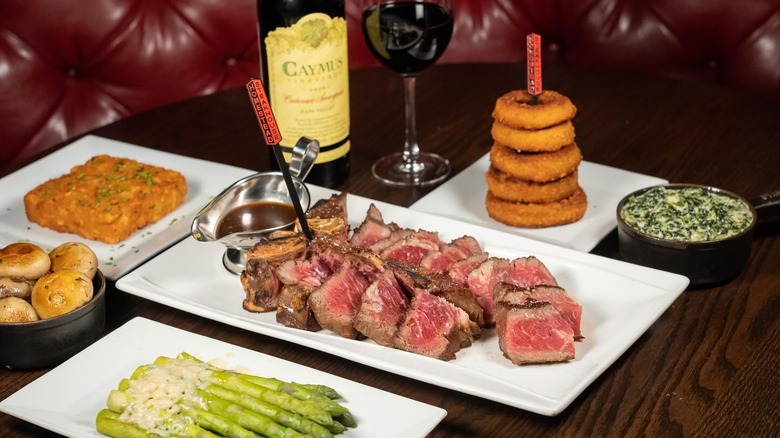
While two other locations in the chain can be found in casino-resorts, diners don't feel the weight of history unless they visit the flagship entry of The Old Homestead, located in Manhattan since 1868. Once called the Tidewater Trading Post and situated among a Hudson River-adjacent neighborhood that housed 250 slaughterhouses and meatpacking plants, the low-lit, wood-lined restaurant grew from five tables into a perpetually popular spot that can serve as many as 800 customers across three floors on busy nights. Owned by the Sherry family for the last eight decades, the Old Homestead was one of the first steakhouses in the U.S. to serve extremely high-quality (and expensive) Wagyu beef, shipped in from Japan. The portions of most everything else on the menu, like the crab cakes, sides of macaroni and cheese, jumbo shrimp, and even the usually modest filet mignon, are categorically very large. All the beef is USDA Prime level and grown in Texas.
(212) 242-9040
56 9th Ave., New York, NY 10011
Keens Steakhouse
Keens Steakhouse is so old that its origins are as an outgrowth of the exclusive men's clubs that dominated high society in big cities in the late 1800s. Before it became a restaurant in 1885, Keens served as the New York office of the London-based Lambs Club, a group of theatrical and publishing figures. One member, Albert Keen, opened what was at first titled Keens Chophouse, known for its large and fancy dinners and ritualistic handling of pipes. The prominent men of politics, sports, and science who regularly dined on steak at Keens were allowed to be members of the Pipe Club and keep their restaurant-issued tobacco smoking implements in the Pipe Room, fetched for them upon each visit by one of the many pipe boys on staff.
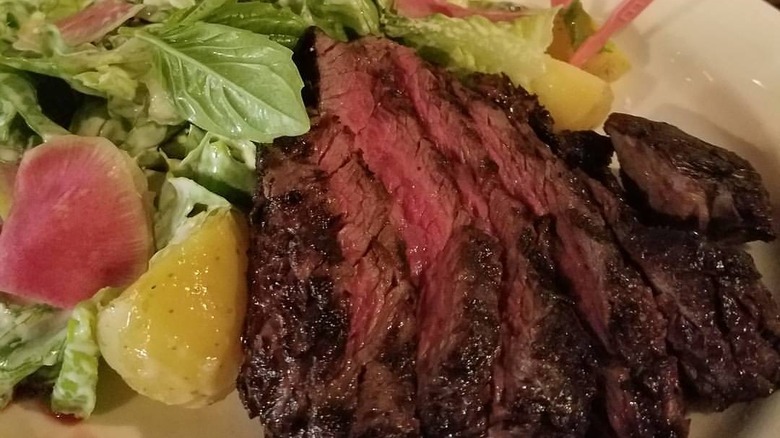
In the early decades of the restaurant, Keens was renowned for its mutton, hailed by, among others, pioneering food critic James Beard, whose founding bestowed an "America's Classic" on the steakhouse in 2013. Mutton is still on the menu today, as are other daunting choices like a king's cut of prime rib and porterhouse service for two or three guests.
(212) 947-3636
72 W 36th St., New York, NY 10018
Peter Luger Steak House
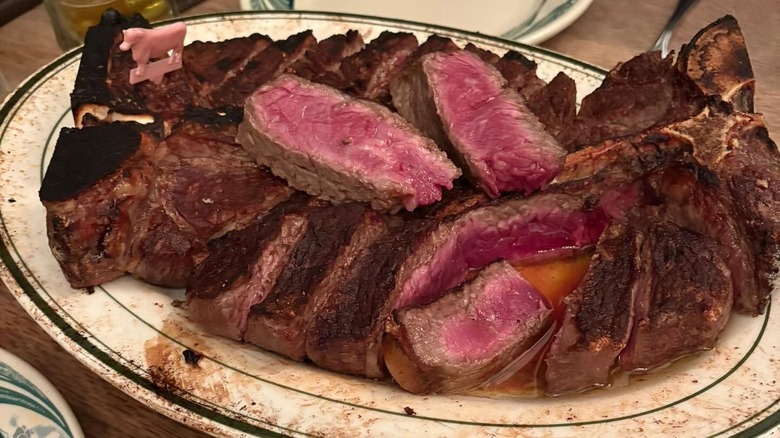
Back in 1887, the future historic steakhouse was a little café and billiard parlor in the Williamsburg area of Brooklyn owned by Peter Luger with a kitchen operated by his nephew, Carl. The original name remained as the restaurant evolved over the decades under new management, with its final form as a classy and highly regarded steakhouse. The owner's wife, Marsha Forman, learned USDA grading techniques to seek out the best meat from wholesalers, and contemporary restaurant employees still pay special attention to color, marbling, and texture before they buy the steaks to age on the premises.
After nearly 140 years in business, Peter Luger Steak House is still relevant, acclaimed, and accomplished. Food Network named the restaurant's Porterhouse for Two one of the five best steaks available anywhere in the U.S. The signature dish consists of delicate filet mignon and a thick sirloin broiled in an 800-degree Fahrenheit oven in clarified butter.
(718) 387-7400
178 Broadway, Brooklyn, NY 11211
The Buckhorn Exchange
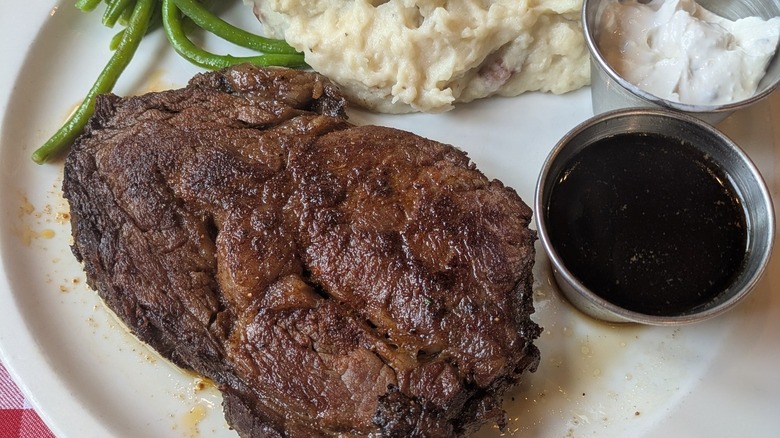
The Buckhorn Exchange isn't just the oldest steakhouse in Colorado; it's the oldest restaurant of any kind in the entire state. It's been open for business in Denver since 1893, less than 20 years into Colorado's statehood. Established by Henry "Shorty Scout" Zietz, the last surviving member of the scouting posse of Wild West icon William F. "Buffalo Bill" Cody, the restaurant served up steaks to an audience of cattlemen, railroad workers, Native American leaders, gamblers, and prospectors. It continued to make history in the 20th century, becoming the first restaurant in the state to be granted a liquor license post-Prohibition. An official city and county landmark as of 1972, relics of Colorado's past (about 500 taxidermized animals) line the walls of the Buckhorn Exchange, a museum that also serves 16-ounce New York strip steaks and 24-ounce porterhouses.
(303) 534-9505
1000 Osage St., Denver, CO 80204
St. Elmo Steak House
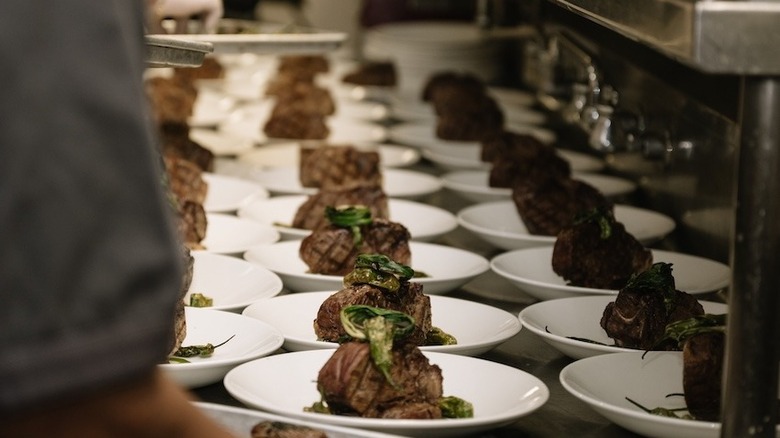
Before it was the St. Elmo Steak House, the oldest steakhouse in Indiana (opening in 1902) it was Joe Stahr's Tavern, a sturdy but generic bar that quickly brought in a lot of travelers because it was so close to a train station in downtown Indianapolis. The establishment also sold food, in the form of the St. Elmo Buffet, named for the Catholic Church's patron saint of sailors. The buffet flopped, but Stahr liked the name so much that he took on the name of the feature for that of the whole restaurant when he slowly started to turn his focus to food. The first item he sold: a 10-cent shrimp cocktail. It's still on the menu (although it costs a whole lot more), but is prepared in much the same way: spicy sauce enrobing four extra-large shrimp.
St. Elmo is now a classy restaurant with an ambiance of warmth and a long list of steaks. The price of the bone-in ribeye, porterhouse, and flat iron, among others, comes standard with a choice of potato or green beans, and navy bean soup or a glass of tomato juice.
(317) 635-0636
127 S Illinois St, Indianapolis, IN 46225
Cattlemen's Steakhouse
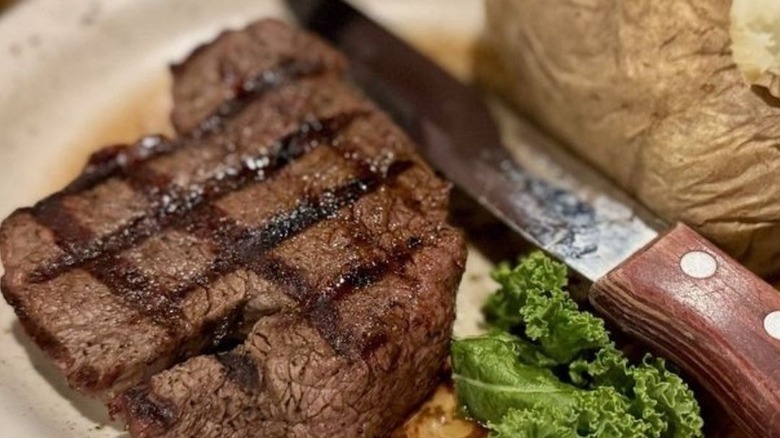
In the early 20th century, Oklahoma City was an important city in the beef trade. Ranchers and dealers would bring beef cattle from around the state and surrounding areas to the Stockyards City district for trading and eastbound shipping purposes. In 1910, Cattlemen's Steakhouse opened to cater to those very cattlemen. After building up its reputation as a great place to get a great steak while in town on business, it became a bustling hotspot because it kept far later hours than other restaurants and served alcohol, defying Prohibition-era restrictions. The oldest restaurant in Oklahoma and an inductee into the National Steak House Hall of Fame, the eatery with a preserved Western theme pays tribute to the industry that has kept it open for more than a century, and serves huge and special steaks, like the Presidential Choice T-Bone and the USDA Prime Blue Ribbon Special ribeye and New York strip.
(405) 236-0416
1309 S Agnew Ave., Oklahoma City, OK 73108
Charlie's Steak House
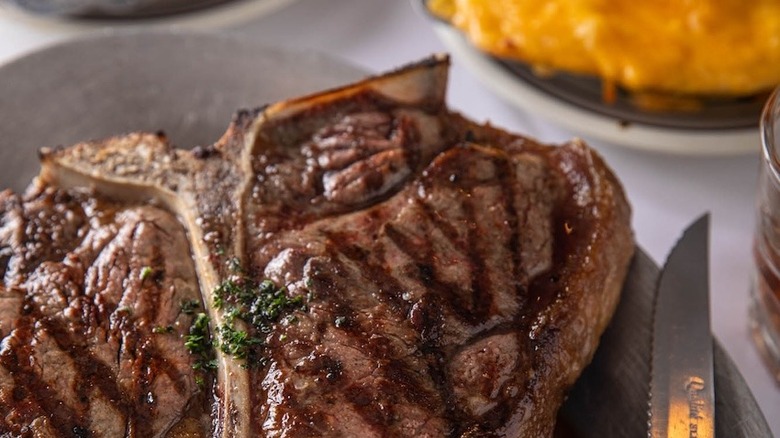
They have a certain way of doing things at Charlie's Steak House, one of the most venerated restaurants in the titanic food city of New Orleans. Only regulars know the drill: the wood-paneled, basement-like space is covered in sports memorabilia, and the staff can be a little grouchy — though less so than they were a couple of generations ago. They also don't offer printed menus and never have, aside from a price-free list of bar snacks. Opened in 1932 by recent Sicilian emigrants Charlie and Naomi Petrossi, Charlie's Steak House sold then-exotic Italian dishes like "Spaghetti Itallienne" but earned its reputation for its steaks. Even during World War II, when rationing made such prime cuts hard to find, Charlie's always had them, and at exceptionally low prices. In 2005, just before a three-year closure after Hurricane Katrina devastated large swaths of New Orleans, a T-bone could be found for under $20 and a filet for $14.
New owners have since had to raise the prices, but they've also improved the quality of the beef and other ingredients. Servers still recite the steaks available on any given night, and customers can order what they like, a difference from a policy enacted by long-time server Pietro Petrossi: Men got T-bones, women got filets, and few alterations were ever allowed.
(504) 895-9323
4510 Dryades St., New Orleans, LA 70115
Gallagher's
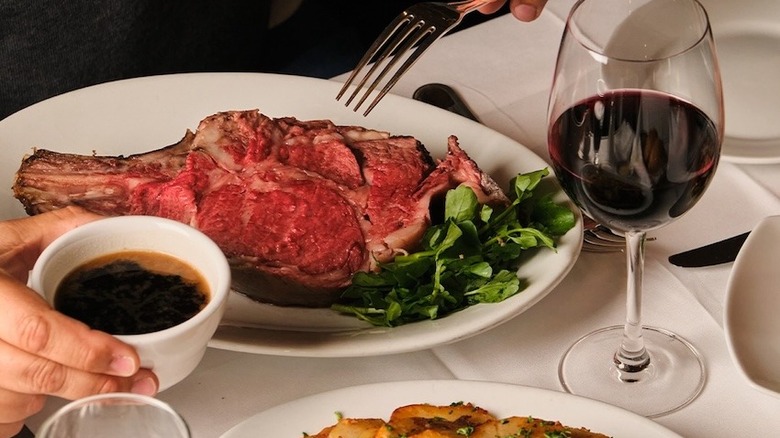
Adjacent to extremely New York landmarks like Times Square and Broadway theaters, Gallagher's Steakhouse was originally a speakeasy, first illegally serving booze in 1927. Six years later, after the sale of alcohol was legalized again, Gallagher's — named for its first owner, "Ziegfeld girl" Helen Gallagher — went legit, revamped as a fancy, real-silver-and-white-linens steakhouse with time-tested meat preparation methods, and catering to a clientele of theatergoers and celebrities.
Even almost a century after it opened, Gallagher's still routinely rates among the best steakhouses and restaurants in general in the crowded and competitive New York market. Gallagher's still takes the meticulous, old-fashioned measures it had for 90 years to make steaks taste fabulous. Through the use of a large glass meat locker that faces the street, more than 3,000 pounds of high-quality beef at a time are aged for 28 to 30 days in near-freezing temperatures. Staff butchers cut and trim all steaks, which are then fired over hickory coals, rather than electric broilers. The meat comes out nutty and charred.
(212) 586-5000
228 W 52nd St., New York, NY 10019
Jess and Jim's Steakhouse
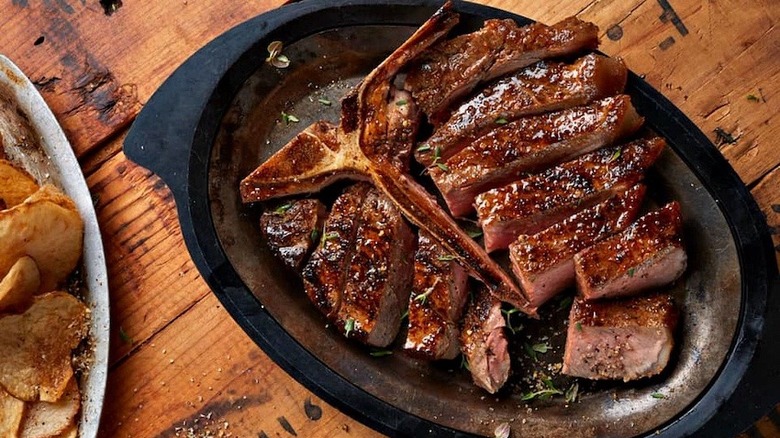
The Kansas City area is traditionally a major hub for many aspects of the beef industry, so it makes sense that the Midwestern city, nicknamed "Cowtown" and long associated with steak and grilling, would be home to one of the most respected steakhouses in the nation. Created by best friends Jess Kincaid and Jim Wright as an intimate bistro in the heart of Kansas City in 1938, a 1957 tornado damaged the building and led to the building of Jess and Jim's Steak House in the southern outskirts. After renowned journalist Calvin Trillin profiled the restaurant in Playboy in 1972, Jess and Jim's went from a local treasure into a nationally known steakhouse. That moment inspired one of Jess and Jim's signature cuts: the Playboy Strip, an enormous 25-ounce slab of sirloin that Esquire called one of the best steaks in the United States.
(816) 941-9499
517 E 135th St., Kansas City, MO 64145
Frank's Steak House
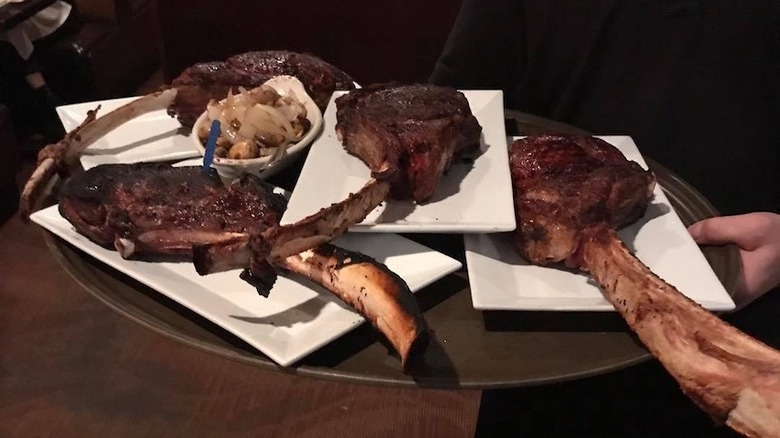
Back in 1938, a bar and restaurant opened in the Boston area town of Cambridge. According to lore, it didn't have a name until about the time it moved into its permanent and current location across the street in 1940, named after either the owner of the land upon which it stood. His name was Frank, but a more likely story is that the proprietors called it Frank's Steak House in honor of a gregarious barfly often found at the establishment.
As much a casual neighborhood restaurant and hangout spot, where customers could also order Italian food and enjoy a glass of inexpensive domestic red wine, Frank's acquired attention and customers because of its steaks, and particularly because they've always been relatively inexpensive. Appearing on many lists of the Boston metropolitan area's best and cheapest restaurants over the decades, the burgers, seafood, and pasta dishes are overshadowed by steaks like "The Sizzler." That's a 15-ounce, hand-cut New York strip sirloin with the bone removed and served on a piping hot and noisy iron skillet. It costs just $40, while the filet mignon with tarragon butter is a steal at $42.
(617) 661-0666
2310 Massachusetts Ave., Cambridge, MA 02140
Gene & Georgetti
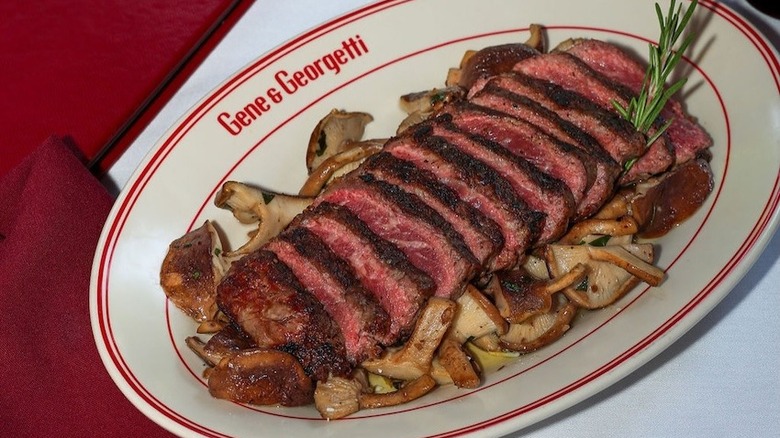
The Gene and Georgetti of Gene & Georgetti were restaurant veteran Gene Michelotti and chef Alfredo "Georgetti" Federighi, who in 1941 opened the restaurant that would go on to be Chicago's longest extant and still overall best steakhouses. After Federighi's death in 1969 and Michelotti's in 1989, the restaurant moved into the hands of the latter's descendants.
They've kept up the sensibility and menu of what was created to be a definitive Tuscan steakhouse, populating a menu with Italian appetizers and pasta to go along with steaks of top, USDA Prime quality that are mostly wet aged for at least three weeks. Gene & Georgetti cooks its steaks now the same way it always did, under a 1400-degree Fahrenheit char-broiler. Along with recommended special sauces and crusts, the specialties of the house include a dry-aged, three-pound T-bone (which is only allowed to be served medium-rare) and a very thick, 35-day-aged prime rib (but only on the weekend).
(312) 527-3718
500 N Franklin St., Chicago, IL 60654
RingSide Steakhouse
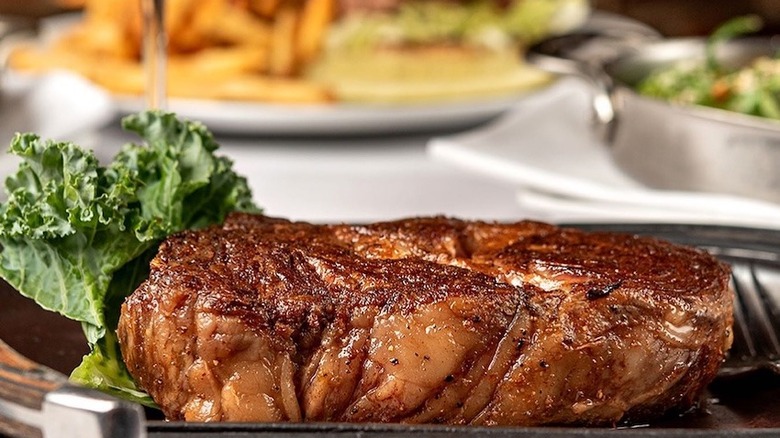
Inside a nondescript brick building in a historically seedy neighborhood in Portland stands the best steakhouse in the state of Oregon that's also one of the most enduring restaurants in the nation. It's been around for so long, since 1944, that James Beard Award namesake James Beard, raised in Portland, called the house dressing-accompanied onion rings the best in the entire U.S.
The original RingSide retains that distinctively elegant steakhouse atmosphere, with lamps on tables, attentive servers, and dishes like mushrooms cooked in wine topping long-aged ribeyes. Some changes have gone into effect over the 80-year history of the RingSide, such as location moves, ownership transactions, and a kitchen fire that put the restaurant out of commission for several months in 2025. Before long, it was back serving American wagyu strip loins, bone-in ribeyes for two, and prime rib dinners.
(503) 223-1513
2165 W Burnside St., Portland, OR 97210
Gorat's Steak House
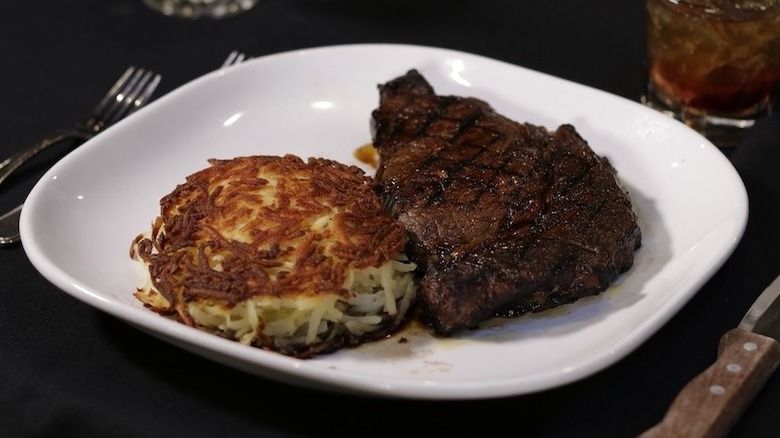
Nebraska is one of the U.S.'s top agricultural states, and its leading product is beef cattle. The oldest of the steakhouses that sprung from that culture is Gorat's, which started serving customers in Omaha in 1944. Louis and Nettie Gorat ran the place for years, succeeded by Louis Gorat, Jr., who kept the restaurant's long-standing menu intact, offering steaks and sides along with traditional Italian dishes. It's also long been the hangout and entertaining spot of choice for the most famous man in Omaha, billionaire investor Warren Buffett.
The menu at Gorat's features impressive steakhouse items, old and contemporary, from onion rings and baked potato soup to artisanal deviled eggs to truffled buffalo shrimp. The steaks are the star, of course, and those are of the exclusive, USDA Prime level, aged for at least three weeks and served with a potato, like Gorat's signature fried hash browns.
(402) 551-3733
4917 Center St., Omaha, NE 68106
The Pine Club
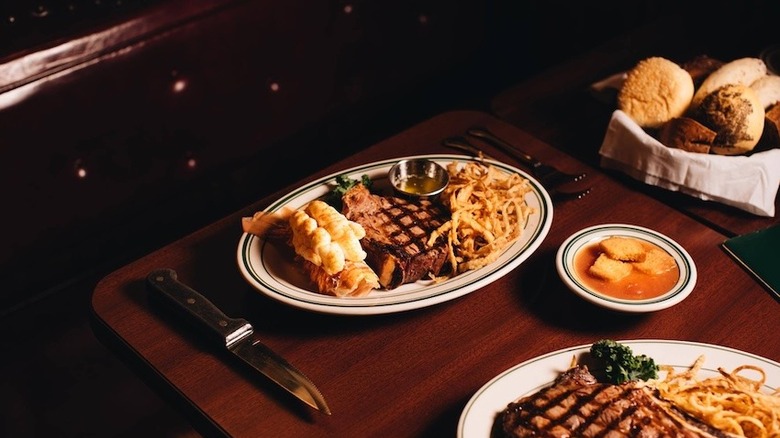
In 1947, Dayton, Ohio, resident Jim Sullivan bought a bar, covered the walls in pine panels, and was inspired to rename it the Pine Club and turn it into a restaurant. The menu is relatively simple, as the restaurant serves only tried-and-true steakhouse staples: shrimp, oysters, lobster, and house salads to precede the meal, and potatoes to accompany the filets, strip loins, and veal chops. The Pine Club proudly doesn't do dessert and doesn't accept reservations or credit cards.
One menu item from the historic restaurant has carved out a legacy of its own. The 20-ounce Bone-In Rib Eye listed on the menu seems like it could come from any well-appointed steakhouse in America, but this one has been called one of the best steaks in the country. It epitomizes the attention to quality and detail that define the Pine Club: It's aged in a special chamber where temperature and humidity are kept at ideal levels for a month, then trimmed on site, broiled, caramelized, and drizzled with butter and accompanied by thin-cut onion rings.
(937) 228-7463
1926 Brown St., Dayton, OH 45409