

Is Your Grocery Store Feta The Real Deal? Here's What To Look For
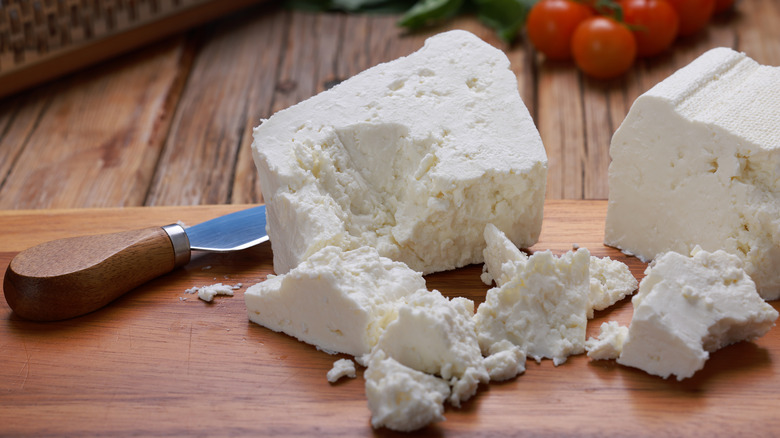
Whether it's crumbled over a classic Greek salad or whipped into a decadent dip, feta is one of Greece's top culinary exports for a reason. The soft, briny white cheese is a versatile and flavor-packed dairy delicacy beloved across the globe. Unfortunately, much of the so-called feta cheese Americans pick up at the supermarket is a far cry from the real deal.
Feta has enjoyed protected designation of origin (PDO) status since 2002, meaning that only cheeses made in certain regions of Greece, with at least 70% sheep's milk and no more than 30% goat's milk, can be labeled as feta within the European Union. However, this legal protection is not enforced stateside, and in the U.S. market, the name feta is generously (or blasphemously) applied to various crumbly white cheeses which could never dream of passing for feta in Greece.
The difference between real Greek feta and other so-called feta cheeses is kind of like the difference between parmesan and Parmigiano Reggiano – non-authentic feta can be fine, but it can't hold a candle to the real thing. While it's a bit harder to find, the creamy, vibrant quality of authentic Greek feta is a genuine dairy delight. If you want to taste true feta, look for cheese that bears the yellow and red protected designation of origin seal, is made in Greece, comes in a block (never pre-crumbled), and is made from sheep and goat milk, not cow's milk.
Why feta is so important in Greece
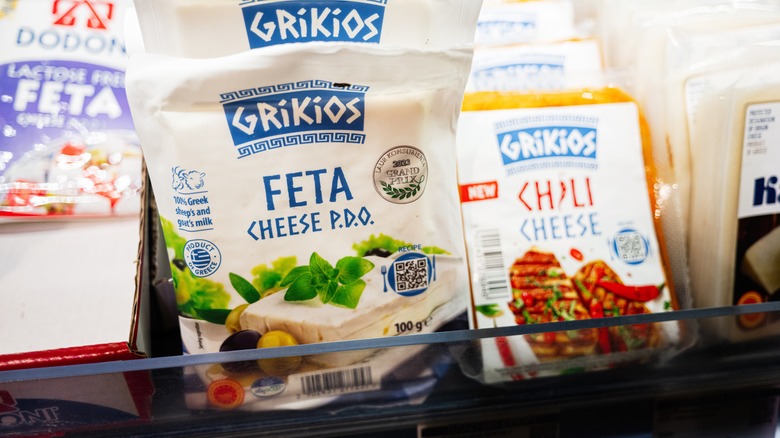
Unlike Greek yogurt, which isn't actually Greek, feta is a truly Greek dairy product. Feta, in some form or another, has been produced in Greece for at least 2,000 years, making it one of the world's most historic cheeses. Feta's popularity hasn't faltered in the 21st century – the average modern Greek person consumes some 26 pounds of feta every year, more than any other country in the world.
While PDO Greek feta is the only genuine feta (at least in the eyes of Greece and the European Union), it's worth noting that not all slightly fraudulent fetas are created equal. In fact, there's a whole spectrum of non-Greek fetas beyond the sad grocery store crumbles. If you can't find PDO Greek feta, the best substitutes are French or Bulgarian feta. Both are made mostly from sheep's milk, giving them a flavor and texture relatively similar to true feta. American feta, on the other hand, is generally agreed to be the worst false feta. It typically contains cow's milk (a huge feta faux pas), and tends to be much drier and milder than its European counterparts. No matter how you slice it, creamy, tangy, real deal Greek feta is an authentic dairy delight well worth seeking out.