

Before You Start Cooking With Beer, Make Sure You Have This Down Pat
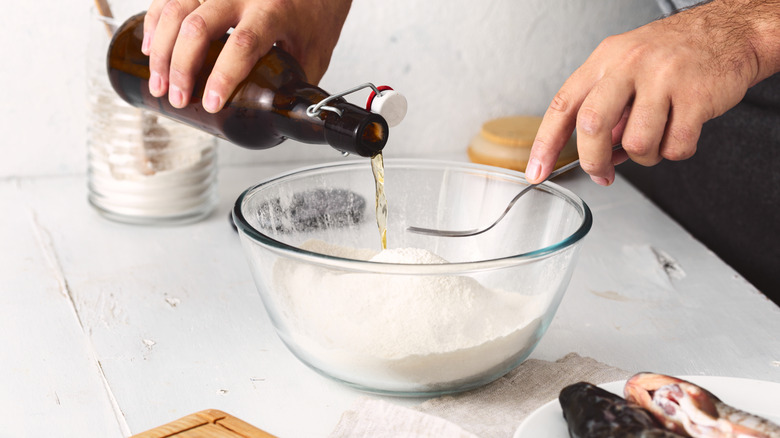
I speak from experience when I say that drinking beer and cooking with beer involve thinking about a beer's flavor in wildly different ways. There are plenty of methods for cooking with beer that you've never heard of, but there are also just as many types of beers; even just lagers and ales are different beasts, and that includes the flavor profiles they can impart into a marinade or braised dish. How do you even begin to get started? For help, we spoke with Karen Malzone, co-owner of Odd Bird Brewing in Stockton, New Jersey, about how to start cooking with beer without getting overwhelmed.
According to Malzone: "Success in the kitchen when cooking with beer is less about having a vast knowledge of beer style ... and more about just knowing your way around recipes." Malzone compares it to singing; before you can get fancy and add lots of vocal flourishes, you need to learn the basics. For cooking, this means you should dial in the recipes you love most, by exploring which basic flavor combinations work best. Only after that should you think about researching what beers might provide the flavors you're looking for. If you feel stuck because you don't have an encyclopedic knowledge of lagers and ales, you're starting your recipe from the wrong end.
Don't start with the beer
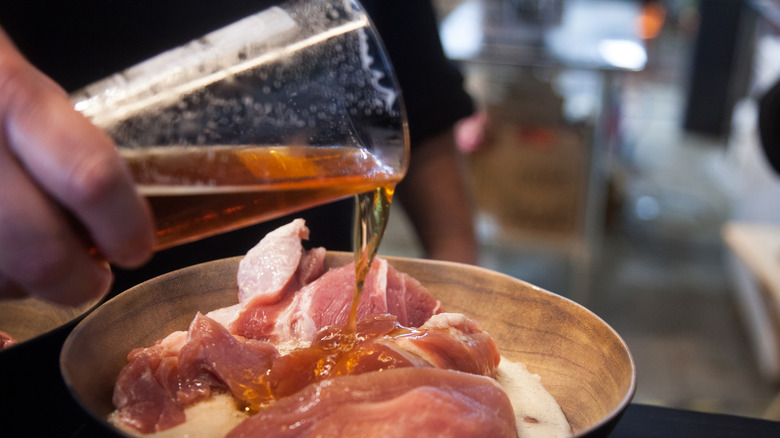
As an example, Karen Malzone brought up a childhood experience: "Growing up, I spent summers at the shore and it would be such a treat to cook mussels to have with chunks of crusty bread and wedges of cheese." Over time, as she grew comfortable with the recipe, she moved away from the typical ingredients: "Being familiar with this recipe of steaming mussels in white wine was a natural gateway to steaming them in a pale lager — something that would be equally friendly with the other ingredients."
In another scenario, you might have enough experience cooking a German bratwurst recipe to discover that the salty, savory meat contrasts perfectly with a bitter, malty märzen beer for the tastiest beer brats. For desserts, you might eventually find that a rich brownie recipe you've tried before pairs with a bitter, nutty stout, which you can bake into both the brownies themselves, and the frosting. Or, a fruity sour or lager beer with citrus notes might be exactly what a cake or pudding needs. It's not just about flavor, though. According to Malzone, beer can play a role in the chemistry of the dish: "I know that some recipes for quick breads call for beer because beer helps to activate some sort of alchemy that provides a rise to the crust and those enviable bubbles in the crumb." It also helps to know how your ingredients might react with beer's carbonation or possibly its yeast.