

The Boozy Rule Of Thumb When Pairing Beer With Any Meal
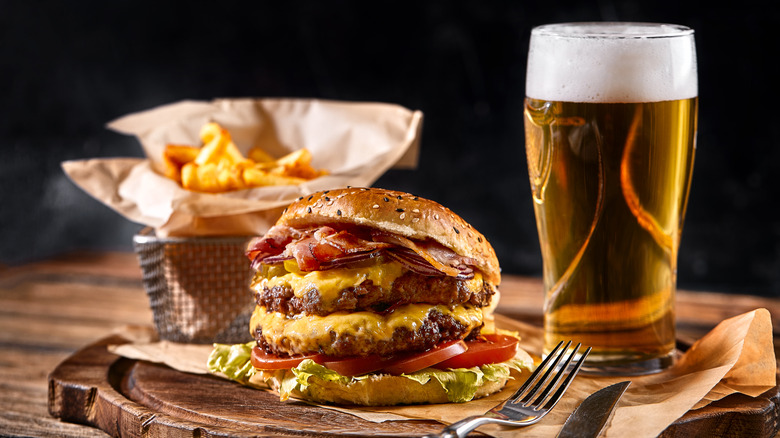
Choosing the right beer for any given occasion can prove to be a bit difficult, with many not even knowing where to start. While some consumers are still searching for the best beer to drink if they don't particularly enjoy the taste of beer, others are fans of the alcoholic beverage but are completely unaware of which types of beer pair well with different dishes and cuisines. While it's much more common to know how exactly wine pairings work as compared to beer pairings, specific types of beers have their own flavors and undertones that can go incredibly well with different dishes as well. Generally speaking, light beers go well with light dishes — a rule of thumb that is your best first step to the wide world of beer pairings.
We discussed how this simple rule can lead you in the right direction with Level 1 Sommelier, Level 1 Cicerone, and owner of Betelgeuse Betelgeuse, Chris Cusack, who explained why you can generally get strong results when pairing light beers with lighter foods and heavy beers with heavier foods. "Lighter beers tend to be crisper, have higher carbonation, and less residual sweetness, which goes great with lighter foods," Cusack explained. "Think [a] pilsner and oysters. Compare that with a porter and a dark chocolate dessert. The porter has lots of roasty notes and residual sweetness that matches perfectly with the chocolate."
Why this beer pairing rule works (and when it doesn't)
Now, while using this method of pairing beers with food is an easy first step to having more fulfilling beer-assisted meals, Chris Cusack was also quick to note that pairing light foods and beers together isn't always the best course of action. "Rule of thumb? Yes. Gospel? I wouldn't say so," Cusack warned. "Lighter beers paired with lighter foods absolutely work as a shorthand, but there are exceptions." A great example of this is using light beer as a palate-cleanser for heavier, spicier foods or eating light foods with a briny or salty taste — such as the aforementioned oysters — alongside heavier drinks like dry stouts.
Nevertheless, as is the case for most food and drink pairings, it's all about either complementing or contrasting the two pillars of your meal effectively. "When I want to complement a dish with a beer, I'm looking to amplify flavor," Cusack explained. "An example of a complementary pairing [is] ceviche and a wheat beer, where both components lift the citrusy backbone." He also noted that India pale ales can do a great job of contrasting richer foods like blue cheese by cutting through their fattiness and balancing each other's flavors. This is also why IPAs are great to pair with BBQ classics like fatty steak or ribs, as the bitter beverage can contrast well with the rich meats, thus creating an incredibly fruitful combination of flavors.