

The Very First Step You Can't Skip Before Cooking With Beer (But Many People Do)
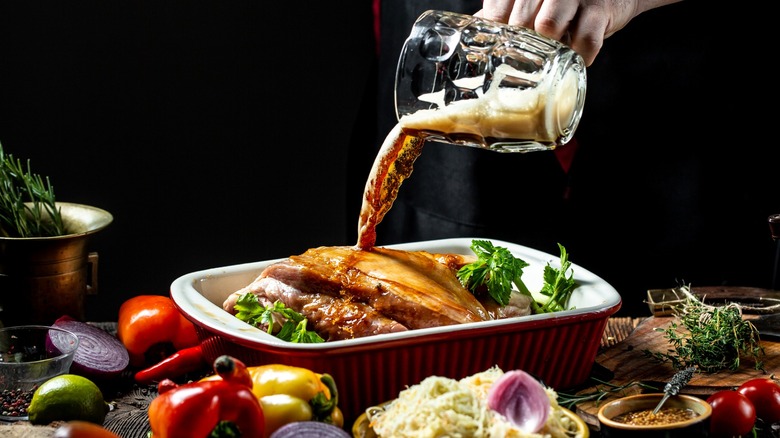
From bread to cheese, there's no shortage of compelling ways to incorporate the flavor of beer into gastronomic delights. Steaming mussels in suds or adding a splash of beer to popular Indian fare elevates the taste of each dish in ways few other ingredients can. However, folks commonly get too excited about cooking with a tasty brew and forget to sample the product beforehand, making the flavor profile a bit of a mystery until someone takes the first bite.
When The Takeout spoke with Karen Malzone, co-owner of Odd Bird Brewing in Stockton, New Jersey, she urged people to take a moment to appreciate the flavor of the beer they're using to upgrade food. "It's always good to make sure the beer you're using has the right flavor profile," she said. Understanding the nuances of the brew you choose to include isn't the only benefit of giving it a taste beforehand. "If your palate is refined enough to catch any contamination, spoilage, or off-flavors, even better."
This is no different than any other ingredient one would add to a dish. You don't start tossing sumac into a recipe if you aren't familiar with how it tastes, right? Well, that robust, hoppy IPA on the store shelf is going to be poles apart from the funky Belgian gueuze sitting nearby. Taking a quick swig first is the only way to know for sure what that contrast tastes like. As a bonus to tasting beer to make sure it's just right for your recipe, Malzone says, "A sip of beer may make for a merry chef, anyway."
Don't shy away from beer you're not a big fan of
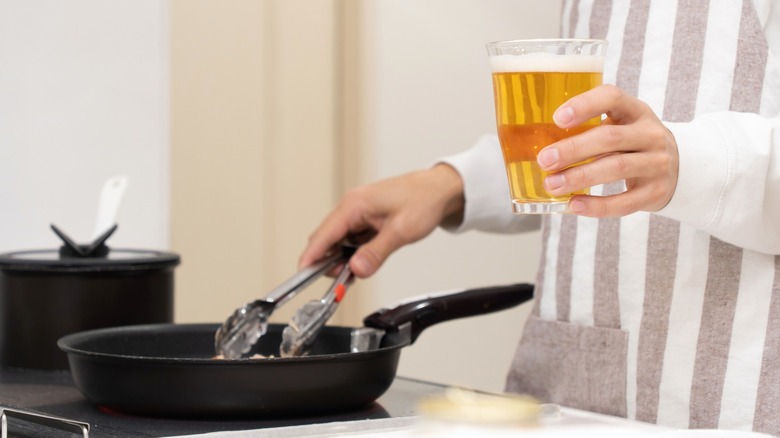
Every beer aficionado has their favorite style. For some, nothing short of the darkest porter will do while others are perfectly at ease savoring a lighter Coors Banquet beer. Rarely would either of these folks appreciate drinking the other's preferred brew, but when it comes to suds in the kitchen, Malzone noted you shouldn't be afraid to stray from what you enjoy drinking.
"I believe you should always cook with a high-quality beer that would definitely be palatable to someone," she said. "However, if a beer style isn't quite up to snuff for your particular tastes but it would be great in the recipe, you should still use it." It's easy to assume you wouldn't like a dish cooked in a beer you aren't fond of, yet only specific types of brew can transmit the flavors you want to impart to a dish.
Malzone uses the example of a classic dessert to drive her point home. "If you're a Mexican-lager-with-lime kind of person but the recipe for a rich chocolate cake calls for a stout, you should absolutely use a really nice, roasty stout because the taste of the cake depends upon it," she said. Using a simple pilsner can be beneficial for the texture in some chocolate cake recipes, but it wouldn't do much to improve the flavor. The same goes for other fare that can be enhanced with beer. Certain styles will be superior depending on what you're making. Again, the best way to discern what works and what doesn't is to give them a taste beforehand.